In a single daylight salvo, the U.S. and Israel erased Iran’s supreme leader’s palace compound—proof that Washington has pivoted from endless “talks” to hard power that Tehran can’t spin away.
Story Snapshot
- U.S.-Israeli strikes on February 28, 2026 hit Iran’s regime nerve centers, including Ayatollah Ali Khamenei’s palace compound in Tehran, which satellite imagery indicated was destroyed.
- Targets reportedly included military, intelligence, nuclear-linked, and government sites, with strikes expanding beyond Tehran to multiple cities.
- Iran responded with missile barrages toward Israel and several regional locations, raising the risk of a broader regional conflict.
- Iran’s leadership status remained contested in early reporting, with Iranian officials saying Khamenei and President Masoud Pezeshkian were alive, while other reports stressed “fog of war” and limited verification.
Daylight Strikes Hit Tehran’s Power Core
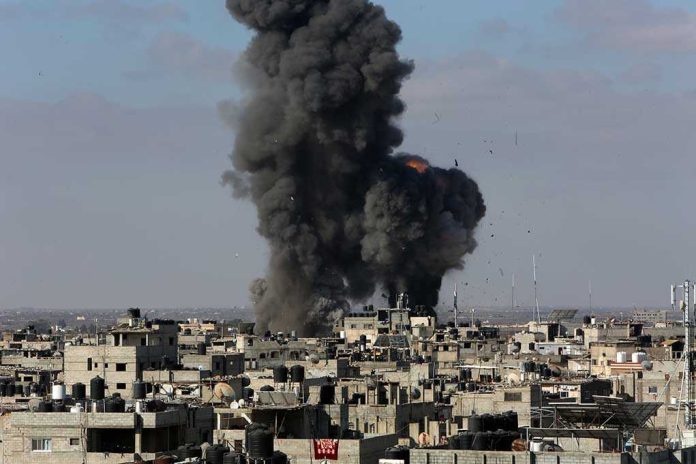
Israeli strikes began Saturday morning, Iran local time, as daylight raids targeted key nodes of regime control in Tehran, including Khamenei’s compound and other government and security facilities described in early reports as tied to national decision-making and internal repression. U.S. participation broadened the operation into a joint campaign hitting air defenses, missile assets, and IRGC-related sites across multiple Iranian cities. The timing—during a reported senior-leadership meeting—underscored the operation’s focus on command disruption.
Satellite imagery cited by multiple outlets indicated Khamenei’s palace compound was obliterated, an extraordinary development in a region where leaders often hide behind layers of security while their proxies terrorize neighbors. Early accounts also described chaos on the ground, including fires, movement on highways out of Tehran, and an internet blackout that limited independent confirmation. That communications cutoff matters: it restricts real-time verification and amplifies rumor, which is why casualty and leadership reports should be treated cautiously.
What Trump and Netanyahu Said the Mission Was
President Trump described the operation as massive and ongoing, framed around degrading Iran’s military and nuclear capabilities and cutting off support for proxy forces that have destabilized the region for decades. Israeli Prime Minister Benjamin Netanyahu similarly emphasized damage to regime leadership and encouraged Iranians to challenge the theocratic system. Those statements are politically significant because they signal an objective beyond “deterrence”—aiming at strategic paralysis of the regime’s machinery rather than symbolic strikes.
The background leading into the strikes included failed indirect nuclear talks, a U.S. military buildup in the region, and earlier warnings about Iran rebuilding nuclear capacity after prior damage to facilities in 2025. Reporting also referenced pre-strike discussions inside U.S. planning circles about going after top leadership, including Khamenei and his son Mojtaba, though such ideas were not presented as confirmed operational outcomes. For voters tired of open-ended diplomacy, the key fact is the posture shift: capability destruction over negotiated promises.
Iran’s Retaliation and the Escalation Risk
Iran retaliated with missile salvos aimed at Israel and other regional locations, with early reporting referencing impacts or threats affecting Gulf states and Jordan. That response highlights Tehran’s asymmetric playbook—punish allies, spread risk, and try to fracture coalitions. In the short term, the exchange increases the chance of a wider regional war, particularly if retaliation expands to U.S. assets or triggers multi-front proxy action from groups Iran has armed and funded.
Economic consequences remain uncertain in early coverage, but any sustained missile campaign affecting Gulf infrastructure can rattle energy markets and global shipping routes. The immediate civic impact inside Iran appeared mixed and hard to confirm: some accounts described celebrations among Iranians who oppose the regime, while others described fear-driven evacuations and blackout conditions. Without reliable, open communications, outsiders should avoid overconfident claims about public sentiment—yet the visible damage to elite infrastructure is undeniable.
Leadership Status: Verified Damage, Unverified Outcomes
Iranian officials said Khamenei and President Masoud Pezeshkian were alive “as far as I know,” while other reports said Khamenei had been moved to a secure location before the strike. Israeli assessments suggested significant harm to senior IRGC figures, with some names reported as likely killed, but early coverage repeatedly emphasized uncertainty. The strongest verified element in the public record is the physical destruction shown in satellite imagery; the weakest is definitive claims about who, exactly, was inside targeted sites at impact.
Khamenei’s Palace Obliterated in U.S.-Israel Strikehttps://t.co/yCs3BYpecc
— PJ Media (@PJMedia_com) February 28, 2026
For Americans focused on constitutional order and accountable government, the strategic question is what comes next: sustained pressure to prevent a nuclear breakout, protect U.S. forces and allies from retaliation, and avoid mission creep that drains taxpayers. The reporting to date supports a clear takeaway: the operation delivered a dramatic, visible blow to the regime’s symbols and infrastructure, but the end-state—deterrence, regime destabilization, or a prolonged conflict—depends on follow-on actions and Iran’s capacity to keep striking back.
Sources:
Live updates: U.S. and Israel attack Iran — Los Angeles Times
Which Iranian officials targeted in Israel-US attacks — Middle East Eye