The United States may be about to do something it has avoided for three decades: put the Castro name itself on a federal indictment over the day four unarmed fliers were blown out of the sky.
Story Snapshot
- Justice Department officials are reportedly preparing charges against former Cuban leader Raúl Castro over the 1996 Brothers to the Rescue shootdown.[2][3][4]
- The case centers on two civilian planes destroyed over international waters, killing four Cuban Americans.[2][3][4]
- Any indictment would collide with U.S.–Cuba diplomacy, where Washington leaks and back-channel meetings run in parallel.[3]
- The move tests how far America will carry moral accountability for communist abuses when the accused is a 94‑year‑old ex-dictator.[3]
How A 30-Year-Old Shootdown Came Roaring Back To Life
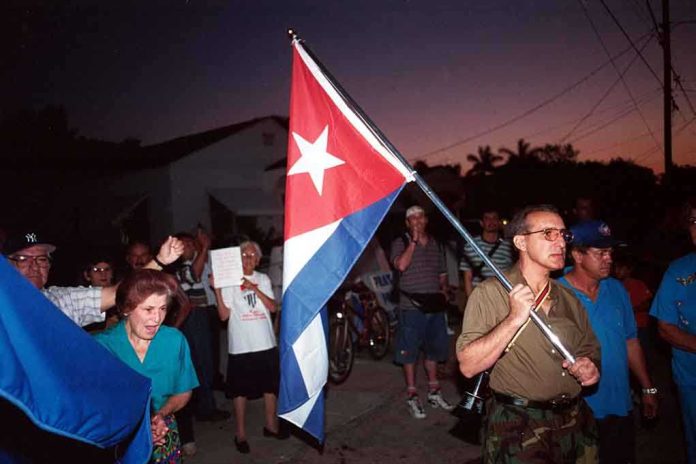
Federal prosecutors in Miami have quietly spent months digging back into one of the ugliest chapters in late twentieth century exile history: the 1996 downing of Brothers to the Rescue aircraft.[2][3] Those planes, flown by Cuban exiles who scoured the Florida Straits for rafters fleeing communism, were unarmed and civilian. Cuban fighter jets intercepted them and shot two of them out of the sky over international waters, killing four men whose families still live in South Florida.[2][3][4]
Reports now say the United States Department of Justice plans to ask a federal grand jury to indict Raúl Castro, then the head of Cuba’s armed forces and later its president.[2][3][4] Anonymous officials describe a case that leans on old intelligence, including recorded communications of Cuban pilots who allegedly celebrated the kill.[1][3] Florida’s Cuban exile community, which has waited decades for direct accountability, views the potential indictment as the justice system finally catching up with history.[2][4]
Why Prosecutors Are Aiming At Raúl Castro Himself
CBS News reporting identifies Raúl Castro as the focus of the looming indictment and underscores his role as commander of Cuba’s armed forces at the time of the attack.[3] Fidel Castro told American media back then that the military operated under his “general orders” to stop incursions into Cuban airspace, while Raúl controlled the armed forces that executed those orders.[3] That combination—political directive at the top and operational authority just beneath—is exactly where American prosecutors often look to build command-responsibility cases.[3]
Reporters say prosecutors will likely bring the case in Miami, the jurisdiction that already handled past litigation over Brothers to the Rescue and where witnesses, families, and much of the exile community reside.[3][4] That location matters. A South Florida jury understands both the brutality of the Cuban regime and the stake ordinary Americans have in punishing attacks on civilians in international airspace. From a conservative standpoint, letting foreign strongmen kill U.S.-linked civilians without consequence erodes deterrence and cheapens American citizenship.
The Legal And Political Knots Around A 94-Year-Old Defendant
The leaks leave major legal questions unanswered. Reports do not specify which criminal statutes the Justice Department plans to use, how prosecutors will navigate jurisdictional limits, or how they will pierce any claim of immunity for a former head of state.[2][3] No public document links Raúl Castro personally to an explicit “fire” order.[1][2][3][4] Instead, the story so far hinges on unnamed sources and broad descriptions of evidence, not sworn testimony or released intelligence assessments.
That opacity creates an obvious tension. On one hand, a nation that believes in the rule of law should not shrug at four citizens killed in what the Organization of American States previously described as a violation of international law.[1] On the other hand, conservatives rightly insist that no defendant—ally or enemy—should face indictment built on politics rather than rock-solid proof. Anonymous leaks about “recordings” will not satisfy skeptics until the underlying material survives cross-examination in open court.
Symbolic Justice, Real Leverage, And The Future Of U.S.–Cuba Policy
The reported timing exposes another layer: while prosecutors move toward charges, American intelligence chiefs reportedly hold quiet meetings with Cuban officials.[3] That split-screen—diplomats and spies in Havana, career prosecutors in Miami—captures how Washington often mixes justice and geopolitics. Indictments against foreign leaders can be partly symbolic, freezing their travel, constraining their successors, and signaling that certain acts will not be forgotten even when extradition is unlikely.[1][2][3][4]
By JOSHUA GOODMAN, ALANNA DURKIN RICHER and ERIC TUCKER MIAMI (AP) — The Justice Department is preparing to seek an indictment against former Cuban President Raúl Castro, three people familiar with the matter told The Associated Press on Frid… https://t.co/VEJAMjmw8W
— Capital Gazette (@capgaznews) May 15, 2026
Critics will argue that indicting a 94-year-old communist relic three decades after the fact is theater. Supporters respond that treating age as a shield effectively rewards dictators who simply outlive their victims’ patience. From a common-sense conservative lens, both things can be true: the move may carry diplomatic utility and political appeal, yet still serve a legitimate moral purpose. The key test will be whether the Justice Department grounds its case in clear statutes, credible witnesses, and public evidence rather than in headlines and pressure from Miami and Tallahassee.[2][3][4]
Sources:
[1] YouTube – US preparing to indict Cuba’s Raúl Castro, reports say
[2] YouTube – USDOJ prepares to seek Raúl Castro indictment: AP sources
[3] Web – U.S. moving to indict Cuba’s Raúl Castro, sources say – CBS News
[4] YouTube – Justice Department takes steps to indict Raúl Castro