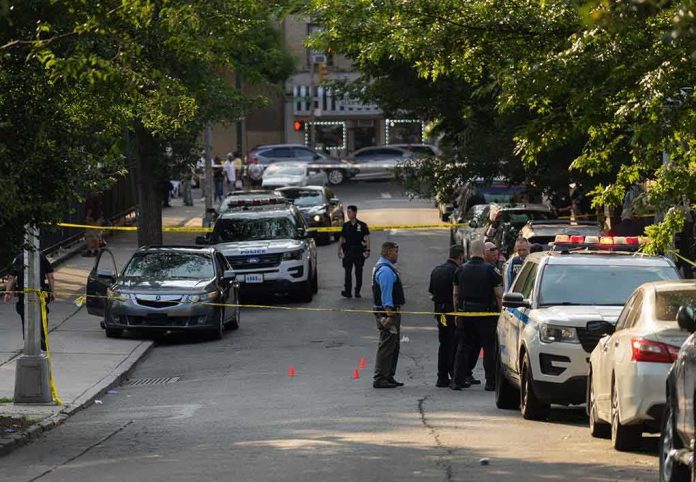
As Notre Dame kicked off against Michigan State, campus alerts warned of shots fired steps from the stadium and a suspected gunman on the move.
Story Snapshot
- University alerts reported gunfire at Eddy Street Commons during the game.
- Officials ordered people in the stadium to stay inside; others to shelter in place.
- Police searched the south edge of campus for the suspect reported in the alert.
- Local outlets described damage to vehicles and apartments; injuries varied across early reports.
Gunfire Reported Near Stadium As Game Began
University officials activated their emergency alert system on Saturday night, reporting shots fired near Eddy Street Commons, a shopping and dining hub just south of Notre Dame Stadium, as Notre Dame played Michigan State. The alert said the suspected gunman was last seen on the south edge of campus. The message told people in the stadium to remain inside and told others nearby to shelter in place while police searched the area. The timing overlapped with the game’s opening, tightening crowd control around the venue.
South Bend police and university police moved quickly into the area outside the stadium, focusing on Angela Boulevard and Eddy Street after the report of shots. Local television described an expanding perimeter and a search for the individual referenced in the alert. Early reports often move faster than verifications in scenes with loud crowds and moving foot traffic, which is why alerts use clear, simple commands that can be followed in seconds. That design aims to limit risk when details are still coming in.
Shelter Orders And Crowd Management Protocols
The stadium “remain inside” order matched standard major-event safety playbooks. Keeping tens of thousands in their seats prevents crush points at gates and reduces exposure in open areas. The shelter in place guidance for those outside the stadium moved casual foot traffic off sidewalks and away from the retail district while police worked. This is the same logic used at other universities when shots are reported near athletic venues, where the goal is to cut movement until officers clear key routes.
Fans who checked their phones saw a high-threat message with direct language. Research shows text alerts produce a stronger sense of urgency than social posts and help people act faster in the first minutes of a crisis. That urgency is useful when an area like Eddy Street Commons has tight streets, restaurants with waiting lines, and heavy game-day pedestrian flow. Quick compliance gives police room to trace witnesses, review cameras, and secure intersections without fighting against a moving crowd.
What Police And Local Outlets Reported On Damage And Injuries
Local outlets reported that police later documented damage from apparent gunfire to vehicles and apartments in the Eddy Street area, with no injuries confirmed in that follow-up account. Another station, citing early updates, reported at least one injured person near the intersection and referenced an officer injury in the immediate aftermath. Such differences reflect the different time stamps and scopes of each report rather than a dispute over whether shots were fired. University messaging and multiple outlets agreed on the core: gunfire occurred and police searched for a suspect.
No suspect in custody after shots fired outside Notre Dame Stadium during the Fighting Irish vs Michigan State game.
It started just after 7:30 p.m. at Eddy Street Commons on Angela Boulevard, right as crowds left the tailgates and kickoff hit. A fight broke out. Then a gunshot.… pic.twitter.com/RPcQtMwgkv
— Arkadalo® (@Arkadalo) September 20, 2026
This split-screen—football drama inside, police work outside—underscores why clear roles matter. The university’s job is to protect people on the ground. The police job is to find the source of the threat and secure evidence. The public’s job is to follow simple, fast commands. That alignment kept most people out of harm’s way while officers did the slow work of interviews, scene checks, and video review. Order beats confusion when seconds count and facts are still forming.
Why The Alert Worked And What Comes Next
The alert used plain language, clear location, and direct actions. That is best practice for high-density settings. It named Eddy Street Commons and the south edge of campus, which helped fans and visitors place the risk and comply quickly. It also bounded the problem so the team running stadium operations could focus on gate control, restroom queues, and media messages without triggering a chaotic exit. The approach mirrors guidance drawn from other game-day alerts at large campuses.
Next steps follow a familiar path. Detectives canvass the corridor, pull footage from storefronts, and cross-check 911 call times against camera time stamps. Officers look for shell casings, bullet paths, and any vehicle sightings tied to the time window. The university reviews its alert cadence, signage, and gate staffing to see what shaved minutes off response. Public safety improves when each layer—alerts, crowd control, patrol response, and follow-up—does its job without overreach or delay. That is common sense policing and campus stewardship.
Sources:
foxnews.com, southbendtribune.com, wndu.com, wrtv.com, hoodline.com, sports.yahoo.com, bleacherreport.com, abc57.com, wsbt.com