The Army says every eligible veteran’s funeral honors are free, yet scammers are billing grieving families anyway.
Story Snapshot
- Military funeral honors cost families nothing, ever.
- Scammers pose as honor guard or officials and demand fast payment.
- Threats to cancel honors aim to panic families into paying.
- Funeral directors, not cold callers, schedule real honors.
What the Army and federal agencies say is free
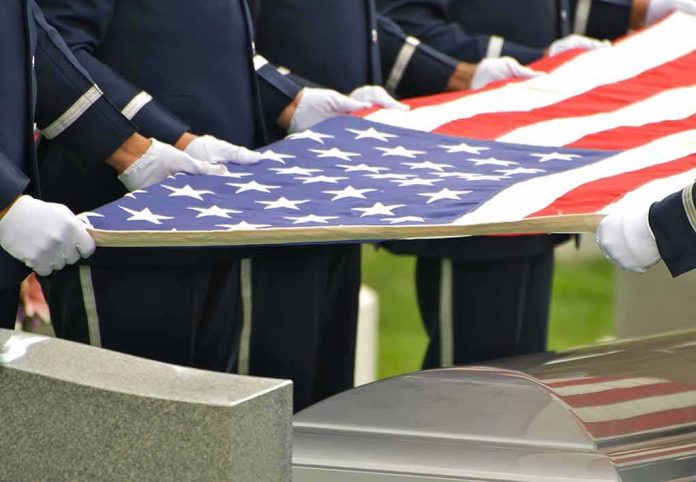
The Department of Defense provides military funeral honors at no cost to eligible families. The Military OneSource program states families never have to pay for honor guard details, rifle volleys, or the folding and presentation of the flag. The Department of Veterans Affairs says never pay a third party for benefits the government offers for free. That clarity matters in a fog of grief. Families can anchor on this rule: if someone asks for money for honors, it is a scam.
Federal guidance also explains how to request honors. Families or funeral homes contact the local funeral honors coordinator listed in the Military Funeral Honors directory, or work through the funeral director who manages the process. The Army’s casualty assistance offices and funeral homes coordinate the schedule. No one needs a “policy,” a deposit, or a processing fee. No one should demand a credit card on the spot. The path is formal, simple, and free by design.
How the scam works and why it tricks good people
Reports describe callers pretending to be honor guard members or government staff. They claim a payment is required for the ceremony and say the charge is a refundable insurance policy. They push for immediate payment by card or money app and threaten to cancel the military honors if the family does not pay right away. Stars and Stripes details the same pattern and reminds families that the funeral director is the main point of contact, not a stranger on the phone. Urgency and fear are their tools.
The Federal Trade Commission warns about a close cousin of this scheme. Imposters pretend to be from the funeral home and say the funeral will be canceled unless more money is paid immediately. Conservative common sense says hang up, slow down, and verify with your known funeral director or the local casualty office. Real institutions do not bully families with countdown clocks. Real benefits do not hinge on a wire transfer.
What to do in the moment and who can actually help
When a caller asks for money for military honors, end the call. Do not share payment or personal data. Report the attempt to the Federal Trade Commission at the government’s fraud portal, then call your funeral director and your installation’s casualty assistance office to confirm plans. Keep the caller ID, any texts, and screenshots. If money was sent, contact your bank or card issuer to dispute the charge. File a police report to build a paper trail.
ARMY: Warns of 'Heartless' Funeral Scam Targeting Deceased Veterans' Families pic.twitter.com/Cy8mmu2bNx
— SEGAMI (@segamihcfund) October 2, 2026
Families can lower risk by setting a simple plan. Name one point person who speaks with the funeral director. Decline on-the-spot changes by phone or text. Require written invoices over email from known contacts. Call back using numbers you already trust, not numbers provided by a surprise caller. When the process stays inside official channels, scammers have nowhere to land. That is how you protect both honor and wallet.
Why this moment demands vigilance
Predators target families right after a death because shock and sorrow make anyone vulnerable. The solution is not suspicion of everyone in uniform; it is a firm line on process and payment. The Army’s position is direct and consistent: no one ever pays for military funeral honors. That rule aligns with basic fairness and respect for service. It also gives families a bright, enforceable test. If a caller breaks that rule, the caller is a fraud. Period.
Sources:
military.com, stripes.com, militaryonesource.mil, va.gov, usa.gov