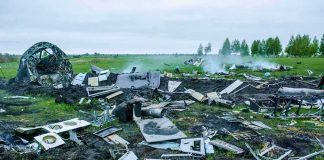

Federal regulators signed off on blowing up degraded explosives in Iowa because they judged waiting could be worse.
Story Snapshot
- Environmental Protection Agency issued an emergency permit for in-place detonations at an Army plant.
- Officials labeled the lead azide both explosive and toxic for lead, elevating public health stakes.
- A federal appeals court put the permit on hold after a lawsuit by environmental groups.
- The Department of Justice argued a separate emergency explosives exception could still allow action.
What the Army Asked To Do, And Why
The Army sought to detonate 68 drums of degraded lead azide at the Iowa Army Ammunition Plant. The Environmental Protection Agency approved an emergency permit on November 13, 2026, allowing on-site, intentional detonations through February 11, 2027. The agency classified the waste as reactive and toxic for lead, and said the condition of the material posed an “imminent and substantial” threat to people and the environment. The Army and state health officials described two controlled blasts within a narrow window.
The government’s case hinged on a simple claim: a controlled blast beats a surprise blast. The Department of Justice told the court the Army must act to prevent a worse explosion and set a target date to do it. The permit also required steps before, during, and after detonation. Those include site controls, monitoring, and follow-up checks to limit exposure and hold the Army to documented safeguards. That framework matters when you mix explosives risk with lead toxicity.
Why A Court Hit Pause
The Eighth Circuit stopped the permit after environmental groups sued, arguing the plan did not fully weigh safer options or share enough details with the public. Illinois officials warned that airborne lead dust could cross the river and reach Mercer County, Illinois, based on modeling they saw. News reports amplified fears of a plume stretching many miles, over homes, fields, and water sources. The stay blocked use of the permit while judges review the challenge.
The Justice Department responded with a different legal path. It notified the court the Army could invoke an emergency munitions-and-explosives exclusion under waste rules and proceed without relying on the stayed permit. That move raised a clash between immediate hazard response and judicial review. It also shifted attention from chemistry to constitutional balance: when does emergency authority outrun a court’s order? Conservative instincts favor both strong public safety action and respect for the courts. That tension begs for clear statutory footing, not agency improvisation.
Risk, Tradeoffs, And The Trust Gap
The core facts are stark. Lead azide can detonate; lead harms brains and bodies; 68 drums sat degraded at an active weapons site. What is less clear is the side-by-side risk math. The public record does not show a quantified comparison of options like continued storage, off-site treatment, or chemical neutralization versus on-site blasting. The permit’s months-long duration also raises a fair question: if the danger forced action, why require a November date rather than seek the safest weather and notice window inside that term?
Illinois officials pressed for more transparency and warning, saying the blast could make lead airborne and drift into their counties. That message resonated because people did not see dispersion assumptions, particle sizes, or deposition thresholds in one place. The permit requires protective actions and monitoring, but confidence grows when the Army shows its work. Share the inspection data, plume models, and post-blast sampling plans, and publish the cleanup triggers with dollars and deadlines. Sunlight steadies nerves.
What Accountability Looks Like Now
Responsible government solves the hazard and proves it did so safely. Three steps would help. First, release the March inspection and stability assessment for all drums, with photos and lab results, so neighbors know what degraded means in practice. Second, present a plain-English, numbers-first comparison of each disposal path, with failure odds and timing bands. Third, post the monitoring map, methods, and reporting dates before any action, then deliver lab-confirmed air and soil results within 30 days, as the plan envisions.
Leaders earn trust by hitting timelines and telling hard truths. If a court stay is in force, respect it while seeking prompt review. If emergency authority is truly clear, cite the statute chapter and verse and accept the oversight that follows. Protecting families and farms from both blast and lead is not either-or. It is do-the-work, show-the-work, and fix-what-follows. That standard serves national defense and the people who live downwind.
Sources:
washingtontimes.com, epa.gov, edition.cnn.com, response.epa.gov, hhs.iowa.gov, nbcchicago.com, apnews.com