
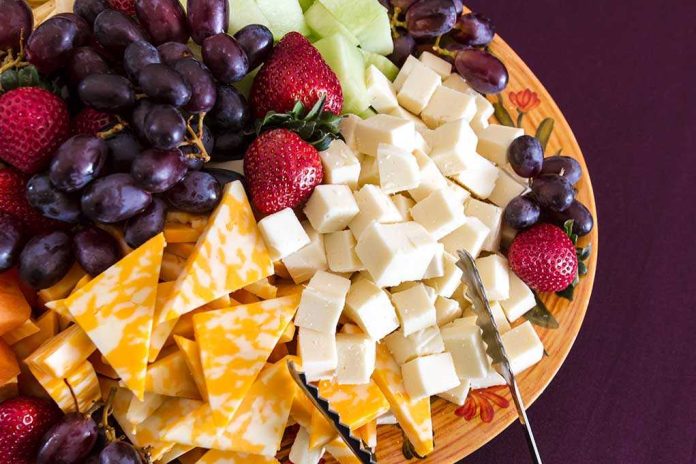
High-fat cheese could slash your dementia risk by 13%, challenging decades of fat-phobia—but is this creamy dream too good to be true?
Story Snapshot
- Lund University study tracks 27,670 Swedes over 25 years, linking high-fat cheese to 13% lower dementia risk.
- High-fat cream shows 16% reduced risk; low-fat dairy offers no such protection.
- Vascular dementia drops 29% with higher cheese intake, hinting at heart-brain connections.
- Association only—no proof cheese prevents dementia; more research needed.
- Findings contradict saturated fat warnings, spotlighting fermented dairy’s unique benefits.
Swedish Cohort Reveals Surprising Cheese-Dementia Link
Researchers at Lund University analyzed data from the Malmö Diet and Cancer Study, following 27,670 adults from 1991 to 1996 through national health registers for up to 25 years. Participants reported diets via detailed questionnaires. Higher high-fat cheese intake—over 50 grams daily with more than 20% fat—correlated with 13% lower dementia risk after adjustments for age, sex, education, lifestyle, and diet quality. Low intake under 15 grams daily served as the baseline.
High-fat cream over 20 grams daily linked to 16% lower dementia risk versus none. Vascular dementia showed stronger ties, with 29% reduced risk for high cheese consumers. Alzheimer’s benefits appeared only in non-carriers of the APOE ε4 gene. Other dairy and low-fat options showed no associations.
Emily Sonestedt, lead researcher, noted high-fat cheese and cream stood out, stating not all dairy equals brain health. The team built on prior findings linking fermented dairy to lower cardiovascular risk in the same cohort, probing vascular-brain pathways.
Why High-Fat Dairy Defies Fat Fears
Sweden’s high dairy culture and precise registers enabled robust tracking. The cohort captured middle-aged adults, ideal for late-life dementia insights. Fermentation in cheese may alter saturated fats’ impact via calcium, proteins, and bioactive compounds, forming a protective “food matrix.” This challenges blanket saturated fat vilification, aligning with conservative values favoring whole foods over processed low-fat alternatives.
Prior studies like UK Biobank hinted at weekly cheese reducing dementia risk, but results mixed. Lund’s work specifies high-fat types, urging nuance over nutrient isolation. Common sense prevails: moderate real cheese trumps lab-made fats, echoing timeless dietary wisdom.
Observational Limits Demand Caution
The study proves association, not causation. Self-reported diets risk inaccuracies; residual confounding from lifestyle or socioeconomic factors persists despite adjustments. Reverse causation looms—early health shifts might sway intake. Authors and the American Academy of Neurology stress replication via trials before recommendations.
Media headlines like “Cheese Protects Your Brain” amplify optimism, yet experts prioritize overall diet: Mediterranean patterns with veggies, fish, and exercise. Guidelines won’t shift on one study; saturated fat nuance grows, but balance rules.
For age 40+ readers eyeing dementia, this sparks hope without overhaul. Pair cheese with proven habits—walk daily, control blood pressure. Facts support enjoyment of high-fat dairy in moderation, fitting American emphasis on personal choice over nanny-state edicts.
Sources:
https://www.lunduniversity.lu.se/article/full-fat-cheese-linked-lower-risk-dementia
https://www.aan.com/PressRoom/home/PressRelease/5304
https://scitechdaily.com/this-everyday-food-was-linked-to-better-brain-health/
https://www.neurology.org/doi/10.1212/WNL.0000000000214343