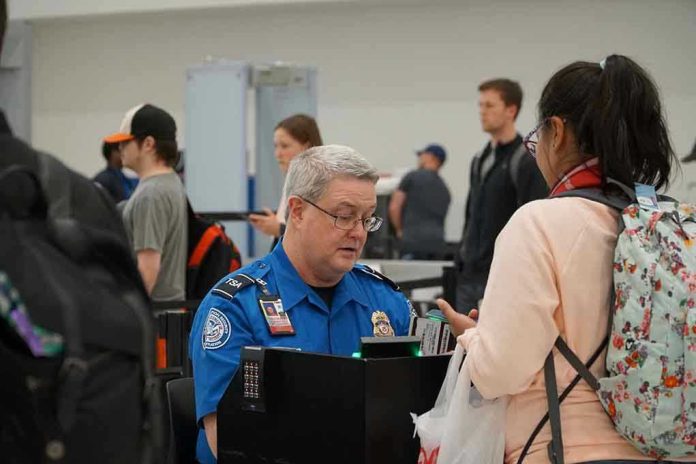
A routine security checkpoint turned into a federal explosives case the moment investigators say airport screening uncovered a device in a carry-on bag.
Story Snapshot
- Federal prosecutors say Kimani Osayande Jones brought an explosive device into Sacramento International Airport and was arrested after a Transportation Security Administration screening.
- Reporting says officers found a flash powder explosive, a torch lighter, a knife, scissors, scissor blades, an aerosol can, zip ties, and five cell phones in the carry-on bag.[1]
- The government says the device was later found to be viable and capable of potentially damaging an aircraft.[1]
- The public record is still mostly one-sided, with prosecutors and early media accounts driving the narrative before any detailed defense rebuttal has surfaced.[1][2]
What Prosecutors Say Happened
The core allegation is simple and severe: prosecutors say Jones tried to move through the security checkpoint at Sacramento International Airport on May 30, 2026, with an explosive device in his carry-on bag. The U.S. Attorney’s Office for the Eastern District of California said a criminal complaint was filed charging him with unlawfully possessing explosive material in an airport. That is the legal starting point, not the ending.
The public reporting adds the shape of the government’s case. According to the coverage, TSA screening allegedly uncovered a torch lighter and a flash powder explosive, and later descriptions said investigators believed the device was viable.[1] Those details matter because federal explosive cases often turn less on dramatic imagery than on whether prosecutors can prove possession, functionality, and intent through the physical evidence itself.
That distinction is where airport cases become dangerous for defendants and fascinating for everyone else. A bag full of suspicious objects can look like intent in a hurry, but the law still has to answer harder questions: was the device actually functional, who controlled it, and what does the surrounding evidence really prove?[1] A complaint can establish probable cause; it does not yet establish guilt.
The Evidence Package That Makes the Case Look Heavier
The most striking part of the public record is not the explosive device alone, but the bundle of items allegedly found with it. Early reporting says the bag contained a knife, scissors, scissor blades, an aerosol can, zip ties, and five cell phones in addition to the explosive material.[1] That cluster of objects creates a strong visual narrative, especially in an airport, where ordinary items can suddenly look tactical.
Still, a strong narrative is not the same thing as proof. A criminal complaint is built to explain why agents believed a crime occurred, not to answer every competing explanation a defense lawyer might later raise. If the defense wants to weaken the government’s theory, the real battleground will be the technical details: how the device was assembled, whether it functioned as claimed, and whether the surrounding items had innocent explanations.
Why This Case Is Receiving So Much Attention
Airport explosive allegations draw attention because they sit at the intersection of fear, security, and public confidence. Sacramento International Airport is not just a backdrop here; it is the reason the story lands with such force.[2] When a case begins with a checkpoint discovery, the public usually hears the government’s version first, and that version naturally dominates until sworn defense filings or expert testimony enter the record.[1][2]
That dynamic is important for readers who have seen too many criminal cases get flattened into instant certainty. The federal system often resolves serious cases before trial, so the public may never see a full evidentiary fight over the device’s construction, the chain of custody, or the meaning of the items found in the bag. In other words, what looks like the whole story today may be only the opening chapter.
What Still Matters Most Before Trial
The unanswered questions are the ones that will decide whether the allegation remains a headline or becomes a conviction. Did investigators preserve the item properly? Did bomb technicians test it in a way that supports the claimed conclusion? Was the carry-on bag actually Jones’s, and can prosecutors connect the cell phones and timer-like details to him in a way that survives cross-examination?[1]
Those questions matter because the justice system is supposed to punish proven conduct, not just alarming circumstances. The public record now supports a serious federal accusation, but it does not yet supply a defense-side technical rebuttal.[1][2] Until that changes, the most honest reading is that prosecutors have a strong opening theory, while the ultimate meaning of the evidence remains to be tested in court.
Sources:
[1] Web – Man nabbed with bomb in California airport
[2] Web – Sacramento man facing explosives charge after SMF arrest