
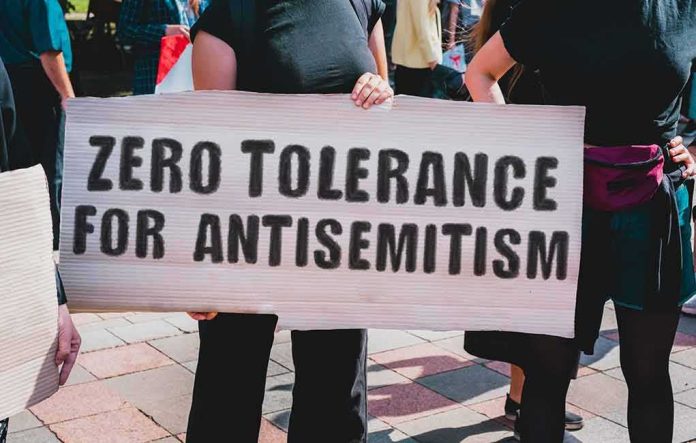
New York City’s mayor hosted a kosher Shavuot dinner at Gracie Mansion while prominent Jewish leaders were publicly urging the community to stay home.
Story Snapshot
- Activist Dov Hikind called on Jewish leaders to boycott Mayor Zohran Mamdani’s Gracie Mansion Jewish Heritage Month event, calling attendance an act of self-betrayal.
- Mamdani’s Nakba Day video was the immediate trigger for the boycott push, compounding existing concerns about his anti-Zionist record and pro-boycott Israel movement stance.
- On his first day in office, Mamdani revoked executive orders tied to antisemitism and campus protests that his predecessor had signed.
- New York City’s most senior Jewish elected officials are now urging Mamdani to publicly acknowledge the Jewish community’s emotional connection to Israel and reconsider his pledge not to visit the country.
A Kosher Menu at a Mansion Nobody Wanted to Enter
The mayor’s office sent out invitations describing the May 18 event as a “Shavuot Celebration in Honor of Jewish Heritage Month,” complete with a “festive kosher dairy menu.” The optics were deliberate. The timing, coming just days after Mamdani posted a video marking Nakba Day, which commemorates the displacement of Palestinians during Israel’s founding in 1948, was not lost on anyone paying attention. Critics saw the dinner not as outreach but as cover, a warm gesture layered over a record that has alarmed a significant portion of New York’s Jewish community.
Hikind, founder of Americans Against Antisemitism, did not mince words. “I am calling on Jewish leaders not to attend this event. I plead with you to take a stand. Show pride. Have self respect,” he said publicly. His rhetoric escalated further when he characterized Mamdani, his wife, and his family as “radical Islamists, endangering the well-being of America and the Jewish community.” That language is inflammatory and goes beyond what the documented record supports. The evidence on hand is a pattern of policy decisions and public statements, not a formal determination of antisemitic conduct. Critics do themselves no favors when they overreach, because it shifts the conversation from substance to tone.
The Policy Record Is Where the Real Argument Lives
Strip away the heated rhetoric, and what remains is a documented set of actions that deserve serious scrutiny. On his first day in office, Mamdani revoked executive orders tied to antisemitism and campus protests that former Mayor Eric Adams had signed. He has refused to back legislation aimed at curbing disruptive protests outside synagogues and schools. He declined to explicitly condemn the slogan “globalize the intifada,” a phrase that many Jewish New Yorkers associate directly with calls for violence. He co-founded a Students for Justice in Palestine chapter in college and has been a public supporter of the boycott Israel movement. He has also refused to recognize Israel specifically as a Jewish state.
Prominent Jewish Leaders Call for a Boycott of Zohran Mamdani, Citing Surging Antisemitismhttps://t.co/vPaeIbXDMQ
I wrote a book! You can buy it on Amazon. Pick up ‘Gaslight, How the Democratic Party Lost Its Mind to Radical Leftism and Abuses Voters in the Process’ today!… pic.twitter.com/JyMyXhMyp8
— Amy Curtis (@RantyAmyCurtis) May 18, 2026
Taken individually, each of those positions can be framed as political disagreement. Taken together, they form a pattern that New York City’s most senior Jewish elected officials have found troubling enough to address formally. According to reporting in The Forward, those officials are urging Mamdani to do more to address Jewish concerns directly, including acknowledging the community’s deep emotional connection to Israel and reconsidering his pledge not to visit the country. That is not fringe activism. That is the city’s own Jewish leadership sending a message through official channels.
Mamdani Did Appoint a Jewish Leader to Run the Antisemitism Office
The full picture requires acknowledging one concrete counter-point. Mamdani appointed Phylisa Wisdom, described as a progressive Jewish leader, to run the Mayor’s Office to Combat Antisemitism. That is a personnel action, not a press release, and it deserves to be weighed honestly. Whether that appointment signals genuine commitment or functions as political insulation from criticism is a question the record alone cannot definitively answer. What it does show is that the situation is not as simple as pure indifference to Jewish concerns, even if the policy decisions paint a different picture.
The harder question New York’s Jewish community faces is whether a dinner invitation and a single appointment outweigh a first-day revocation of antisemitism-related executive orders, a refusal to protect synagogues from disruptive protests, and a Nakba Day video posted while a kosher party was being planned across town. On those facts, the skepticism driving the boycott call looks less like partisan grievance and more like a rational response to a documented record. Common sense suggests that actions carry more weight than menus, and that a community with reason to feel unsettled is entitled to say so.
Sources:
[1] Web – Prominent Jewish Leaders Call for a Boycott of Zohran Mamdani …
[2] Web – Mamdani Nakba Day video prompts pushback from Jewish leaders …
[3] Web – Pro-Israel Activist Urges Boycott Of Mamdani Jewish Heritage Event …
[4] Web – New York City’s top Jewish officials urge Mamdani to visit Israel
[5] Web – Watch NYC Jewish Event Boycott, Rise of Antisemitism in New York
[6] Web – Jewish Leaders Boycott Zohran Mamdani’s Gracie Mansion Event …
[7] Web – Mamdani’s anti-Zionist policies are targeting New York’s Jewish …
[8] YouTube – ZOA’s Liz Berney Blasts NYC Mayor Mamdani’s Israel Parade Boycott
[9] Web – NY Jewish group claims double standard after Mamdani comments …
[10] Web – Mamdani Refuses To Attend Israel Day Parade As Israeli Delegation …