Passengers heard “We controlled the terrorists” as the cockpit sent the world’s rarest hijack code and the jet dove for safety.
Story Snapshot
- The Flydubai jet briefly broadcast the hijack code 7500, then diverted to Tabuk, Saudi Arabia.
- Israeli authorities scrambled fighter jets while air traffic control treated it as a real hijack risk.
- Later reports point to a violent fight between the two pilots, not an organized hijacking.
- The airline confirmed an in-flight incident and a safe landing with all passengers accounted for.
A hijack alert no controller can ignore
Flydubai flight FZ1073 departed Dubai for Tel Aviv and soon triggered an emergency chain. The transponder briefly showed code 7500, which signals unlawful interference. That single code forces controllers to shift into counter-hijack procedures. No one assigns 7500 by mistake from the ground, and silence from the crew counts as a warning. The jet diverted to Tabuk, Saudi Arabia, where it landed safely and the passengers disembarked without harm.
Israel’s security system reacted fast. Officials treated the alert as credible and launched fighter jets to cover a potential hijacking. That response fits protocol when a 7500 code appears near its airspace. The situation had to be resolved in minutes, not hours. The plane’s change of course and the quick landing confirmed that controllers and military units followed the book under stress. They were not playacting a drill; they were blocking worst-case risks.
What the airline and media say happened in the cockpit
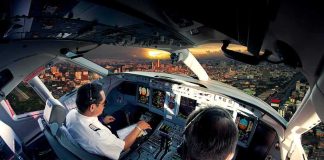
Public reporting converged on a fight between the two pilots. Accounts describe a cockpit altercation that led to the emergency squawk, rapid descent, and diversion. The airline said there was an incident en route and that everyone was safe after landing in Tabuk. Israeli media, citing security sources, framed the event as a crew dispute rather than a terrorist takeover. Officials later said this was not a hijacking. Those details cooled the early panic but did not erase the alarm.
Some outlets went further, suggesting a violent scuffle, even a stabbing. These claims are not uniform across reports and remain thin without cockpit recordings. Sensational fragments always outpace facts when sirens blare. The disciplined take is simpler: a cockpit conflict rose high enough to trigger a rare code and an urgent diversion. That is not routine. That demands firm investigation by the airline and regulators, with crew statements and data to match rumor with record.
Why 7500 is designed to over-warn, not under-warn
Code 7500 exists to tip the scales toward safety. Aviation rules teach crews to squawk 7500 under unlawful interference and teach controllers to treat it as real until proven false. The Federal Aviation Administration codifies that approach. Controllers never assign 7500 from the ground, and system displays flag hijack-specific alerts to trigger security responses. This bias saves lives when seconds matter, even if it sometimes amplifies scares that later prove internal and not terror-linked.
A massive mid-air crisis was averted aboard Flydubai flight FZ1073 after brave Israeli passengers and cabin crew subdued a pilot during a violent cockpit altercation. En route from Dubai to Tel Aviv, the Boeing 737 MAX suddenly plummeted 14,000 feet in just one minute after one… pic.twitter.com/yqPhDJ3LNg
— R. Sachin Suryavanshi (@RSachinSurya) September 30, 2026
Reasonable people can respect that design. American conservative values prize order, clarity, and chain of command. A cockpit is not a chat room; it is a command post. If two pilots cannot maintain discipline, they do not belong at altitude with families strapped behind them. The airline owes the public a full accounting, including voice and data timelines. If policy, training, or screening failed, fix it now. The 7500 code did its job. Now leadership must do theirs.
Sources:
aljazeera.com, bbc.com, cbsnews.com, jpost.com, ndtv.com, wayman.edu