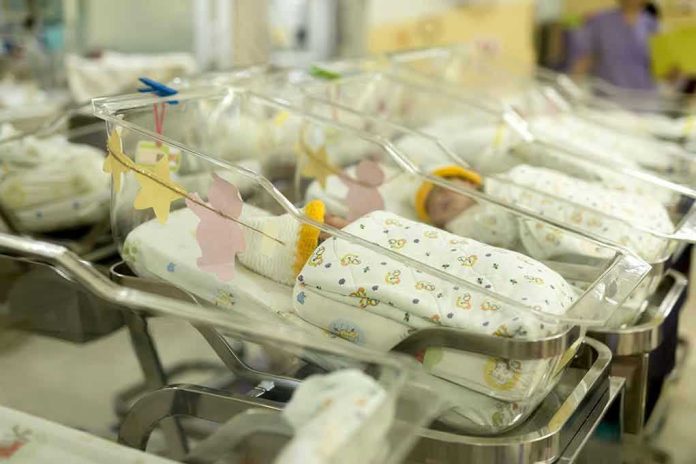
A seemingly harmless “nursery virus” diagnosis from a doctor can transform into a parent’s worst nightmare when their infant ends up fighting for breath in an intensive care unit.
Story Snapshot
- Infants in nursery settings contract 6-12 respiratory infections annually, with symptoms lasting nearly half the year
- While most nursery viruses remain mild, 2-3 out of every 100 infants under three months hospitalized with RSV require intensive care
- General practitioners often dismiss nursery-acquired infections as routine, yet certain viruses like RSV can escalate to life-threatening bronchiolitis within days
- New maternal vaccines and infant antibodies introduced since 2023 have reduced severe RSV cases, offering protection previously unavailable
The Nursery Virus Gamble Every Parent Faces
The term “nursery virus” rolls off doctors’ tongues with practiced nonchalance, a catch-all phrase for the respiratory infections children inevitably contract in group care settings. General practitioners deploy this label to describe everything from rhinovirus to respiratory syncytial virus, banking on probability that favors mild outcomes. The nursery environment creates a perfect viral incubator where close contact, shared toys, relentless coughing, and toddlers’ hand-to-mouth exploration habits facilitate rapid pathogen transmission. Infants possess immature immune systems that make them particularly vulnerable to these circulating viruses.
Parents receive reassurances that frequent illness builds immunity, and statistics support this optimistic view. Most children weather these infections with nothing more than disrupted sleep schedules and parental exhaustion. The normalcy statistics prove compelling: pediatric experts confirm children in daycare settings spend approximately half their first year sick, cycling through infections that seem endless yet typically resolve without intervention. This represents the immune system’s education, an unavoidable tuition payment for long-term health benefits.
When Routine Becomes Critical
The dangerous assumption lies in treating all nursery viruses as equivalent threats. Respiratory syncytial virus stands apart from common colds in its capacity to devastate infant respiratory systems. RSV attacks the smallest airways, causing bronchiolitis that can progress from mild congestion to respiratory failure within 72 hours. Infants under six months face particular danger, with preterm and low-birthweight babies carrying even higher risks. The virus causes apnea episodes where breathing simply stops, a terrifying reality that transforms pediatric wards into high-stakes monitoring stations each fall and winter.
The gap between initial medical dismissal and ICU admission reveals a troubling pattern in primary care triage. General practitioners serve as gatekeepers, balancing efficient care against over-hospitalization concerns. This calculus works for most patients but fails catastrophically for the small percentage whose symptoms accelerate. Parents report frustration when doctors minimize their concerns, attributing worsening breathing difficulties to normal viral progression. The deterioration timeline follows a predictable yet deceptive pattern: mild symptoms emerge within a week of nursery exposure, fever and congestion develop over three to five days, then sudden respiratory distress demands emergency intervention.
The Medical Community’s Response Evolution
The healthcare establishment has begun closing the protection gap that left infants vulnerable to severe RSV outcomes. Maternal vaccines and infant monoclonal antibodies entered widespread use during the 2023-2024 season, representing the first meaningful prevention tools against a virus that previously sent thousands of babies to hospitals annually. The CDC now recommends immunization through two pathways, with most infants requiring only one intervention. This development fundamentally alters the risk calculation for parents navigating nursery enrollment decisions for young infants.
The expert consensus acknowledges both the normalcy of frequent infections and the imperative to recognize warning signs. Dr. Sekhsaria from Akron Children’s Hospital validates parental experiences of near-constant illness while emphasizing that immune development justifies this difficult period. Parkside Pediatrics offers practical guidance: most germs prove inconvenient rather than dangerous, but breathing difficulties demand immediate medical attention. This balanced perspective respects both statistical probability and the catastrophic outliers that haunt emergency departments.
The Parental Vigilance Paradox
Parents face an impossible calibration between reasonable concern and paralyzing anxiety. The mathematical reality offers cold comfort: RSV infects 11 percent of symptomatic children in childcare settings, yet only 2-3 percent of infected infants under three months require hospitalization. These favorable odds provide little solace when your child becomes the statistical exception requiring oxygen support or ventilation. The economic and emotional costs extend beyond hospital bills to encompass work disruptions, parental leave exhaustion, and the psychological toll of watching your infant struggle for breath.
The path forward requires parents to internalize a contradictory truth: nursery infections represent both normal immune development and potential threats requiring vigilant monitoring. Trust the statistics that predict mild outcomes while remaining alert to the breathing difficulties, persistent fever, and lethargy that signal dangerous progression. The introduction of RSV immunizations provides tangible protection that previous generations lacked, a medical advancement that deserves celebration and utilization. Common sense dictates that dismissing parental concerns as overreaction serves neither children nor the medical professionals who bear responsibility for their care. The colloquial “nursery virus” diagnosis deserves retirement in favor of precise identification and honest risk communication that empowers rather than patronizes anxious parents navigating their infant’s vulnerable first year.
Sources:
Child Illness – First Steps Nursery
RSV in Infants and Young Children – CDC
Nursery Germs – Two Hands Preschool
Surviving Daycare Germs – Parkside Pediatrics
Why Does My Child Get Sick After Starting School or Day Care – Akron Children’s