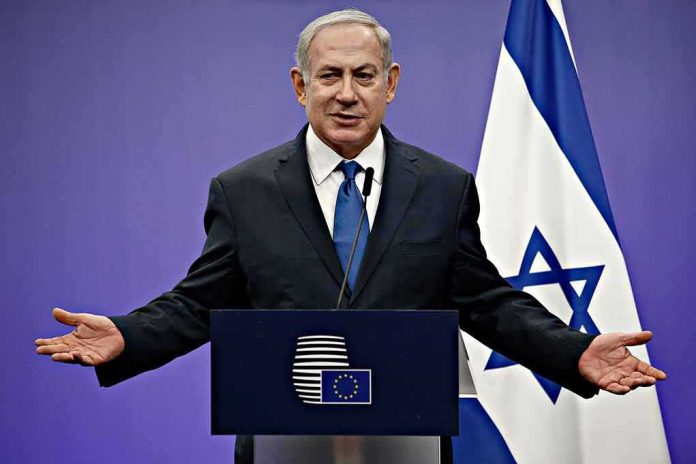
Benjamin Netanyahu walked into the United Nations promising to defend Israel’s soldiers and to confront a mayor who called him a war criminal, with an arrest warrant hanging over it all.
Story Snapshot
- Netanyahu vowed to “tell the truth” at the United Nations and to rebut New York City Mayor Zohran Mamdani’s claims.
- His speech slot at the United Nations General Assembly in New York was scheduled and public.
- The International Criminal Court issued an arrest warrant in 2024, raising the stakes of his visit.
- United States law and diplomatic immunity shielded him from a New York City arrest attempt, according to legal analysis.
What Netanyahu Said He Would Do At The United Nations
Reuters quoted Netanyahu on September 22 saying he was “coming to the United Nations” to “tell the truth about our heroic soldiers,” and to “tell the truth” about Mayor Zohran Mamdani. He accused Mamdani of supporting “Hamas terrorist monsters” and tied his defense to the October 7 attacks. The setup was plain: use the world’s biggest stage to defend the military and flip the charge back on his critic.
The timing mattered. The United Nations General Assembly gathers cameras, heads of state, and quick takes. That stage gives short lines a long life. Netanyahu’s promise signaled a speech built on clarity, not legalese: soldiers fought terrorists; critics sided with them; that was his frame. That approach fits a high-wire goal. Change the headline from “arrest warrant” to “defense of duty,” and do it in one prime-time shot.
Why New York Could Not Arrest Him
Calls to “arrest him at the airport” roared on social media, but city hall did not hold the keys. The United States is not a member of the International Criminal Court. Federal law preempts local action here. A head of government on an official visit also receives diplomatic protections that local police cannot pierce. A widely viewed legal breakdown made that clear and urged caution about claims of a surprise takedown in Manhattan.
That legal shield did not erase the politics. It sharpened them. Opponents could say immunity is not innocence. Supporters could say a foreign court hunts allies while giving terrorists cover. Both sides get a clean line to repeat. For Americans who value the rule of law, the balance is simple: due process beats mob justice, and foreign tribunals do not run New York streets. That is common sense and good civic order.
The Warrant That Shadowed The Speech
The International Criminal Court issued arrest warrants for Netanyahu and former defense minister Yoav Gallant on November 21, 2024, citing “reasonable grounds” to believe they bore responsibility for alleged war crimes and crimes against humanity in the Gaza war. The action was rare and symbolic. It placed a sitting leader of a key Western ally under formal suspicion, and it guaranteed that any speech would play against a hard legal backdrop.
The warrant does not prove guilt; it signals the court found a plausible case to investigate. That detail matters. It means a sweeping claim that all military conduct was justified will run into the court’s public findings. A smart defense focuses on duty, proportionality, and the chain of command. Critics point to civilian harm and intent. The truth will turn on facts the public has not fully seen, not on viral clips or sharp slogans.
The United Nations Stage And The Narrative Fight Ahead
Netanyahu’s New York slot was lined up days in advance, giving his team a runway to script the moment and the message. The speech’s likely aim was to lock three ideas in place: Israel fought a terror army after October 7; soldiers followed the law; and critics are grading Israel by a double standard. That last point resonates with many Americans who see global bodies treat allies and adversaries with different yardsticks.
Israeli Prime Minister Benjamin Netanyahu has condemned New York Mayor Zohran Mamdani ahead of his planned UN General Assembly appearance. The latest clash follows Mamdani’s renewed call for Netanyahu to face arrest over the International Criminal Court warrant. Mamdani has… pic.twitter.com/Qe18Uqybkt
— IndiaToday (@IndiaToday) September 22, 2026
Mayor Mamdani’s charge keeps the counter-story in view: treat the International Criminal Court like a normal court and push for arrest. He has echoed that line often, and national outlets amplified it. The political clash helps him, but the legal case does not live at city hall. It lives in filings, evidence packets, and testimony that only courts will sort. Until then, the United Nations remains a theater where narrative wins minutes while the law takes years.
Sources:
nypost.com, bbc.com, npr.org, theguardian.com