
New York City leaders agreed to end horse-drawn carriages by 2028 after a tourist’s death put safety beyond debate.
Story Snapshot
- A June 2028 phaseout follows a fatal Central Park crash tied to a runaway horse.
- City Council Speaker Julie Menin called carriages a growing public-safety liability.
- A Manhattan Borough President report logged 96 serious incidents and 40 horse deaths.
- The plan outlines worker transition help and bans horse sales to slaughter.
What City Hall Decided and Why It Landed Now
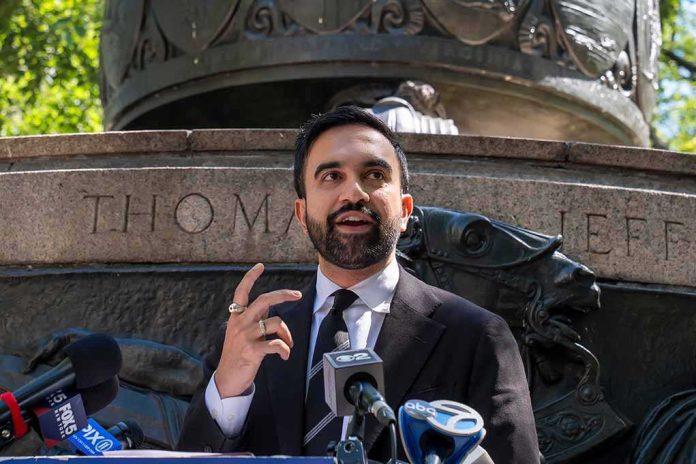
Mayor Zohran Mamdani and City Council Speaker Julie Menin reached a deal to phase out New York City’s horse-drawn carriages by June 2028, with legislation headed for a vote. The agreement moved after 18-year-old Romanch Mahajan died when a Central Park carriage horse bolted and the rider was thrown, according to police and local reports. Menin framed the policy as a safety measure as crowds and traffic around the park have grown denser. The phaseout sets a clear end date and a path to wind down operations.
The bill orders agencies to build a transition plan for workers by April 1, 2027. The plan includes job referrals, training, career counseling, and potential financial support. It also blocks any sale of former carriage horses to slaughterhouses and directs retirement or sanctuary placement. This approach follows a common-sense playbook: mitigate harm to families who relied on medallions and stables, and secure humane outcomes for the animals. Specific payouts and medallion values remain to be finalized, which keeps some anxiety alive.
The Safety Record and What Numbers Can—and Can’t—Prove
The Manhattan Borough President’s Office compiled evidence of 96 serious incidents and 40 horse deaths across years, drawing on scattered reports from city and private sources. The office admits there is no single, reliable public database to verify every case, which limits precision. Still, the record shows repeated collisions, horse collapses, and runaways. Newsweek also reported a 16-year-old carriage horse named Deniz died from eating Japanese yew, a highly toxic plant identified in a Cornell veterinary necropsy. That case spotlighted preventable exposure risks.
Supporters of a ban argue the fatal Mahajan crash revealed a basic control failure: a horse can spook in seconds, and the margin for error is thin when tourists, cyclists, and cars mix at park edges. Skeptics counter that one death does not make an industry unworkably dangerous without clear rates per ride or per mile. That point is fair as a statistic, but the policy question weighs not only averages. It weighs whether the city wants to accept low-frequency, high-consequence events in a family tourist setting.
Jobs, Medallions, and the Tradition Argument
Carriage drivers and the Transport Workers Union say this is a lawful, regulated small business with roots going back more than 150 years, and that many tourists still love the rides. They warn the ban could erase careers, crush medallion value, and threaten homes and family finances. The union says it pushed for tighter rules instead of a sweeping ban and criticizes the transition plan as thin on guaranteed money or placements. That concern should be taken seriously and addressed in the final bill text and fiscal note.
🔴 NYC to ban horse-drawn carriages by June 2028
Mayor Zohran Mamdani and City Council Speaker Julie Menin agreed to back legislation outlawing horse-drawn carriages, with a council vote expected next week. The ban takes effect June 2028.
"The horse carriage industry is coming… pic.twitter.com/RefhdsncgY— NewsTongue (@NewsTongueX) October 14, 2026
From a conservative, common-sense lens, government should not break small businesses lightly. If officials choose a ban, they owe owners clear, contract-like terms: who qualifies, what is paid, when payments arrive, and how job placement is measured. The current draft sketches intent but leaves room for doubt about medallion valuation and funding stability. City leaders should lock in enforceable protections so workers are not left holding the bag while the city banks the political win.
The Policy Shift: From Managing Risk to Removing It
New York has tried to manage carriage risks for decades with route limits, weather rules, hours, and insurance. The new deal marks a pivot from regulation to removal. That choice follows a tragic death, a record of injuries, and persistent welfare disputes. The safety rationale rests on a simple premise: a spooked thousand-pound animal in a tourist zone is a non-negotiable hazard. If the council finalizes the vote, the question moves from should we end carriages to how we honor workers and horses on the way out.
Sources:
facebook.com, abcnews.com, politico.com, nytimes.com, nbcnewyork.com, nydailynews.com, cnn.com, ny1.com, pix11.com, manhattanbp.nyc.gov