
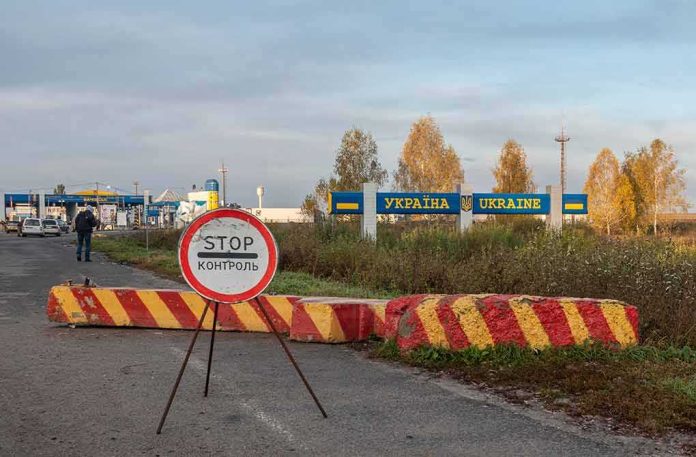
Poland’s leader warned that Russia’s next moves could reach Polish soil, and people on the border are acting like it.
Story Snapshot
- Prime Minister Donald Tusk said Russia will intensify actions and may target Polish border crossings.
- Residents near Ukraine got multiple alerts in one day about possible drones or missiles crossing over.
- A Russian strike landed less than a mile from Poland, raising the stakes on the frontier.
- Poland tightened coordination among troops, police, border guards, and customs officers.
Warnings Move From Rhetoric To Sirens
Polish Prime Minister Donald Tusk said Poland expects Russia to target border crossings with Ukraine as Moscow tries to choke trade and pressure Kyiv’s economy. He added that recent weeks would bring “very intensive actions” and that escalation could touch Polish territory. Residents on the frontier already felt the shift. Phones lit up three times in one day with alerts to watch for drones or missiles that might cross the line and to be ready to shelter.
Ukrainian officials reported a Russian drone strike near Yahodyn that hit less than a mile from Poland. Polish border authorities confirmed that proximity, which sharpened local concern even more. Tusk said Polish and Ukrainian services worked overnight to avert a direct threat to a crossing, a sign of round-the-clock coordination at the edge of the war. Poland also scrambled jets and issued regional alerts as part of a broader precaution posture.
Border Towns Adjust Daily Life Around Alerts
Communities like Dorohusk on the Polish side now watch the sky at night and keep a mental map of basements. People who once checked weather apps now track air alerts. Shops keep radios on low to catch warnings. Parents plan pickup routes near shelters. None of this is panic. It is a checklist. It reflects the new normal along a border where a drone can cross faster than a weather front and where seconds matter more than debates on television.
Local police coordinate with border guards and volunteer firefighters. Mayors test sirens and share simple rules that save lives: head inside, stay away from windows, and wait for the all clear. Truckers at crossings ask where to go if a strike hits a queue. Border medics now stage tourniquets next to thermometers. These small steps add up. They help a scattered line of farm towns act like a single safety net when minutes count.
What “Gray Zone” Pressure Looks Like Up Close
NATO describes Russia’s pattern along the eastern flank as steady testing—airspace brushes, drone probes, and pressure near borders—that risks miscalculation and raises danger. Analysts frame it as “gray zone” activity meant to unsettle daily life and stretch defenses without a declared war. Poland’s answer is classic deterrence and hard-nosed common sense: build layered defenses, link civil and military responders, and cut reaction time to as close to zero as possible. That is not escalatory; it is prudent.
A Starlink station serving Ukraine’s military was set on fire in Poland. Prosecutors suspect Russia ordered the attack. Denmark now rates the risk of a limited Russian attack on NATO as “low but growing,” though NATO, US and Estonia downplay the threat. https://t.co/D9hkgqbIjH
— Anonymous (@YourAnonCentral) September 27, 2026
Poland’s government ordered tighter teamwork among soldiers, police, border guards, and customs officials after strikes near the frontier. The goal is speed and clarity when alerts hit, with one playbook and clear lines of command. This fits the wider Alliance stance: reinforce the line, reduce gaps, and deny Russia easy wins that could test the North Atlantic Treaty Organization’s will. Freedom demands vigilance, and on this border, vigilance has a schedule and a siren.
Why This Matters Beyond One Border Crossing
Trade routes through Poland are lifelines for Ukraine. Hitting crossings would slow aid, raise costs, and test nerves. Tusk’s warning that Moscow aims at trade to weaken Kyiv spells out the logic. A strike that lands meters from Poland also risks a fast chain reaction. That is why alerts must work, fighters must scramble, and civilians must know the drill. Clear rules and strong borders keep small incidents from becoming big crises. That is basic common sense and sound defense.
Ground Truth: Resolve, Restraint, And Readiness
Poles on the frontier are not asking for drama; they want working sirens and quick answers. The state’s job is to keep order, protect trade, and make sure families can sleep when the alerts stop. The West should see this for what it is: a test of patience and will, not a search for glory. Russia pushes at the seams. Poland is stitching them tighter with planning, drills, and calm resolve. That steadiness, more than any speech, is what deters the next shove.
Sources:
youtube.com, kmbc.com, english.aawsat.com, aa.com.tr, reuters.com, pravda.com.ua, belfercenter.org