Seattle’s homelessness crisis didn’t suddenly “explode” in 2026—what exploded was the patience of residents watching disorder become normal.
Quick Take
- King County’s 2024 Point-in-Time count recorded 16,868 people experiencing homelessness, a sharp jump that predates Seattle’s new mayor.
- Mayor Katie Wilson’s early-term push includes a $5 million proposal for 500 tiny home units, moving through the Seattle City Council.
- Encampment removals in parks, including in Beacon Hill, have become flashpoints over public space, safety, and compassion.
- Housing costs and governance fragmentation sit beneath the street-level reality of addiction, mental illness, and open-air drug use.
The “Socialism” Label Hooks Attention, but the Timeline Tells the Harder Truth
Fox’s framing of Seattle’s new mayor as “socialist” works because it gives frustrated people a simple villain for a complex breakdown. The available data refuses to cooperate with that simplicity. King County’s homelessness surge registered before Mayor Katie Wilson took office, with the 2024 count showing 16,868 people experiencing homelessness. That gap between political branding and measurable trend is where serious readers should focus.
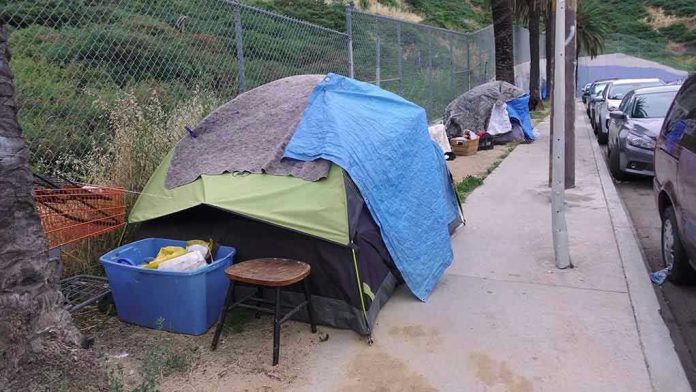
Seattle’s street disorder now functions like a live-feed referendum on leadership. Residents see tents hardening into semi-permanent clusters and drug use migrating into parks, sidewalks, and transit-adjacent corridors. Businesses see fewer customers and more security costs. Parents see playgrounds turned into no-go zones. Those daily visuals drive politics, because they feel like proof that the city’s systems stopped enforcing basic standards.
What Actually Changed: More Money, More Agencies, and Less Accountability
Seattle has spent heavily, including a reported $118.93 million commitment tied to the 2024 homelessness response. Yet funding alone does not create capacity, coordination, or consequences. In 2022 the city shifted most homelessness funds to the King County Regional Homelessness Authority, a regional structure meant to unify strategy. Regionalization can reduce duplication, but it also gives everyday residents a new problem: nobody can clearly answer who owns failures.
That accountability vacuum shows up during controversies over encampment removals. When city crews clear a park, critics argue the sweep just moves suffering down the road. When the city delays, neighbors argue officials have surrendered public spaces. The push-pull turns every decision into an outrage cycle, which helps activists fundraise and helps politicians campaign, but leaves families, businesses, and vulnerable people stuck in the same loop.
Mayor Wilson’s Tiny Homes Push: A Fast Tool, Not a Full Strategy
Wilson’s proposed $5 million expansion for 500 tiny home units has advanced through the City Council’s finance process, with a full vote expected. Tiny homes solve one urgent problem: speed. They can move people out of tents faster than traditional construction and often pair with case management. For residents demanding visible change, that matters. For skeptics, it also raises the harder question: what happens after placement, and what standards apply?
Tiny home villages can stabilize people who want help, but they cannot substitute for a working public order framework. Seattle’s most bitter debates hinge on whether the city will set enforceable boundaries: parks remain for families, sidewalks remain passable, public drug use triggers intervention, and repeat refusal of services has consequences. Conservative common sense respects compassion, but it also insists the first civil right is the right of ordinary people to safely use their own city.
Housing Costs Drive the Math, but Addiction Drives the Daily Fear
Researchers and city-facing reports often point to housing costs as the upstream driver. Seattle’s rent growth and long-term affordability squeeze help explain why West Coast cities show far higher homelessness rates than cheaper metros with similar poverty or opioid exposure. That’s the “math.” The “mood,” though, comes from street-level chaos: untreated addiction and mental illness turning public spaces into open-air triage zones with no clear rules.
Residents can accept that housing costs matter while still rejecting the idea that public drug use is simply a byproduct of rent. Those are different problems requiring different tools. Housing supply and affordability take years; public safety and behavioral health triage require daily execution. When a city blurs those lines, it effectively tells taxpayers: tolerate disorder now, and trust us on long-term solutions later. That bargain collapses when conditions visibly worsen.
Beacon Hill Sweeps and the Fight Over Public Space
Encampment removals in Beacon Hill parks illustrate why this issue stays politically radioactive. A park is a public asset, not a negotiable privilege. Allowing long-term camping turns shared space into contested space, and contested space breeds conflict. Clearing a park without strong follow-through can just relocate people and recreate the camp elsewhere. Clearing a park while offering credible alternatives at least reasserts a baseline: the city still governs.
Seattle’s crisis also carries a painful moral asymmetry. The housed public experiences fear, anger, and loss of access; the unhoused experience exposure, victimization, and addiction. Adults over 40 recognize the trap: a system can be both compassionate in intention and catastrophic in results. The ethical test becomes practical: does policy reduce human suffering in measurable ways, or does it mainly reduce political pressure through endless process?
The Next 100 Days Will Decide Whether Seattle Relearns “No”
Mayor Wilson’s first stretch in office lands in a city already primed for backlash. Visible disorder creates a demand for rules, not slogans. Seattle can expand shelter and tiny homes, invest in treatment, and push housing production while still enforcing basic standards in parks and on sidewalks. That balance aligns with conservative values: personal responsibility paired with real help, plus clear expectations for public behavior.
If Seattle refuses to relearn “no,” it will keep relearning the same lesson: residents eventually stop debating policy details and start voting based on lived experience. Data from 2024 already showed the trajectory worsening. Without transparent accountability between the mayor, the city council, and the regional authority, every new dollar will feel like a ransom payment—and every new encampment will feel like proof that nobody is in charge.
Sources:
Addressing Homelessness – Seattle Human Services
Homelessness in Seattle – Wikipedia
The Rise of Socialism: Seattle mayor takes heat as homelessness, drug use spiral
King County Regional Homelessness Authority