A driver in Bangor, Maine, allegedly aimed a car at a journalist on public property and missed by feet, not inches.
Story Snapshot
- The Maine Wire says reporter Joe Sokol was filming near a methadone clinic when a driver confronted him.
- Editor Steve Robinson called it an attempted killing and interference with journalism.
- Bangor police responded and are investigating, according to the outlet.
- Sokol recorded the license plate moments after the encounter, the outlet reported.
What Happened Outside the Bangor Treatment Center
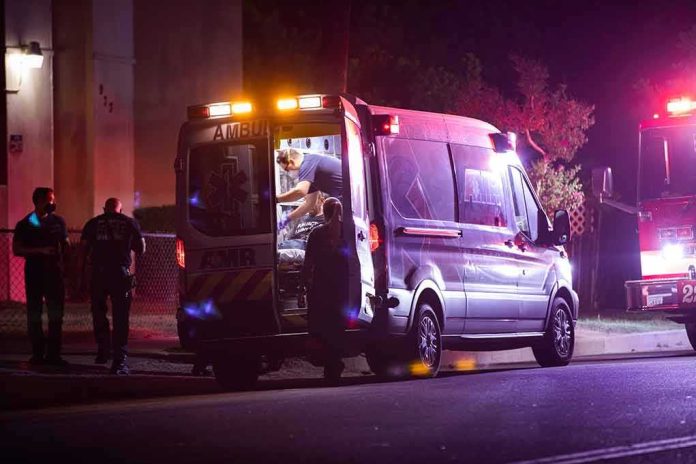
The Maine Wire reported that its journalist, Joe Sokol, was filming from public property outside Bangor Comprehensive Treatment Center at 689 Odlin Road. The outlet says a driver confronted Sokol during his reporting on the clinic’s methadone program and then attempted to strike him with a vehicle. The outlet’s account states the video it published shows the moment the car lunged toward him. Editor Steve Robinson said the driver identified Sokol as a journalist before the escalation.
Bangor police arrived after the incident and began an investigation, according to The Maine Wire. The outlet also reported that Sokol recorded the vehicle’s license plate immediately afterward and described it as Maine registration 841-LZD. Those steps match basic evidence preservation: document the scene, note identifiers, and contact law enforcement. The outlet framed the episode as a direct attack on a reporter doing his job on public ground near a medical facility.
The Outlet’s Framing and the Words That Raise the Stakes
Editor-in-Chief Steve Robinson used sharp language that signaled serious intent. He said the driver aimed to stop a journalist from reporting and called the act “attempted killing.” That charge uses moral clarity to draw a line around press freedom and public safety. Based on the facts reported, the behavior described is not a parking-lot spat; using a car against a person is a deadly-force scenario by common sense and American conservative values that prize order and accountability.
The Maine Wire’s description also connects place and purpose. Sokol was assigned to cover the clinic’s operations and the scene unfolded right there. That link matters because it suggests motive tied to reporting, not a random road-rage encounter blocks away. The outlet says the video “clearly captures the event,” which suggests visual corroboration for the lunge and the reporter’s quick reaction to avoid harm. One caveat applies: police have not released further details at this time, per the outlet’s account.
Why This Incident Resonates Beyond One Parking Lot
This report lands in a climate where journalists face threats and harassment during routine work. A 2024 report from the International Women’s Media Foundation found 36 percent of surveyed U.S. journalists had been threatened with or experienced physical violence while working. Those numbers show the job brings real risk, even outside hot zones or protests. Most days pass without violence, but the share who have been targeted is large enough to take each close call seriously.
Joe Sokol, a reporter from the Maine Wire, was filming a story on a local methadone clinic, the Bangor Comprehensive Treatment Center, that has received the following amounts of taxpayer dollars from Medicaid ⬇️ when someone tried to kill him via a vehicle ramming attack this… https://t.co/z7eNmZYrvT
— Mrgunsngear (@Mrgunsngear) October 1, 2026
Vehicle attacks on journalists are less common than online abuse or shoving. Yet when a car moves at a person, the margin for error is zero. A driver does not need a weapon to create lethal force; the vehicle is the weapon. That is why fast police response and evidence capture matter. The reported video, the license plate record, and the specific location facts form a core set of details that authorities can test against witness accounts and any nearby surveillance.
What Accountability Should Look Like Now
Police should review the outlet’s footage frame by frame and obtain any business camera recordings from the clinic and nearby lots. Investigators should interview the driver and any bystanders who heard the exchange about Sokol’s role as a reporter. If facts support intent or reckless conduct, charges should follow. That is not a media privilege; it is equal protection under the law. A civil society cannot allow vehicles to become tools to silence speech on a public sidewalk.
Conservatives often say sunlight is the best disinfectant and law and order is nonnegotiable. Both apply here. A journalist on public property is not a threat; he is a witness for the rest of us. If someone tried to shut that witness up with a two-ton machine, the answer is not a shrug. The answer is enforcement, deterrence, and a clear message that the First Amendment lives in the open air, not only in a newsroom.
Sources:
thegatewaypundit.com, themainewire.com