A 15-year-old boy bled out on a packed rush-hour subway car while terrified commuters watched helplessly, the eighth transit homicide in a system spiraling into chaos.
Story Snapshot
- Jayjon Burnett, 15, was shot in the chest on a moving A train in Queens during Friday rush hour after a street dispute escalated between teen groups
- Suspect Keyondre Russell, 18, arrested Saturday and charged with murder following video evidence review by NYPD
- The killing marks the eighth MTA homicide this year and the fourth in just two weeks
- Good Samaritans dragged the dying teen onto the platform where police performed CPR before he was pronounced dead at a hospital
- The Far Rockaway station locked down for seven hours, disrupting service as investigators combed the scene
When Arguments Turn Deadly on Moving Trains
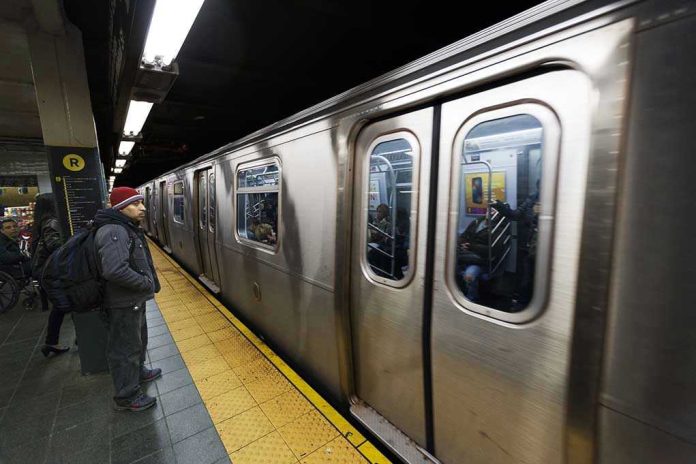
The confrontation began on the streets of Far Rockaway, a residential Queens neighborhood where afternoon commuters and students mix in predictable rhythms. Two groups of teens carried their beef onto the southbound A train around 3:47 p.m., the argument simmering as the train rolled toward the terminal station at Mott Avenue. Just before 4 p.m., as the car filled with rush-hour passengers, 18-year-old Keyondre Russell allegedly pulled a gun and fired once into Jayjon Burnett’s chest. The train kept moving while the boy collapsed, blood spreading across the floor as strangers scrambled to help.
Bystanders hauled Burnett onto the platform at Far Rockaway-Mott Avenue, where patrol officers immediately began CPR. Paramedics rushed him to a hospital, but the single gunshot proved fatal. The station went into lockdown for seven hours while detectives processed evidence and reviewed surveillance footage. NYPD officials quickly determined the shooting was not random violence, it was the culmination of a dispute that started blocks away and followed both groups onto public transit, turning a crowded train into a crime scene.
The Disturbing Pattern Behind the Numbers
Burnett’s death represents more than a single tragedy. The MTA system recorded eight homicides by the time of this shooting, with four occurring in the two weeks prior through a mix of stabbings and gunfire. Every case resulted in an arrest, demonstrating NYPD’s ability to solve transit murders even as they fail to prevent them. The trend points to escalating teen violence, often tied to gang disputes that migrate from street corners onto subway platforms and into train cars packed with innocent commuters just trying to get home.
Earlier this year, a Bronx shootout at the Mount Eden station killed 35-year-old Obed Beltran-Sanchez and wounded five others, including victims aged 14 to 71, when rival gang members opened fire. Police charged a 16-year-old and 15-year-old in that incident. Additional shootings at the 167th Street station and Concourse platform involved teenagers, underscoring how young perpetrators now view the subway as an extension of street territories. The common thread is brazen disregard for bystander safety and the assumption that crowded public spaces offer cover rather than deterrence.
Video Evidence and Rapid Justice
MTA Transit President Richard Davey emphasized the urgency of downloading surveillance footage immediately after the shooting, highlighting how the system now depends on cameras to identify perpetrators after violence erupts. The NYPD used video and witness statements to pinpoint Russell within hours, arresting him Saturday and parading him out of the 101st Precinct around 6 p.m. for the media. He faces murder and criminal weapon possession charges. The swift arrest follows a pattern where every MTA homicide this year ended with a suspect in custody, yet the arrests do little to ease commuter fear when attacks keep happening.
The reliance on reactive technology rather than proactive deterrence raises questions about transit security strategy. Cameras capture crimes but do not stop armed teens from boarding trains or carrying disputes across multiple stops. Commuters witnessed Burnett’s final moments and watched good Samaritans attempt to save him, a scene no amount of video surveillance can erase from their memories. The seven-hour station closure disrupted evening service, imposing economic costs on the MTA and inconvenience on thousands of riders who had nothing to do with the violence.
A Community in Shock Over Lost Youth
Far Rockaway resident Ray Jay Durand captured the community’s anguish in a simple statement: “He’s only 15.” That sentiment resonates beyond one neighborhood. Jayjon Burnett had his entire life ahead of him, cut short by an 18-year-old with a gun and a willingness to use it on a crowded train. The victim’s family now mourns while Russell awaits trial, and commuters board the same A line wondering if the next argument will erupt into gunfire. The incident erodes public confidence in subway safety at a time when New York officials promote mass transit as the lifeblood of the city’s economy and mobility.
The political pressure mounts as four deaths in two weeks force city leaders to confront uncomfortable truths about youth violence, illegal firearms, and the limits of policing in a system carrying millions daily. Calls for increased patrols, metal detectors, and funding for surveillance technology will likely intensify, but these measures address symptoms rather than root causes. Teen disputes that escalate from streets to trains suggest deeper failures in conflict resolution, community intervention, and consequences for carrying weapons. Arresting suspects after bodies fall offers justice but not prevention, a distinction lost on no one riding the A train through Far Rockaway today.
Sources:
Bronx subway shooting: Teen suspect Mount Eden
Teen arrested in connection with NYC subway shooting that killed 1, wounded 5
NYPD: 15-year-old boy shot on Concourse subway platform, man charged