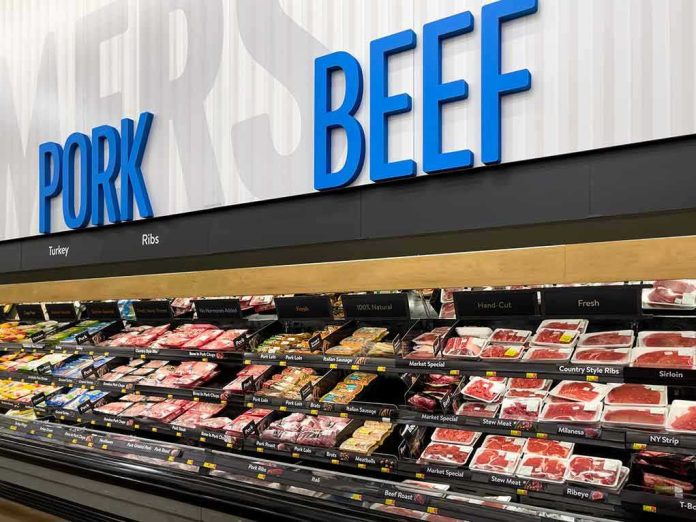
The sticker shock in the meat aisle this Memorial Day is not a holiday anomaly; it is the price tag on years of quiet damage to America’s cattle herd.
Story Snapshot
- Beef prices are hitting record or near-record highs just as grill season begins, driven mainly by a historically small cattle supply.[3]
- Years of drought, high feed and fuel costs, and expensive credit have pushed ranchers to shrink herds and slaughter more animals early.[3]
- Strong, steady demand for meat means shoppers keep buying, even as prices rise, while pork and chicken stay relatively cheaper.[2][3]
- Conservative common sense points to long-term policy and market distortions, not just greedy grocers or one holiday weekend, as the root of the problem.[3]
Why Your Memorial Day Steak Suddenly Costs Like a Luxury Item
Beef lovers walking into the grocery store this weekend are colliding with a story that has been building for years, not weeks. Retail beef prices are hovering near record highs, with many common cuts sharply more expensive than last grilling season.[3] Reporters on local and national outlets keep repeating the same uncomfortable statistic: the United States cattle herd has fallen to its smallest size in roughly three quarters of a century.[3] That shrinking herd, not a sudden collective craving for burgers, sits at the center of the surge.
Ranchers did not cut herds because they lost interest in raising cattle; they did it because the math stopped working. Prolonged drought baked major cattle states, drying up pasture and forcing producers to buy expensive feed or sell animals early.[3] At the same time, fuel, transportation, labor, and equipment costs climbed, and higher interest rates made it more painful to borrow for land, feed, or machinery.[1][3] A lot of ranch families chose survival over expansion, liquidating cows that should have been the next generation of calves.
The Supply Squeeze You Cannot Fix With Coupons
Cattle are not widgets. You cannot flip a switch in January and have more ribeye ready by Memorial Day. When ranchers shrink herds, the consequences last for years because rebuilding takes time. To grow again, producers have to hold back female animals for breeding instead of sending them to slaughter, which means less beef in the short term and higher prices as consumers compete over a smaller pool of meat.[3] That biological lag is why today’s prices reflect yesterday’s drought and policy choices more than this weekend’s cookout plans.
Television segments that interview shoppers staring at ten-dollar-per-pound ground beef capture the symptom but not the disease.[2][3] Holiday demand does add pressure; more people gather, grill, and spend. But analysts consistently point back to structural factors: fewer cattle on the ground, disrupted imports, and elevated production costs.[1][3] The Iowa Cattlemen’s Association, for example, cites tariffs, interest rates, and earlier drought as major ingredients in this price stew.[1] When supplies are tight before the holiday rush even begins, the Memorial Day spike stops looking like the main culprit and starts looking like the match tossed on dry grass.
Demand Is Strong, But It Is Not the Villain
Consumers, for their part, have not exactly abandoned meat. Industry reporting shows Americans still treat beef as the centerpiece of the plate, even when medical elites and diet fads wag a finger at red meat.[2] Surveys and sales data point to robust meat purchases, with most households continuing to buy protein regularly.[2][3] A recent analysis highlighted that meat sales in general hit record levels, a sign that, while people grumble, they still place steak and burgers in the cart when they can find room in the budget.[2]
Beef prices are near record highs heading into Memorial Day weekend due to low cattle supply and high demand, pushing consumers toward budget-friendly grilling alternatives. https://t.co/ID9h1LuXiN
— ConsumerAffairs (@ConsumerAffairs) May 22, 2026
From a conservative, common-sense standpoint, strong demand for a culturally valued food is not a problem to “fix”; it is a sign of a healthy preference for nutrient-dense protein. The real concern arises when families willing to work and budget still find basics edging into luxury territory. That is where government-imposed costs, questionable trade decisions, and years of monetary policy show up in the grocery bill. When feed, fuel, compliance, and credit all carry a policy premium, the final price of beef naturally climbs.[1][3]
Imports, Market Power, and the Politics of Your Burger
Some coverage points toward import policy and packing-house concentration as additional pieces of the puzzle. Trade decisions have tightened foreign beef flows at times, while border disruptions reduced the number of feeder cattle crossing into the United States.[3] Meanwhile, a handful of giant processors handle the vast majority of slaughter and packing, and they have already faced lawsuits and settlements over alleged supply manipulation. Those facts make consumers understandably suspicious that someone between the ranch and the register might be doing more than simply passing along higher costs.
The truth probably frustrates both conspiracy theorists and bureaucrats: markets here reflect multiple stress points hitting at once. Herds shrank because of drought and bad economics. Costs rose thanks in part to energy and regulatory burdens. Imports and tariffs nudged supplies around the margins. Big packers operated with the kind of market share that always invites scrutiny.[3] Against that backdrop, Memorial Day demand becomes an accelerant, not the spark. That is the multi-layer story hiding behind a single nasty number on the meat case label.
What Shoppers Can Do While Washington Argues
Households staring down high beef prices have more power than they think, even if they cannot make it rain on Texas rangeland. Many butchers still run specials on less glamorous cuts that grill beautifully with a little technique: chuck roasts sliced into steaks, sirloin tips, or marinated round.[3] Pork and chicken remain notably cheaper per pound, providing relief valves for the family budget.[2][3] Mixing ground beef with ground pork or beans, stretching stews, and buying larger cuts to portion at home can blunt the shock.
At a deeper level, voters who prefer self-reliance over central planning should pay attention to which policies make it harder, not easier, to raise cattle in America. Sensible water management, stable energy policy, and a lighter regulatory touch give ranchers room to rebuild herds without begging Washington for subsidies. Markets work best when families, not bureaucrats or monopolies, decide what lands on the grill. If we want future Memorial Days where steak feels normal again, the path runs through freer producers and sounder policy, not wishful thinking about holiday sales.
Sources:
[1] YouTube – Beef prices reach record highs before Memorial Day weekend
[2] YouTube – Beef prices hit all-time highs ahead of Memorial Day
[3] Web – Beef prices soar as Americans prepare for Memorial Day cookouts