Marco Rubio’s testimony on Iran puts the central American dilemma in plain sight: stop Tehran from getting a bomb, or accept that the margin for error keeps shrinking.
Quick Take
- Rubio told the House Foreign Affairs Committee that Iran should not be allowed to enrich uranium and linked that capability to weaponization.[1]
- He framed the policy as part of a larger promise to protect peace abroad and security at home.
- The hearing record supplied here is more revealing for what it shows than for what it omits: a hard line on enrichment, but little evidence of a fully aired House-floor debate over alternatives.[1][5]
- The wider Iran debate still turns on one technical distinction that politicians love to blur: civilian enrichment versus weapons-relevant breakout capacity.[1]
Rubio Draws a Bright Line on Enrichment
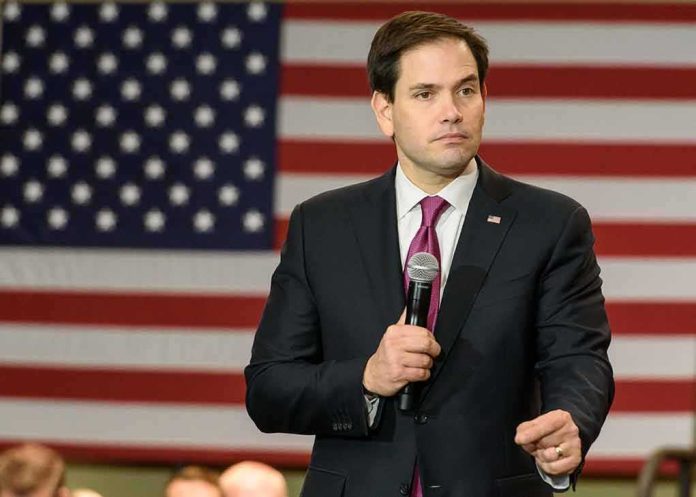
Rubio’s clearest statement came during his House Foreign Affairs Committee testimony, where he said Iran should not be allowed to enrich uranium and agreed that an acceptable deal would be one in which Iran cannot enrich because enrichment can be weaponized.[1] That is not a casual talking point. It is a policy boundary. Once a senator or secretary of state draws that line, every later negotiation, sanction, and ceasefire proposal gets measured against it.
He reinforced that position with the broader warning that Iran will never have a nuclear weapon and that maximum pressure remains part of the U.S. toolkit to keep it that way.[1] In the same hearing, Rubio tied sanctions and leverage to the larger objective of forcing Tehran away from the nuclear path.[1] For conservative readers, the logic is familiar: deterrence works better when it is visible, credible, and backed by consequences instead of wishful diplomacy.
What the Hearing Record Actually Shows
The supplied record does not show a clean, fully developed House exchange in which opponents methodically challenge Rubio’s Iran policy point by point.[2][3][5] Instead, the available materials are a patchwork of committee testimony, budget questioning, and separate public remarks.[3][4][5] That matters because the shape of the evidence limits how far anyone should push the storyline. The strongest documented fact is Rubio’s own stance, not a complete adversarial test of it.
That absence does not weaken the significance of the testimony. It actually sharpens it. When a top diplomat repeats that Iran must never get a nuclear weapon and that enrichment itself is unacceptable, he signals the administration’s default posture before the next round of bargaining begins.[1][6] In Washington, those words are not background noise. They are a negotiating marker, a warning to allies, and a signal to adversaries who try to read American hesitation as permission.
The Bigger Iran Debate Behind the Sound Bite
The dispute around Iran has always been less about slogans than about thresholds. The technical fight centers on whether any enrichment can be monitored and capped, or whether any enrichment at all creates a shortcut to weapons capability.[1] Rubio’s answer is the harder one: no enrichment, no ambiguity, no threshold status.[1] That position aligns with the most skeptical reading of Tehran’s intentions and leaves little room for trust-based diplomacy.
That is also why the issue keeps returning to Congress. Lawmakers know sanctions can punish, but they also know sanctions alone rarely end a nuclear program unless the target believes the pressure will keep getting worse.[1][4] Rubio’s testimony reflects that logic with unusual clarity. He treats coercion not as an emotional response but as leverage inside a larger strategy, the kind of strategy that appeals to voters who prefer hard limits over diplomatic theater.
Why the Story Matters Now
Rubio’s testimony arrives at a moment when Iran policy is being judged less by theory than by risk management.[3][6] If the administration believes a nuclear-armed Iran would destabilize the region and threaten the United States directly, then every concession becomes expensive.[1][6] If opponents believe controlled enrichment can be contained, then every refusal looks like an avoidable escalation. The hearing crystallizes that choice without settling it.
The real takeaway is not that Rubio discovered a new doctrine. It is that he stated the old doctrine with fresh urgency at exactly the moment when urgency matters most.[1] That makes the testimony politically useful and strategically revealing. It tells allies what Washington expects, tells Iran where the red line sits, and tells Congress that the administration intends to keep the pressure on unless Tehran changes course.
Sources:
[1] YouTube – LIVE: Marco Rubio testifies before House panel for first time since …
[2] YouTube – TOP MOMENTS FROM MARCO RUBIO’S TESTIMONY TO …
[3] YouTube – Secretary Rubio testifies before the Senate Committee on Foreign …
[4] YouTube – Secretary Rubio testifies before the House Foreign Affairs Committee
[5] Web – Marco Rubio Confirmation Hearing Secretary of State – Rev
[6] YouTube – Secretary of State Marco Rubio testifies before Senate panel