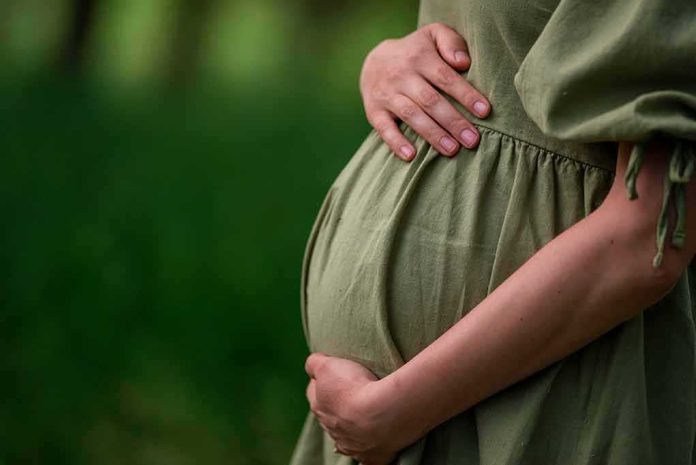
One pregnant Haitian woman in Florida is now hiding because the end of Temporary Protected Status has turned her daily life into a deportation risk.
Story Snapshot
- A 29-year-old expectant mother told CBS News she is staying out of sight after the White House ended Temporary Protected Status for more than 300,000 Haitian nationals.
- She said she lost her job when her legal protection expired and now expects her health insurance to run out soon.
- CBS News reported that United States Immigration and Customs Enforcement planned to ramp up arrests and deportations of Haitian migrants as the deadline approached.
- Her case reflects a wider fear inside South Florida’s Haitian community, where pregnant women worry about care, work, and safety at the same time.
How a Legal Deadline Became a Personal Crisis
The woman at the center of the CBS report is six months pregnant and already living with a high-risk pregnancy. She said she now leaves home only for urgent doctor visits, and even that feels risky. The loss of Temporary Protected Status means more than paperwork to her. It means the loss of work authorization, a paycheck, and, soon, the health coverage that once helped protect her pregnancy.
CBS News said she is “in hiding” because she fears deportation at any moment. The same report said she had held Temporary Protected Status until the Trump administration ended the program after a long legal fight. That detail matters because it shows how quickly a policy shift can reach into a family’s most private space. A woman preparing for childbirth is now thinking like someone being hunted by a deadline.
Why Pregnancy Raises the Stakes
Pregnancy changes the meaning of deportation fear. A person can sometimes delay a move, a job search, or a trip. A pregnancy does not wait. The CBS reporting says the woman began avoiding unnecessary outings as her legal status collapsed. Another CBS report from South Florida said a separate Haitian woman, also 29, was six months pregnant with a high-risk pregnancy and feared what the loss of protection would mean for her and her baby.
That fear is not limited to one household. Haitian communities in Florida have been under pressure as legal protections narrowed and uncertainty spread. Some families now worry about losing work, while others worry about leaving home at all. For pregnant women, that anxiety lands in the worst possible place: the doctor’s office, the pharmacy, and the hospital door.
A Broader Pattern of Fear Around Medical Care
The deeper story is not just deportation. It is what deportation fear does to medical behavior. United Nations human rights experts warned in 2023 that fear of removal may stop Haitian migrant women from seeking health care and put their lives at risk. United Nations reporting in 2025 again described vulnerable Haitian mothers and infants being deported in the Dominican Republic, showing how quickly immigration pressure can become a health crisis.
Haitian pregnant woman in Florida fears deportation as TPS ends: "I've been in this country most of my life" https://t.co/iWwRcYOY2l
— CBS News (@CBSNews) August 9, 2026
That broader pattern gives the Florida story its force. When people believe a clinic visit could lead to detention, they wait too long. They skip checkups. They push through pain. Advocacy reporting on Haitian women in the Dominican Republic described mothers avoiding hospitals and even giving birth in unsafe settings because of deportation fears. The setting is different, but the human reflex is the same: hide first, seek care later.
The Policy Fallout in South Florida
CBS News reported that roughly 330,000 Haitians nationwide could lose legal protections as the order takes effect, leaving thousands of South Florida families exposed to what comes next. Another CBS report said the woman in hiding had already lost her job because her status expired and now faced the end of her insurance. That combination is devastating. It strips away income, legal stability, and medical access at the same time.
This is why the story resonates beyond one pregnancy. It shows how immigration policy can move from a federal announcement to a kitchen table crisis in a matter of days. For Haitian families, the end of Temporary Protected Status did not stay in Washington. It landed in bedrooms, clinics, and workplaces across Florida. And for one pregnant woman, it landed as a simple question with no easy answer: stay hidden, or step outside and risk everything.
Sources:
cbsnews.com, nytimes.com, ohchr.org, news.un.org, theconversation.com, americansagainstice.org, oas.org, youtube.com