
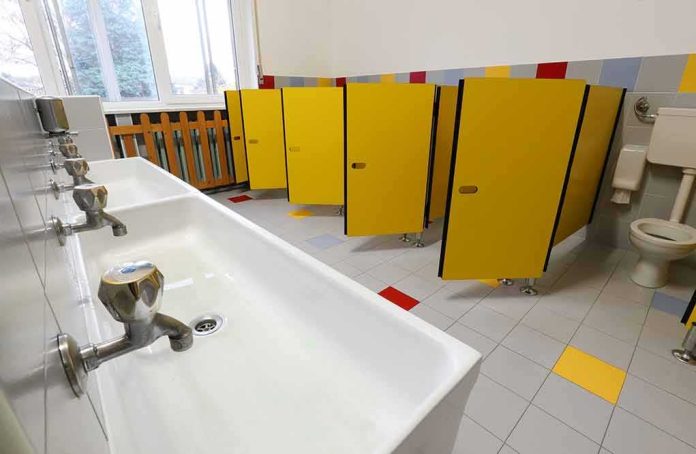
Dallas–Fort Worth International Airport will add two dedicated ablution stations in Terminal D restrooms, a small private project that sparked a big reaction.
Story Snapshot
- Texas filing shows one men’s and one women’s ablution station in Terminal D restrooms.
- Reporting says the goal is ritual washing and drier, safer restroom floors.
- The work is described as privately funded, not a large public project.
- DFW added two chapel-adjacent ablution stations in 2019 near Terminal D.
What DFW Actually Filed And Plans To Build
State records list a renovation in Terminal D that adds one men’s and one women’s ablution station inside existing concourse-level restrooms. The Texas registration is the public backbone here, and it fixes the scope to two stations, not a terminal-wide overhaul. A project tracker that mirrors the filing repeats the same count and location. It also labels the work private in funding and purpose, which aligns with a narrow facilities upgrade, not a taxpayer build-out.
Props to City of Dallas, TX / DFW Airport and Texas Department of Licensing and Regulation…Islamic ablution wudu stations in Terminal D restrooms will hopefully decrease washing in airplane restrooms! pic.twitter.com/xyPHk3F9xI
— Name is Tinna (@nameistinna) August 13, 2026
Local reporting states the stations will offer a set place for ritual washing before prayer. It also says the design aims to cut water on floors and around sinks when travelers try to wash at regular fixtures. That intent is plausible for any high-traffic restroom. Proper drains and a low-basin design can keep more water where it belongs. The record does not include engineering memos or injury logs, so the safety benefit remains a stated aim rather than a measured result.
This Is Not DFW’s First Wudu-Capable Facility
Airport history matters. In 2019, DFW announced upgrades to the Terminal D interfaith chapel, including two ablution stations next to the chapel for ritual purification. The airport chaplaincy also lists the Terminal D chapel location after security near Gate 40, which matches the pattern of prayer space in that terminal. The new plan places stations inside public restrooms rather than next to the chapel. That shift moves the function from a niche room to a mainstream facility doorway.
Critics may call that redundant. They are not wrong to ask whether existing chapel-adjacent stations already meet demand. Supporters can counter that public restrooms are closer to gates and open to all travelers on tight connections. Both views share one hole: no one has produced usage counts, wait times, or passenger surveys to prove or disprove need. Until the airport releases data, claims about demand are more cultural than empirical.
Funding, Scale, And What It Says About Priorities
The record describes the project as privately funded. That point undercuts claims that broad taxpayer funds are driving a religious build-out. The regulatory and project-tracker notes also frame the work as a small, targeted renovation, not a capital program that reworks a terminal. A modest scope with private dollars reads as accommodation for a known traveler practice, similar to nursing rooms or bottle-fill stations. The practical test is simple: does it keep water off floors and speed people through restrooms safely?
Dallas-Fort Worth International Airport is introducing dedicated Wudu stations to Terminal D restrooms. ✈️🕋 Fox News
The privately funded installation aims to provide a dedicated space for ritual cleansing while resolving a long-standing maintenance headache:
standard sinks… pic.twitter.com/uIULlLcMsc
— Mazi okwuoma (@MaziEzike_Nedu) August 13, 2026
Reasonable people can agree on baseline rules. Public spaces should be safe, clean, and welcoming. Facilities should serve real use, not political theater. On those standards, the airport’s case looks fine so far, but light on proof. If DFW wants buy-in from skeptics, it should post the plumbing and floor plans, name the official sponsor, and share pre- and post-install slip data. Numbers beat noise. If results show drier floors and fewer incidents, that will speak to common sense and conservative stewardship.
Why The Story Blew Up Anyway
Three words did the work: “Islamic foot-washing stations.” A small restroom fix became a flashpoint because the label is vivid and tribal. Social posts rushed in with spin, while airport documents stayed sparse. That vacuum invites people to project fears or cheer signals. The cleaner read is far more boring and more American: a private party pays for a simple feature that helps some travelers and may reduce mess for everyone. Hold it to outcomes, not outrage.
Sources:
facebook.com, x.com, wanderboat.ai, dfwairport.com