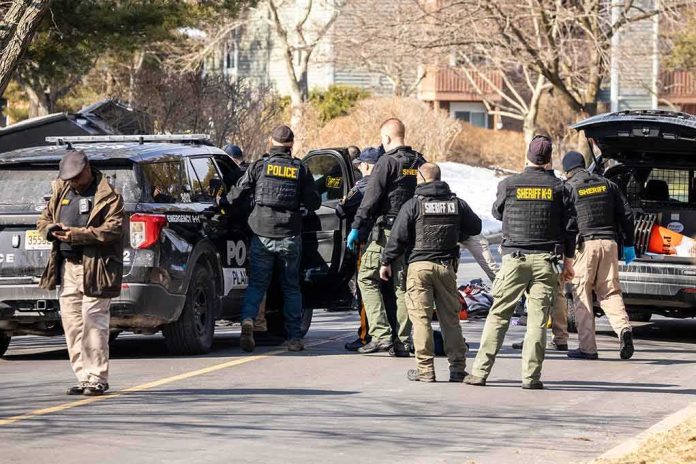
A 29-year-old Columbia police officer is dead, another is wounded, and a domestic dispute call once again proved the most dangerous job in America wears a badge.
Story Snapshot
- Police say two Columbia officers were shot responding to a domestic dispute at a city park.
- Officer Christopher DeLong, 29, died from his injuries; the second officer survived.
- Columbia’s police chief said the suspect also died at the scene.
- Research shows domestic calls are a top killer of officers nationwide.
What Police Confirmed About The Shooting
Columbia Police Chief W.H. “Skip” Holbrook said two officers responded to a reported domestic dispute near Southeast Park on Saturday. Gunfire broke out at the scene. Both officers were hit. Officer Christopher DeLong, age 29, later died from his wounds. The second officer was treated for injuries. The suspect also died, according to Holbrook. The chief called the loss “heartbreaking” and asked the city to pray for the DeLong family as they grieve a son who wore the uniform for them.
Local outlets identified the fallen officer as DeLong and reported he served with the Columbia Police Department for roughly two years. The Richland County coroner honored his service and warned that scenes like this show the daily danger officers face. Police closed the park area as state investigators worked the site. The State Law Enforcement Division took the lead, which is standard in South Carolina after officer-involved shootings.
Why Domestic Disputes Turn Deadly For Responding Officers
Federal research documents the risk that met DeLong at that park. A Centers for Disease Control and Prevention review found 116 officers were killed nationwide while responding to domestic disturbance calls between 1996 and 2010. Ninety-five percent of those murders involved a firearm. Analysts who track calls for service rank domestic disputes among the deadliest for patrol officers, because emotions run hot and weapons are often close at hand.
These calls also force officers to enter tight spaces and unclear scenes fast. Neighbors, partners, and children can be nearby. The person who called may switch from victim to aggressor. The suspect can step from a bedroom or car with a gun in a second. This mix demands split-second choices, strong training, and a cool head. Even perfect tactics cannot erase the danger when someone chooses to shoot.
What Leaders Said And What Common Sense Demands
Chief Holbrook pledged support for the wounded officer and for DeLong’s loved ones. That matters. But the next duty falls on policy makers. Back the training that keeps officers alive at the doorframe, not only at the funeral. Fund scenario drills for domestic disputes, ballistic shields in patrol cars, and stronger radios where parks and apartments create blind spots. Support faster backup standards, because seconds matter when a suspect draws down in a park pavilion.
American conservative values stress order, restraint, and responsibility. That starts with enforcing laws that keep repeat violent offenders off the street, and it includes clear backing for self-defense when officers face a gun. Communities also need survivor services for families trapped in abuse, because the best way to avoid a shootout is to break the cycle before the 911 call. Both justice and mercy fit inside a badge when the mission is life first and violence last.
The Human Cost Behind The Headlines
DeLong’s name now stands with those who ran toward danger and did not return. His partner will carry the memory of a day that changed everything. The department will reroute shifts, pin memorial bands, and hold a procession no one wanted. The city will pause at the sight of flags at half-staff. People should remember that behind each patrol car sits a family watching the clock, counting the minutes until the knock at the door that no one wants to hear.
Young Police Officer Killed in South Carolina Park Shooting
A 29-year-old police officer was killed and another wounded in a shooting at a city park in Columbia, South Carolina, late Saturday, according to Police Chief Skip Holbrook.https://t.co/casJvp1QxK pic.twitter.com/Ynj9xqrftY
— AIJES News (@aijesinfo) August 30, 2026
South Carolina knows this pain. Police across the state will step in to cover calls while Columbia grieves. The work goes on because it must. That is the quiet promise of public safety. When the next domestic call hits the radio, other officers will answer it, knowing what happened here. Honor them by demanding better tools, better training, and swift justice for those who shoot at the people who keep order so the rest of us can live our lives.
Sources:
wrdw.com, bignewsnetwork.com, abc11.com, iz.ru, krcgtv.com, jnix.netlify.app, stacks.cdc.gov