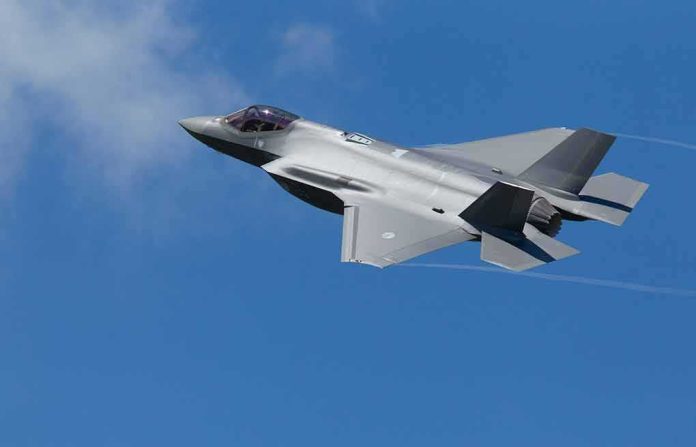
Canada stamped “no” on records tied to a viral “Made in USA” F-35 photo—and the fight now cuts to the bone of secrecy versus accountability.
Story Snapshot
- Ottawa refused records requests about an F-35 photo under national security exemptions.
- The law lets Canada withhold defence and allied military information if release could cause harm.
- Critics claim costs were misrepresented and key data withheld from Parliament.
- A Pentagon official blasted Canada’s delays and lack of transparency in the F-35 review.
What Ottawa Says The Law Allows
National Defence leaned on Canada’s Access to Information Act, which lets departments refuse records if release could harm international affairs or Canada’s defence. This exemption, under section 15, is injury-based. Officials must believe that disclosure could cause real harm, not just embarrassment. The Treasury Board’s guidance spells this out in plain terms. It is not a loophole. It is the written rule Parliament passed for security-sensitive files.
Defence and security agencies use this tool often. Annual reports show section 15 ranks among the most-used exemptions across National Defence year after year. The Communications Security Establishment also reports regular use of section 15 to shield military and allied defence information. That pattern shows a system built to default toward caution when records touch combat systems, allied tech, or operational plans—not a one-off fix for a bad headline.
Why This Photo Matters
The “Made in USA” F-35 issue strikes a nerve because the jet is the biggest, priciest combat buy Canada has made in a generation. The program includes aircraft, weapons, sustainment, and base upgrades. Small signals—like a label on a photo—become lightning rods for debates about costs, sovereignty, and industrial benefits. When Ottawa refuses related records, even for lawful reasons, many assume the worst and fill the silence with their own storylines.
Washington’s patience also factors in. A senior United States defense official criticized Canada’s delays and lack of transparency during the continuing review of the F-35 plan, framing it as politics over readiness. That public jab added heat at home and made the records fight feel bigger than a single image file. Allies watch how Canada manages the file, because it speaks to speed, clarity, and alliance reliability.
The Critics’ Case: Cost, Candor, and Control
Opposition voices and analysts claim the government kept Parliament and the public in the dark on true costs and key assumptions. A well-known policy analysis argued the dispute over the F-35’s “real” cost became part of a wider fight about releasing financial information to Parliament. It also noted the Auditor General found serious problems in how officials ran the early procurement and in the accuracy of cost estimates. Those facts cut against trust even when secrecy is lawful.
Academic work mapped how the Canada F-35 process turned into a political cudgel as costs rose and critics attacked the non-competitive path used in early years. That history still shapes how people read every new delay or denial. When citizens see “no records” or “exempt,” they do not see risk management; they see a rerun of an old show. That is why a single photo can spark a larger storm about process and truth in budgeting.
What Common Sense Demands Now
Canada must shield mission details and allied technology. That is non-negotiable. The Access to Information Act exists to prevent harm to defence and to partnerships that keep pilots alive and skies safe. But conservative common sense also says taxpayers deserve straight numbers and clear milestones. Cost, schedule, sustainment plans, and industrial offsets can be disclosed in aggregate without giving away tactics or sensitive data.
Parliament can tighten oversight without leaking secrets. Give cleared committee members access to classified briefings on major defence buys. Publish a public-facing cost and schedule dashboard that tracks only non-sensitive metrics. Release redacted contracting summaries on a fixed cadence. These steps align with the law, protect allies, and rebuild trust. If Ottawa wants fewer sensational fights over labels on photos, it must drain the mystery around the parts of the program that do not risk lives.
Sources:
19fortyfive.com, search.open.canada.ca, canada.ca, rcmp.ca