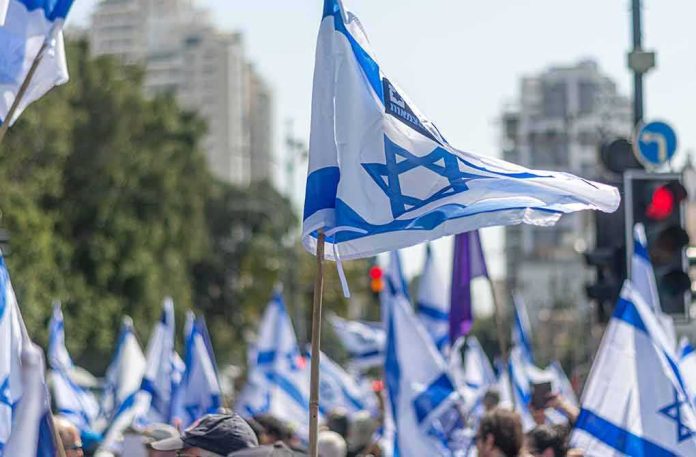
Israel votes Tuesday, and the country is locking down crossings and opening the polls for a high-stakes national decision.
At a Glance
- Israel’s general election is set for Tuesday, October 27, with polls open 7 a.m. to 10 p.m. local time.
- The army will close all West Bank crossings on election day as part of a phased security plan.
- Voters will choose the 120-seat Knesset in a nationwide proportional vote; 38 parties are on the ballot.
- Officials and media call this the first general vote since the October 7, 2023 attacks and regional wars.
Election Day Is Set, Security Plan Is Active
Israel’s national vote is scheduled for Tuesday, October 27, with polling stations opening at 7 a.m. and closing at 10 p.m. local time. Voting will use the country’s national proportional system to fill all 120 Knesset seats, with 38 parties competing for representation. The Israel Defense Forces announced a step-by-step plan limiting movement for Palestinian workers on Sunday and Monday, then a full closure of all West Bank crossings on election day. Authorities said restrictions will end after the vote.
Al Jazeera reported that the army’s plan was approved by Israel’s political leadership, which aligns with standard election security practices. The closure procedure matches prior measures during sensitive periods. Media accounts link these moves to recent security incidents in the West Bank and to operations in Hebron, underscoring the tense backdrop for the vote. This is a real election with real stakes. The state is preparing to run it on time, while it tries to head off threats that could disrupt a normal day at the polls.
Why This Vote Carries Extra Weight
Reporters frame this as Israel’s first general election since the October 7, 2023 attack and the wars that followed with Gaza, Lebanon, and Iran. That history sets a serious tone and sharpens voter focus on security, leadership, and national direction. ABC News describes a close, high-energy race that could upend Israel’s political map and test Prime Minister Benjamin Netanyahu’s hold on power. The core facts are simple: the date is set, the rules are known, and the system expects millions to vote on Tuesday.
Numbers tell part of the story. Al Jazeera cites the Central Elections Committee figure of about 7.3 million eligible voters. That suggests a huge civic exercise spread across thousands of polling stations. The proportional system invites many parties, but the electoral threshold pushes smaller factions to merge or fade. That tension can swing final seat counts by a handful of votes per precinct. Expect long lines in key districts, and watch turnout trends in cities that often decide coalition math.
How Israel Keeps Elections On Schedule
Israel’s legal tradition favors holding elections on time. The country has postponed a Knesset vote only once under the current framework’s spirit, during the 1973 war, before later rules set stricter limits. Legal analysts point to Basic Law provisions that make any delay a last resort that requires broad support and a true emergency. The bar is high to protect equal and free voting for all citizens. That is why administrators plan hard, and security forces try to keep the calendar intact.
Even with heightened risk, the institutional aim remains steady: keep the polls open, keep the count clean, and certify results fast. The Central Elections Committee runs the process and sets the ground rules for parties, media, and public bodies. Courts can referee edge cases, but the committee’s mandate is to deliver a normal election under abnormal pressure. That mission matches common sense and conservative values: hold the vote, secure the ballot, and let citizens decide.
The Closure Question And The Ballot Box
The army’s decision to close West Bank crossings on election day raises hard questions about security and freedom of movement. Officials argue these steps reduce risk near a national event and end as soon as the polls close. Critics often call such moves collective punishment. The record here shows a clear election-day closure tied to specific dates, layered with a ramp-down plan after voting concludes. Voters inside Israel will still find open polling stations from morning to night.
⚠️ NETANYAHU WARNS IRAN COULD TRY TO DISRUPT ISRAEL’S ELECTION
With Israel’s election approaching, Benjamin Netanyahu says intelligence suggests Iran or its allies could attempt attacks to disrupt the vote. He warned that Israel was prepared to respond. pic.twitter.com/Ue4lKuoN1e
— SHOCKER MEDIA ⚡️ (@shocker_media) October 25, 2026
Hebron operations have also drawn attention ahead of the vote, including reports on displaced families and recent soldier deaths. These events fuel concern about spillover violence during a pivotal week. The government and army appear set on a basic trade-off: clamp down where threats loom, while preserving the core act of voting. That balance will define Tuesday’s story almost as much as the final seat tally.
What To Watch Between Now And Tuesday Night
Watch for any last-minute guidance from the Central Elections Committee on polling logistics. Track turnout reports during midday and evening, especially in swing areas. Follow how party leaders manage get-out-the-vote efforts under security limits. Expect fast math on coalition paths once sample counts post after 10 p.m. local time. The goal is simple and serious: run the election as planned, count every lawful vote, and deliver a result the country can accept.
Sources:
x.com, votes24.bechirot.gov.il, aljazeera.com, newsminimalist.com, fakti.bg, votes21.bechirot.gov.il, en.idi.org.il