A sidewalk showdown in Morristown turned raw when an immigration agent declared a “crime scene” and shoved back a woman who kept moving in to film.
Story Snapshot
- Federal immigration agents were conducting an operation in Morristown when a bystander moved in to record.
- An agent told her to leave, called it a “crime scene,” and physically stopped her.
- No public record shows charges against the woman, and no federal statement explains the force used.
- The clash highlights the right to film police and the limits when safety or interference is at stake.
What Happened On The Sidewalk
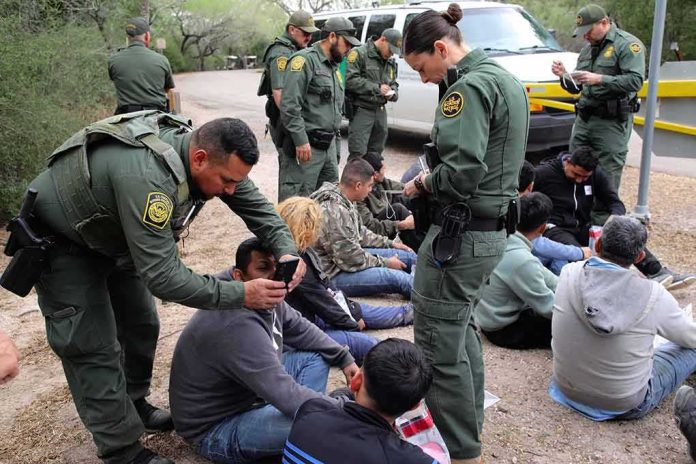
Patch reported that Alexis Brown saw an immigration enforcement action unfolding and began filming as she walked toward agents and bystanders. An agent told her, “This is a crime scene” and “get out,” then blocked her with his body as she continued forward. Video described by reporters shows the camera jolt right after contact. The scene took place with local police nearby. Morristown Green’s account similarly describes a push while Brown recorded.
Brown said she came closer to document the operation and ensure witnesses were present, not to disrupt the agents. She said she was scared and believed the force had no reason. She also said she only learned a perimeter existed at the moment of contact. Activists at the scene said the raid aimed to intimidate the community, and Brown asserted she stood on a public sidewalk when the encounter occurred.
What We Know And What We Do Not
The reports agree on core facts: a live operation, a woman recording, movement toward agents, a direct order to leave, and physical contact that jolted the camera. They do not show where a perimeter began, what distance agents required, or any posted boundary. They also do not show Brown blocking a doorway, grabbing anyone, or stopping a vehicle. No public record shows a criminal charge, and no federal agency statement explains the use of force or cites policy.
That gap matters because it leaves the legal justification unclear. Time, place, and manner limits can apply when a person’s movement risks safety or disrupts an arrest. But the burden is on the government to set clear, reasonable limits and explain why force was needed to enforce them. Without a statement, the public is left to read tea leaves from shaky video and crowd audio. That vacuum fuels mistrust and spin from both sides.
The First Amendment Line Everyone Keeps Misreading
Federal courts have recognized a right to record police in public. The Court of Appeals covering New Jersey has endorsed that right in a well-known Philadelphia case. But courts also allow reasonable limits when recording tips into interference or danger. The legal line turns on conduct, proximity, and effect on the operation—not on a person’s politics or their phone camera. The key test is whether movement or behavior actually gets in the way or raises safety risks.
Common sense lines up with that rule. Record from a few steps back? Protected. Keep closing distance after a clear command during an arrest? Expect a pushback and possibly a citation. The problem in Morristown is the missing record. If agents set a clear staging area and warned Brown before contact, their case looks stronger. If they did not, their force looks thin. Both stories could be tested with full video, radio traffic, and a simple written explanation.
What This Says About Policing, Policy, And Public Trust
Morristown has seen multiple immigration arrests this year, and that backdrop shapes every bystander reaction. People bring strong views to the curb. That is fine. But the street rules cannot change with the crowd. Agents need clear perimeters and minimal force. Citizens need to record from a safe distance and follow lawful orders. That is how you preserve both safety and liberty when tempers rise and cameras roll.
Here is the bottom line through a conservative lens. Border laws must be enforced, and officers deserve space to do the job. The First Amendment also matters, including on a public sidewalk. The state’s duty is to draw a bright line and stick to it. The citizen’s duty is to respect that line. Morristown’s clash became messy because neither side left a clean paper trail. That is fixable with policy, training, and transparency—not louder slogans.
Sources:
youtube.com, patch.com, morristowngreen.com