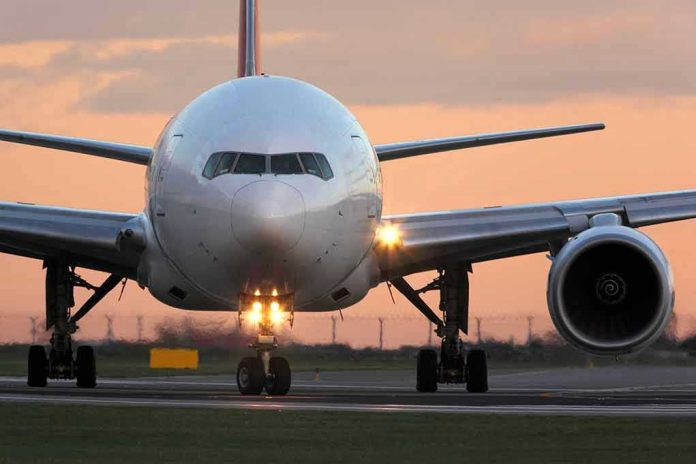
When a JetBlue Airbus A320 faced a chilling near-collision with a stealthy U.S. Air Force tanker, it highlighted the alarming risks of military operations in civilian airspace.
Story Overview
- JetBlue flight nearly collides with a U.S. military tanker north of Venezuela.
- The tanker was invisible to radar due to an inactive transponder.
- Incident underscores safety risks amid U.S. military presence in the Caribbean.
- Potential for stricter airspace regulations following the near-miss.
The Incident Unfolds
On December 12, 2025, a routine flight from Curacao to New York turned into a harrowing experience for the crew and passengers aboard JetBlue’s Airbus A320. As the aircraft climbed to its cruising altitude of 35,000 feet, the pilots were startled to see an uncommunicated U.S. Air Force tanker suddenly appear directly in their path. The tanker, lacking an active transponder, was invisible to the aircraft’s Traffic Collision Avoidance System (TCAS) and air traffic control (ATC) radar.
Forced to take immediate action, the JetBlue pilots halted their ascent, narrowly avoiding a mid-air collision. The tanker continued on its path, heading northeast toward Venezuelan airspace, leaving the JetBlue crew to report the incident to Curacao ATC. The near-miss occurred within a perilous distance of just two to five miles, raising serious concerns about aviation safety in the region.
Implications of Military Operations in Civilian Airspace
The incident shines a spotlight on the inherent dangers when military aircraft navigate civilian airspace without active transponders. These devices are crucial for visibility on radar systems and collision avoidance technology, and their absence can lead to potentially catastrophic outcomes. The U.S. military’s presence in the Caribbean has been increasing, and while their operations are essential for strategic reasons, they must be balanced with civilian safety protocols.
The U.S. Air Force’s tanker likely operated without a transponder for operational stealth reasons. However, this practice raises questions about the coordination between military and civilian aviation authorities. The U.S. Southern Command, responsible for overseeing military operations in the region, emphasized the importance of trained procedures and operational safety. Yet, the lack of communication and coordination in this incident highlights an urgent need for reevaluation of current practices.
Reactions and Potential Changes
JetBlue, prioritizing their passengers’ safety, swiftly reported the incident to federal authorities. They are expected to cooperate closely with investigations led by aviation regulators such as the Federal Aviation Administration (FAA) and the National Transportation Safety Board (NTSB). The incident may prompt a deeper investigation into military transponder use and lead to stricter airspace regulations.
In the short term, this event could lead to increased scrutiny of U.S. military operations in the Caribbean. In the long term, it might drive changes in the rules governing airspace deconfliction between military and civilian flights. The potential for stricter protocols could significantly impact how military operations are conducted in regions with heavy civilian air traffic.
Looking Ahead
The near-collision not only startled the JetBlue crew and passengers but also sent ripples across the aviation industry. It raises critical questions about how to balance national security interests with public safety in shared airspace. As investigations unfold, stakeholders from both military and civilian sectors must come together to prevent similar incidents in the future. Ensuring that military operations do not compromise civilian safety is paramount, and this incident serves as a stark reminder of the challenges in achieving that balance.
As aviation experts and regulators navigate the complexities of this incident, the hope is for a resolution that enhances safety protocols and fosters better communication between military and civilian aviation entities. Only by addressing these critical issues can we ensure the skies remain safe for everyone.