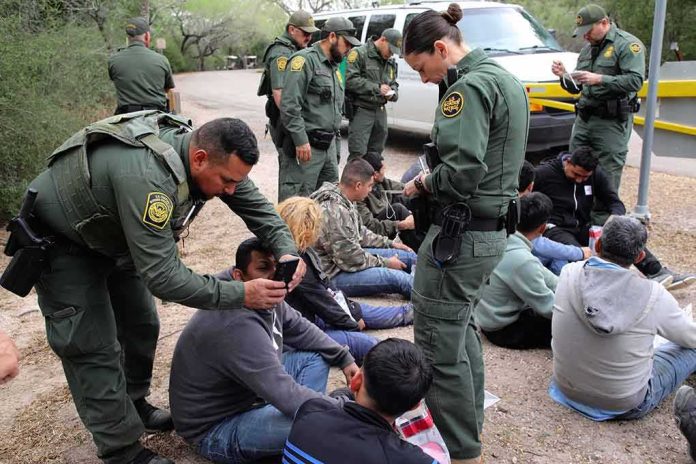
A Denver-born man says he was deported to Mexico after a routine traffic stop, and the federal government later agreed to let him back into the country while his lawsuit plays out.
Quick Take
- Brian José Morales García, 25, says he was deported despite claiming U.S. citizenship, then returned after producing a birth certificate.
- The Department of Homeland Security (DHS) disputes his account, saying he admitted to being a Mexican national who entered illegally.
- Detention data shows a rising share of people held without criminal records, from 6% to 41% in one year.
- Democrats in Congress are eyeing oversight hearings, but face a funding system that runs through 2029.
A Traffic Stop That Ended in Deportation
Morales García was pulled over in Central Texas and ended up in Immigration and Customs Enforcement (ICE) custody. He told officers he was born in Denver and had documents at home proving it. The Austin American-Statesman reported he was deported four days after his arrest, before anyone verified his claim. The Texas Tribune reported he signed removal paperwork after five days in detention, saying he feared being held indefinitely.
His attorneys later submitted stronger citizenship documentation. A joint court filing reviewed by Newsweek shows the Department of Justice agreed Customs and Border Protection (CBP) would let him reenter once he presented his birth certificate and identification. He came home, but only after the system meant to catch cases like his had already failed once.
The Government Pushes Back
DHS has not conceded the point. In a written statement, the agency said record checks showed Morales García was unlawfully present and that he admitted being a Mexican national who entered the country illegally. That is a direct, named rebuttal, not just skepticism. It means the case remains a real factual dispute, even though the decision to let him back in suggests the government saw enough doubt to act.
This tension matters. A wrongful deportation claim backed by a government reversal is serious evidence of a process failure. But DHS contesting the underlying facts means reasonable people can still disagree about exactly what went wrong, and why. Both things can be true at once.
Detention Numbers Tell a Bigger Story
The Morales García case is one file. The American Immigration Council, an advocacy group, reported something broader: the share of ICE detainees with no criminal record jumped from 6% in January 2025 to 41% by December, while total detention grew from about 40,000 to 66,000 people. That is a real shift in who is being held, even if the group’s advocacy mission invites scrutiny of its framing.
DHS tells a different version of the same numbers. The agency has repeatedly said most arrests involve people with convictions or pending charges, citing a 75% figure during its first 100 days. Both claims can be accurate for different time periods or categories, which is exactly why independent, government-audited data matters more than dueling press releases from either side.
Congress Eyes Oversight, Not Just Outrage
Democrats are not just complaining on cable news. The Associated Press reported that possible investigations could examine DHS’s purchase of large warehouses for detained immigrants, whether ICE rushed hiring thousands of new officers, and deaths inside detention facilities. Immigration rights groups want Congress to go further, pushing for funding clawbacks and operational changes at ICE and CBP.
These are concrete, checkable targets. Oversight hearings, document requests, and inspector general audits are normal tools of a divided government, not inherently partisan theater. Whether they turn into real accountability or just headlines depends on follow-through, something Congress has struggled with across both parties for years.
The Money Problem Democrats Can’t Solve
Here is the catch nobody on the left seems eager to highlight. Former acting ICE director Jonathan Fahey said ICE and DHS funding is locked in through 2029, meaning Democrats may have little power to choke off operations through normal budget fights, even if they win more seats. The White House signed legislation delivering $70 billion for ICE and CBP, a sum Republicans frame as overdue homeland security investment.
That leaves Democrats with oversight, lawsuits, and public pressure as their main levers, not the purse strings. For conservatives who believe enforcing immigration law is a basic government duty, that is a feature, not a bug. The Morales García case shows real process needs fixing. It does not show the whole enforcement system is illegitimate, and voters who backed stronger border enforcement are unlikely to confuse the two.
President Donald Trump has rejected the idea of changing his administration's deportation policy, despite recently acknowledging during his CBS News 60 Minutes interview that the crackdown might have been too tough. When a reporter asked whether he had instructed Stephen Miller,… pic.twitter.com/skWqgxiBia
— OGM News (@OGM_News) November 10, 2026
What happens next likely runs on two tracks at once. Courts will sort out the specific facts of the Morales García case, while Congress decides whether oversight produces real fixes or just another round of partisan noise heading into next year’s budget fights.
Sources:
townhall.com, tucsonsentinel.com, statesman.com, texastribune.org, newsweek.com, americanimmigrationcouncil.org, dhs.gov