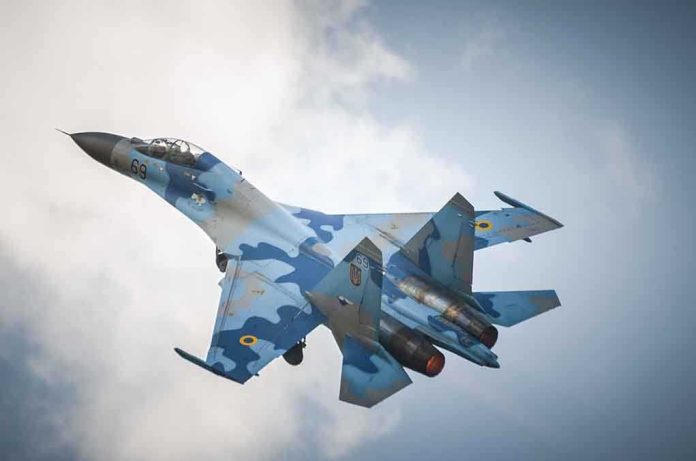
An F-16 Thunderbird crash in California’s Mojave Desert raises questions about military safety and operational protocols.
Story Highlights
- An Air Force Thunderbird F-16 crashed in the Mojave Desert.
- The pilot safely ejected before the crash.
- The incident raises concerns about military aviation safety.
- An investigation is underway to determine the cause.
Details of the Incident
The United States Air Force faced a significant setback when one of its F-16 Thunderbirds crashed in California’s Mojave Desert. The incident, marked by a massive plume of black smoke, has drawn considerable attention. Fortunately, the pilot managed to eject safely, averting a potential tragedy. The crash site, located in a remote area, is now the focus of an intensive investigation to uncover the factors leading to this dramatic event.
The Thunderbirds, known for their precision flying demonstrations, are a symbol of American military prowess, and such incidents inevitably lead to questions about safety and operational protocols. The Air Force is committed to maintaining high standards in both these areas, making this investigation crucial to ensuring future safety.
Military aviation operations in the Mojave Desert are common due to its vast open spaces and established infrastructure. However, the crash underscores the inherent risks of such operations, particularly when involving high-profile demonstration teams like the Thunderbirds. The investigation will examine potential mechanical failures, pilot error, and environmental factors to prevent future occurrences.
Implications and Response
The immediate loss of an F-16 represents a substantial financial hit for the Air Force. Beyond the tangible loss, there are broader implications, including the potential temporary grounding of the Thunderbirds and increased public scrutiny of military aviation safety. The Air Force must balance transparency with national security as it addresses public concerns and ensures operational readiness.
In the long term, findings from the investigation may lead to revisions in maintenance protocols, training procedures, and operational guidelines. These changes aim to reinforce safety measures and preserve public confidence in military aviation demonstrations.
Stakeholder Interests
Key stakeholders include the United States Air Force, the Thunderbirds demonstration team, and the pilot involved. Each has vested interests in the investigation’s outcome. The Air Force is focused on determining the cause and preventing future incidents, while the Thunderbirds aim to maintain their operational status and public reputation.
Local authorities and emergency response teams in California also play a critical role in managing the aftermath and ensuring community safety. As the investigation progresses, collaboration among military and civilian entities will be essential to achieving comprehensive and accurate findings.
Sources:
Air Force Thunderbird Crashes in California’s Mojave Desert