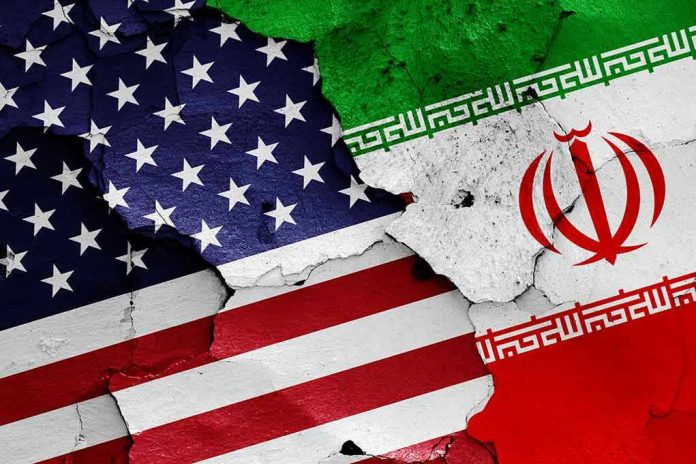
The real fight over the new Iran deal is not just about missiles or nukes — it is about whether Washington is secretly wiring Tehran billions in cash before Iran does a single thing.
Story Snapshot
- JD Vance flatly denies Iran gets “billions upfront” just for talks or a signature.
- Leaked drafts and media reports say frozen Iranian assets could be unlocked fast.
- Both sides use the same draft language to tell opposite stories about the money.
- This “cash up front” fight echoes every major U.S.–Iran argument of the last decade.
Why the money fight matters more than the missiles
Every time Washington talks to Tehran, the same question jumps out before the ink is dry: are we paying them to behave, or rewarding them for bad behavior? This round is no different. Reports claimed Iran would get access to billions in frozen assets the moment a peace memorandum was signed. That lit up conservatives who remember pallets of cash under President Barack Obama and who do not trust any deal that looks like ransom for calm in the Strait of Hormuz.
Vice President JD Vance moved fast to slam those claims as “fake information” and said Iran would receive no cash simply for signing an agreement or showing up at talks.[1] He stressed that no Iranian funds would be released “upfront,” and that any economic relief would come only after Iran met strict obligations on nuclear limits and regional behavior.[1] For voters who want a tougher line, that promise matters: no check before performance, no reward for just sitting at the table.
What Vance is actually promising — and why wording is everything
Vance and other officials describe the package as “performance-based.” That means Iran only gets economic benefits if it first does what the text demands: roll back its nuclear program, accept inspections, and help end the war that closed the Strait of Hormuz.[1][3] White House briefings have echoed that idea, saying economic relief follows compliance, not the other way around.[3] On paper, that lines up with basic common sense: you do not pay a hostile regime up front and hope they keep their word later.
The catch lies in how these deals usually work. Sanctions relief and asset releases rarely flip on all at once. They are staged, often through escrow and foreign banks. That allows each side to claim victory. U.S. leaders can say “no cash for signatures,” while Iranian leaders can tell their people, “money starts moving as soon as we sign.” Both stories can lean on the same clauses, just told in different order. That split-screen messaging is not a bug; it is baked into modern diplomacy with adversaries.
Where the “billions upfront” narrative comes from
The opposing story did not appear out of thin air. Reporting on early drafts said the memorandum “did include” fast access to frozen Iranian assets, with numbers in the ten-billion-plus range tied to the deal’s first stage.[7] Those details sounded to critics like a cash windfall dressed up as technical sanctions relief. When combined with a permanent ceasefire, a massive reconstruction plan, and reopening the Strait of Hormuz, the whole package looked to hawks like a lopsided giveaway dressed up as peace.[3][7]
Once that frame took hold, every leak about unfreezing assets or easing oil sanctions fed the “billions for Tehran” outrage loop. Iranian media and some regional outlets pushed their own spin, hinting that money would move quickly once papers were signed. That helps Tehran sell compromise at home. But it also fuels suspicion in the United States that the administration is downplaying the cost. For a conservative audience that remembers broken promises from Iran, that is not paranoia; it is pattern recognition built on decades of bad faith from the regime.
Drafts, denials, and the fog of pre-deal politics
There is another wrinkle: there is still no final deal. Vance himself has said more than once that the United States and Iran are “very close” but “not there yet” and that talks have even broken down after marathon sessions in Pakistan.[5][7] That means every big number you see now lives in a draft, not binding law. Drafts change. Clauses get cut. Economic sweeteners move from “immediate” to “after verification” with a few keystrokes once the political blowback starts to bite.
@Transition_Protocol: Highly Recommended. Jun 11.
With EX-CIA & Pepe:– W I L L T O N I T E S T A R T T H E G U L F – W A R –
🕌🇮🇷#Iran’s FINAL 24 Hours ⏰:
– #Khamenei’s Last 🕊️#Peace_Window,
– Before #All_Out #Gulf_WAR:
*https://t.co/RDv7cyluQc
*
Clickable Index…— Cassandra 🏛️☭ Occupy Schagen (@OccupySchagen) June 12, 2026
Iran, for its part, has publicly rejected key elements of U.S. demands in parallel: it has pushed back on transferring enriched uranium abroad and dismissed claims that a signing is imminent in Geneva. Those denials show Tehran is also managing its own hard-liners, who hate any hint of weakness. Both capitals are playing to two audiences at once: foreign negotiators and domestic voters. That is why money language stays foggy right up until the final hour—and why every side accuses the other of lying in the meantime.
How a conservative reader should sort the spin
When you strip away the slogans, one thing is clear: Vance is staking his credibility on a simple promise that aligns with basic conservative instincts. He says there will be no cash or asset release merely for signing or showing up, and that any economic benefit will depend on Iran’s actions, not its intentions.[1] That is the right standard: no prepayment to a regime that still chants “Death to America” and arms terror proxies across the region.
At the same time, leaked draft details suggest that once Iran crosses certain checkpoints, large sums could move fast.[7] That does not technically break Vance’s promise, but it tests its spirit. The real test will come when a final text appears. Does it tie every dollar to verifiable steps that can be reversed if Iran cheats? Or does it frontload so much relief that Washington loses leverage on day one? Until that page is public, both “no cash up front” and “billions for Tehran” remain weapons in a political fight built on the same unfinished document.
Sources:
[1] Web – Vance denies that Iran will receive “billions of dollars of assets” in …
[3] Web – Vance says Iran deal would release no cash for signing or talks
[5] YouTube – Trump And Vance Angrily Deny Peace Deal Favors Iran
[7] YouTube – Vance says US not there yet on Iran, but close