
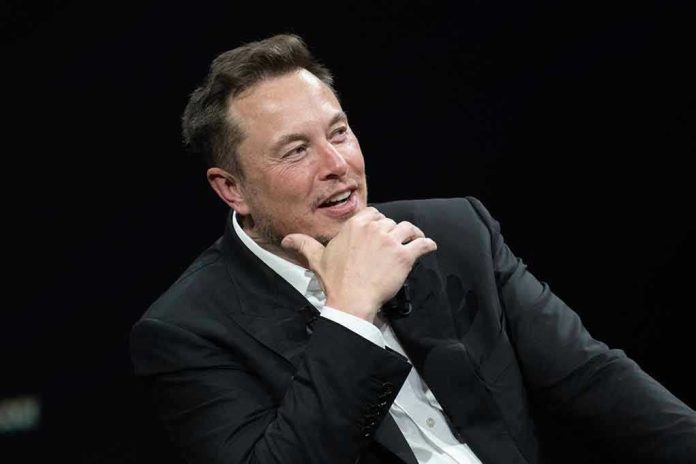
A sitting head of state is now reviewing whether to sue the world’s richest man for claiming she takes orders from drug cartels—a collision of social media recklessness and international diplomacy that nobody saw coming.
Story Snapshot
- Mexican President Claudia Sheinbaum announced lawyers are reviewing potential legal action against Elon Musk after he publicly claimed she’s controlled by drug cartels
- Musk posted his allegations on X just one day after Mexican forces successfully eliminated the country’s most wanted drug kingpin in a major security operation
- The Mexican Embassy identified Musk’s evidence as an outdated video clip on legal theory, deliberately stripped of context and weaponized as misinformation
- Sheinbaum called the accusations absurd during a Tuesday press conference, while Musk has remained silent on the legal threat
- The incident raises unprecedented questions about accountability when platform owners spread unsubstantiated claims about foreign leaders
When Victory Becomes Controversy
Sunday should have been a moment of national pride for Mexico. Federal forces conducted a major operation that resulted in the death of Rubén Oseguera Cervantes, known as El Mencho, the leader of Cartel de Jalisco Nueva Generación and the country’s most wanted drug lord. The operation represented a significant victory in Mexico’s ongoing struggle against organized crime. By Monday morning, however, the narrative had shifted dramatically when Elon Musk decided to weigh in on Mexican politics with explosive allegations.
The Accusation That Sparked International Tension
Musk’s Monday post on X responded to another user questioning whether Sheinbaum was a “cartel plant.” His reply was unequivocal: “She’s just saying what her cartel bosses tell her to say. Let’s just say that their punishment for disobedience is a little worse than a ‘performance improvement plan.'” The comment came from a man who owns the platform hosting his words, amplifying them to millions without editorial oversight or fact-checking. The timing proved particularly inflammatory, coming immediately after Mexico had demonstrated exactly the opposite—effective action against cartel leadership.
The Foundation Built on Quicksand
The Mexican Embassy quickly identified the source of Musk’s allegations: an old video clip featuring Sheinbaum discussing legal theory regarding approaches to combating organized crime. The clip had been stripped of its original context and recirculated on social media as if it represented current policy or an admission of cartel influence. This wasn’t a smoking gun—it was a academic discussion about rule of law, repurposed as propaganda. The embassy’s statement emphasized that context matters, describing the recycling of outdated content as a deliberate attempt to distract from Mexico’s legitimate security success.
A President Responds With Measured Contempt
Sheinbaum addressed the allegations during a Tuesday press conference with a mixture of dismissal and bewilderment. She called Musk’s claims “absurd” and stated that her lawyers were reviewing potential legal action. Her response carried an almost amused quality: “I don’t know how they make this stuff up. It makes me laugh reading this from the commentators.” Yet beneath the laughter lay a serious question about reputation and credibility. A head of state had been publicly accused of being a puppet for criminal organizations by one of the world’s most influential figures.
The Broader Pattern Nobody Can Ignore
This incident doesn’t exist in isolation. X’s own artificial intelligence system, Grok, has previously identified Musk as a “top misinformation spreader” on the platform—a remarkable admission that the platform’s internal systems recognize problematic patterns in its owner’s behavior. The Sheinbaum episode fits a troubling template: inflammatory claims made without substantiation, amplified through massive reach, and leaving targets to fight uphill battles against misinformation. When the person spreading questionable content also controls the platform, traditional content moderation approaches become meaningless. The power asymmetry is stark—Musk commands attention through wealth and platform ownership, while Sheinbaum must rely on governmental legitimacy and potential legal recourse.
Context Mexico Wants Everyone to Remember
The Mexican government provided additional context that often gets lost in sensational headlines. Defense Minister Ricardo Trevilla Trejo reported that 80 percent of nearly 25,000 weapons seized from cartels since October 2024 originated from the United States. This statistic reframes the security conversation—Mexico’s cartel problem is substantially armed by weapons flowing south from America. Additionally, U.S. authorities reportedly aided the operation that eliminated El Mencho, indicating ongoing bilateral security cooperation. These facts complicate simplistic narratives about Mexican government competence or cartel influence.
What Happens Next Matters for Everyone
Sheinbaum’s legal team now faces complex questions about jurisdiction, defamation law, and practical enforcement. Could a Mexican court successfully pursue action against an American citizen for statements made on a U.S.-based platform? What precedent would such action establish for holding social media figures accountable for spreading unsubstantiated claims about foreign leaders? The answers will affect far more than this single dispute. Platform governance, international diplomatic norms, and the practical limits of free speech when wielded by those with unprecedented amplification power all hang in the balance. Musk has remained silent about the legal threat, leaving observers to wonder whether he recognizes any boundaries to his commentary.
Sources:
Mexico Threatens Legal Action Against Elon Musk After Cartel Comment
Why is Mexico considering legal action against Elon Musk?