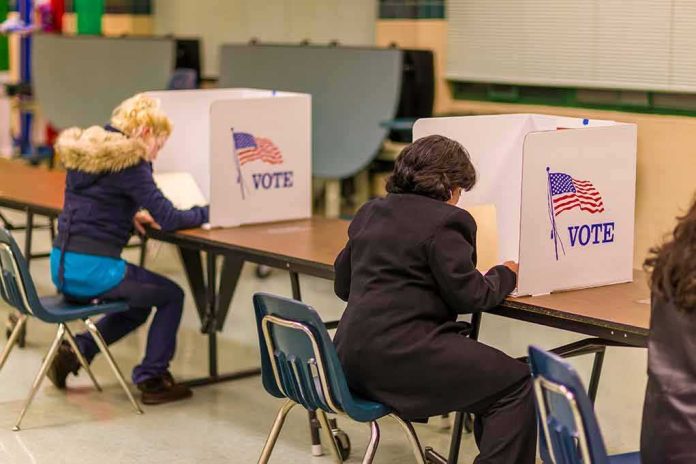
Voters in several states handed Democrats new Senate seats while also locking voter ID into their constitutions, and that split tells us more about today’s electorate than any slogan ever could.
Story Snapshot
- Democrats flipped multiple Senate seats the same night voters approved photo ID measures in Ohio, North Carolina, and Nevada.
- The measures were separate constitutional questions, not party-line ballots, so split votes were possible and common.
- Several voter ID amendments largely embedded existing state rules, softening the “policy shift” narrative.
- Polling shows broad cross-party support for voter ID, which can outpace support for Republican candidates.
What Actually Happened On The Ballots
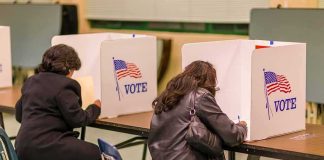
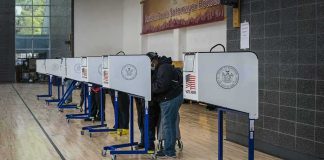
News outlets reported Democrats flipped a string of Senate seats while voters in Ohio, North Carolina, and Nevada passed photo ID measures for elections on the same night. Ballotpedia tracked these as distinct constitutional amendments, placed alongside candidate races on the same ballots. That layout matters. Voters were not asked to choose one party slate. They faced a candidate choice and, separately, a rules-of-the-road choice for how voting should work.
Some Senate races remained tight or uncalled in the earliest coverage, but the core pattern held in multiple states: Democratic wins in top races coexisted with GOP-backed voter ID approvals. This was not a local quirk. The cross-state spread gave both parties reasons to claim a message. Democrats could say their candidates won. Republicans could say voters endorsed their election security agenda at the rule level.
Why The Split-Ticket Pattern Makes Sense
Political science and history show voters often split tickets when ballots separate candidates from issues. That is especially true when a measure feels like house rules rather than ideology. The 2026 voter ID amendments in Ohio and North Carolina mostly constitutionalized requirements already in place under statute or for in-person voting, which reduced the sense of a big change. When voters view a measure as a safeguard, they can support it regardless of which party they favor for Senate.
Public opinion helps explain the fork in the road. Politifact cited polling showing broad support for voter ID among both Republicans and Democrats, with strong majorities in each camp. That baseline support often outperforms individual candidates who carry baggage, gaffes, or local issues. Voters can prefer a Democrat for temperament or economics and still choose firmer ID rules to protect elections. That is not a contradiction; it is a layered preference.
About That “30-Point” Shock
The spread claim lacks documented, certified margins in the sources at hand. The coverage confirms the directions of the results, not a state-by-state 30-point gap between each Senate race and each measure. Treating a multi-state, multi-measure night as a single number blurs key differences. Nevada’s details differ from Ohio’s. North Carolina’s mail ballot provision is not the same as in-person checks. Precision matters. Until certified canvasses are compared on identical denominators, a hard spread number is more slogan than statistic.
The Conservative Read: Rules, Trust, And Outcomes
Conservatives argue you can support broader ballot access and still demand proof of identity. The 2026 map backs that stance. Voters approved photo ID, often by safe margins, while also picking Democrats in several marquee races. The message sounds like common sense: run secure elections, and then let the best messenger win the argument of the day. If Democrats field compelling candidates, they can win under tighter rules. If Republicans want to win, they must match candidates to the electorate, not just the rulebook.
Media framing often splits the story into two lanes, praising Democratic flips while parking voter ID votes in the policy garage. That misses the whole car. Ballots can carry mixed signals by design, and voters use that freedom. The lesson is not that outcomes were odd. The lesson is that many Americans sort issues with more care than parties expect. Campaigns that respect that nuance will beat campaigns that treat voters like a monolith.
Sources:
thegatewaypundit.com, nprillinois.org, houstonpublicmedia.org, nhpr.org, news.ballotpedia.org, citizensvoice.com, nbcphiladelphia.com