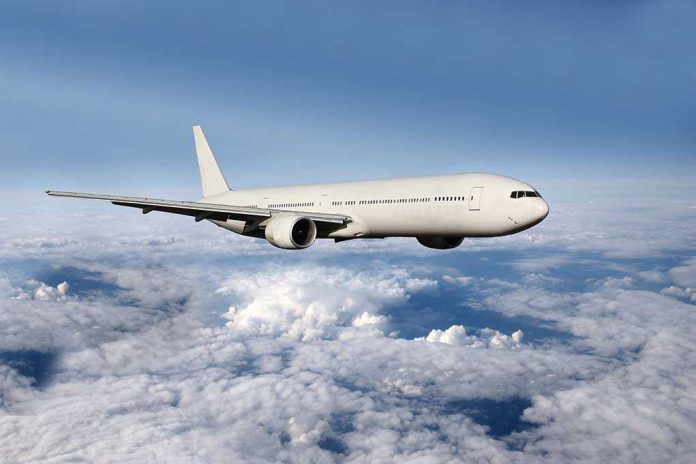
A recent incident involving a sudden 100-foot plunge of a plane has raised concerns about cosmic rays and their potential impact on aviation safety.
Story Overview
- Cosmic rays are being investigated as a possible cause of a plane’s sudden drop.
- The incident has sparked discussions about the safety of air travel.
- Experts are examining how cosmic rays might affect aircraft systems.
Airplane Plunge Sparks Cosmic Ray Investigation
In a startling event, an aircraft recently experienced a sudden 100-foot plunge, prompting an investigation into cosmic rays as a potential cause. This incident has heightened awareness about the influence of cosmic events on aviation safety. Passengers and crew were left shaken, but fortunately, no injuries were reported. Experts are now exploring how cosmic rays, which are high-energy particles from outer space, could interfere with aircraft electronics and navigation systems.
The discussion around cosmic rays and aviation safety is not new. Researchers have long been aware that these high-energy particles can affect electronic systems at high altitudes. However, this recent incident brings renewed attention to the potential risks. The aviation industry is now tasked with finding ways to mitigate these risks, ensuring that travelers remain safe even in the face of cosmic phenomena.
Impact of Cosmic Rays on Aviation
Cosmic rays are known to bombard Earth constantly, but their effects are typically negligible for most people. However, at high altitudes, such as those experienced during flights, the impact can be more significant. Aircraft are equipped with systems to protect against such disruptions, but incidents like the recent plunge highlight the need for ongoing improvements. Scientists and engineers are working together to develop more resilient technologies that can withstand these cosmic interferences.
While the current understanding of cosmic rays and their effects is advancing, more research is needed. The aviation industry must stay ahead of these challenges to prevent future incidents. By improving technology and increasing awareness among pilots and crew, the risks associated with cosmic rays can be minimized.
Steps Toward Safer Skies
In response to the incident, airlines and regulatory bodies are reviewing current safety protocols. This includes assessing the vulnerability of aircraft systems to cosmic rays and implementing additional protective measures. The goal is to ensure that passengers can fly with confidence, knowing that every precaution is being taken to safeguard their journey.
As investigations continue, the aviation industry remains committed to advancing safety standards. This incident serves as a reminder of the importance of innovation and vigilance in the face of cosmic challenges. Travelers can expect ongoing efforts to enhance the reliability and safety of air travel, even under the most unusual circumstances.
Sources:
How Cosmic Rays Grounded Thousands of Aircraft