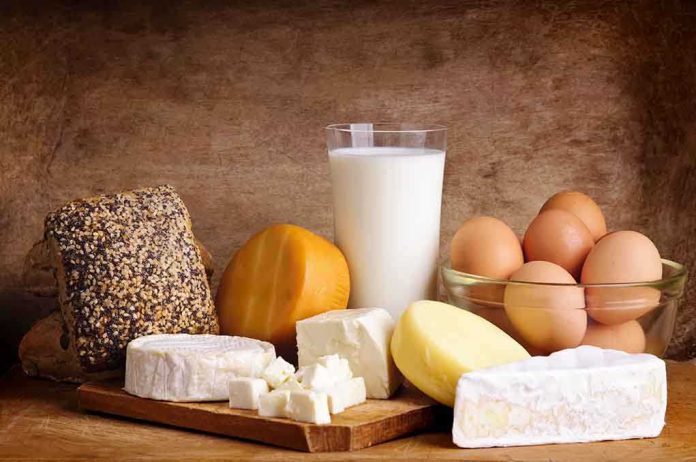
America’s dairy farmers face a self-inflicted crisis as genetically engineered cows produce record butterfat levels, crashing prices and squeezing family farms just as President Trump’s pro-agriculture policies aim to restore rural prosperity.
Story Snapshot
- U.S. cows produced over 9.1 billion pounds of butterfat through November 2025, a 4.7% record increase that outpaces demand.
- Butter prices plunged nearly 70 cents in August 2025 after a summer production surge, hurting farmers’ incomes.
- Cheesemakers struggle with imbalanced protein-to-fat ratios, facing higher costs to fix milk for American-style cheese.
- Genetic shifts in Holstein cows achieved unprecedented 5.0% butterfat levels, creating long-term market distortions.
- Market rebalancing favors protein over butterfat, signaling farmers to adapt breeding and nutrition strategies.
Record Butterfat Production Overwhelms Markets
U.S. dairy cows generated more than 9.1 billion pounds of butterfat through November 2025, marking the highest 11-month total ever and a 4.7% rise from 2024. This surge stems from 15 years of genetic selection prioritizing fat over balanced milk components. From 2010 to 2024, butterfat output jumped 30.6% while total milk production grew only 15.9%. Farmers responded to market signals where butterfat topped milk checks in eight of the last ten years. Now, supply exceeds demand, depressing prices and challenging processors. President Trump’s focus on American agriculture underscores the need for market-driven adjustments to protect family farms from such imbalances.
Cheesemakers Hit by Protein-Fat Imbalance
Cheesemakers require stable protein-to-fat ratios for cheddar and American-style cheeses, but U.S. milk’s ratio dropped from 0.82-0.84 to 0.77. Unlike EU and New Zealand producers with balanced supplies, American processors incur extra costs to skim butterfat or add protein concentrates. CoBank reports this imbalance complicates production quality and yield. The U.S. butterfat growth of 13% dwarfs global competitors’ 2%, giving exports an edge but hurting domestic cheese operations. Rural communities dependent on dairy face added pressure amid these inefficiencies.
Genetic Innovations Backfire on Farmers
Holstein cows in first and second lactations now hit 5.0% butterfat, historic highs never seen before, thanks to genomics and breeding. New York dairy farmer Jonathan Lamb presented data showing this seismic shift at the USDA Agricultural Outlook Forum. Summer 2025 saw over 5% production spikes in June through August, triggering an August butter price collapse of nearly 70 cents. While butter exports soared 35% in 2025’s first seven months, the glut risks farm consolidations. CoBank economist Corey Geiger urges nutrition tweaks to boost protein, aligning with free-market corrections under Trump’s rural revival.
Imports ballooned from 10 million pounds in 2011 to 172 million by 2024, signaling past demand, but domestic surplus flipped the dynamic. Butter inventories ended 2025 7% below prior levels due to holiday demand and exports, yet production grows 3-4% into 2026. USDA enhanced the Dairy Margin Coverage program to aid margins, reflecting smart government support without overreach.
Path to Rebalancing Ahead
Protein now leads milk checks for the first time in a decade, incentivizing farmers to adjust rations and breeding over 3-5 years. Efficient operations offset losses via beef-on-dairy calves and cheese exports, but high-cost farms in the Southeast and New England struggle with fluid milk declines. Long-term, balanced milk enhances efficiency, cuts processor costs, and bolsters global competitiveness. Consumers enjoy lower butter and cheese prices short-term. This saga warns against over-optimization, favoring Trump’s emphasis on practical, American-first farming resilience over globalist distortions.
Sources:
Supply Could Overwhelm Demand in Early 2026
Butterfat Surge Challenges Balance for U.S. Cheesemakers
Farm Credit East Dairy Markets Report
Economist Says U.S. Dairy Producers Should Shift Focus from Butterfat
90k Less Margin, 214k More Cows: Beef-on-Dairy Calf Checks and Your 2026 Survival Playbook
USDA Increases 2026 Milk Production Forecast
Markets Are Bubbling Over With Butterfat
2026 Dairy Outlook: Navigating Volatility, Genetics and Beef-Dairy Revolution