President Trump issued a final ultimatum to Iran in an exclusive phone interview with Fox News, threatening devastating military strikes on civilian infrastructure including power plants and bridges if Tehran refuses to sign a new nuclear deal.
Story Snapshot
- Trump delivers “last chance” warning to Iran during 20-minute call with Fox News correspondent Trey Yingst
- U.S. threatens strikes on Iranian power plants, bridges, and critical infrastructure if nuclear deal rejected
- Special envoys Jared Kushner and Steve Witkoff lead high-stakes negotiations in Islamabad, Pakistan
- Iran rejected U.S. proposal for 20-year enriched uranium moratorium, prompting American walkout from initial talks
- Multiple deadlines converge: nuclear deal hours away, Wednesday ultimatum on Strait of Hormuz blockade
Trump’s Direct Warning to Tehran
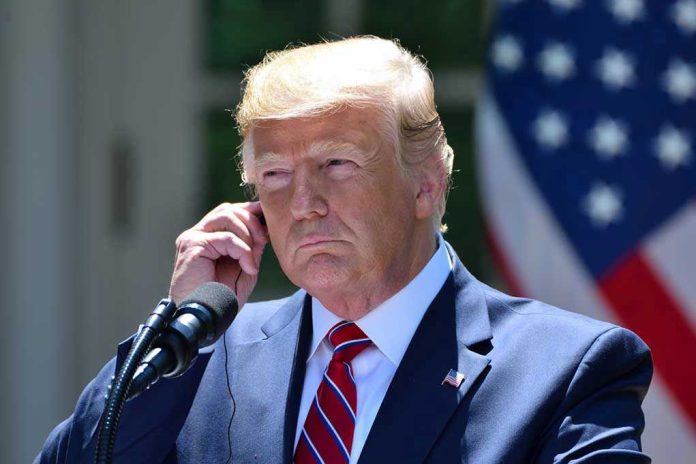
President Trump spoke directly with Fox News chief foreign correspondent Trey Yingst on Sunday, delivering an unmistakable message to Iran’s leadership. Trump characterized the moment as Tehran’s “last chance” to negotiate a nuclear agreement, warning that failure to sign would trigger U.S. military action targeting Iranian infrastructure. The president specifically mentioned power plants and bridges as potential targets, marking a departure from traditional military-only strike packages. Trump reinforced his warning through social media, urging Iran to make a fair deal or face the consequences. This approach contrasts sharply with previous administrations’ negotiating tactics, signaling Trump’s willingness to use overwhelming force to compel Iranian compliance.
High-Stakes Diplomacy in Pakistan
U.S. special envoys Jared Kushner and Steve Witkoff departed Monday evening for Islamabad, Pakistan, where neutral ground negotiations with Iranian representatives were scheduled. The American team previously walked away from initial talks in Pakistan after Iran rejected core U.S. demands, particularly a proposed 20-year moratorium on enriched uranium production. Nuclear expert David Albright praised the walkout strategy, stating it put Iran on the defensive and signaled America would not engage in endless negotiations without substance. Vice President JD Vance had led the earlier team that exited those stalled discussions. Regional officials confirmed Iran made a subsequent “significant proposal” following Trump’s ultimatum, though U.S. negotiators deemed it insufficient to warrant resuming talks.
Converging Deadlines Create Crisis Point
Multiple timelines are colliding to create an unprecedented pressure situation. Reports from April 7 indicated Trump’s “final” deadline for a nuclear agreement was just hours away. Separately, Iran faces a Wednesday deadline to lift its blockade of the Strait of Hormuz or face military action from U.S. forces. The strait closure has already prompted armed clashes between American and Iranian forces, threatening global oil shipping routes and energy markets. Intelligence assessments indicate Iran is approximately one week away from possessing sufficient fissile material for nuclear weapons, adding urgency to the diplomatic standoff. An ongoing regional ceasefire is set to expire next week, further complicating the security landscape.
Strategic Shift from Obama-Era Approach
Trump’s confrontational strategy represents a fundamental departure from previous nuclear negotiations with Iran. The administration explicitly rejected any financial incentives reminiscent of the Obama administration’s controversial cash payments associated with the Joint Comprehensive Plan of Action. Instead, Trump emphasized American military superiority and willingness to strike Iranian oil production facilities and regional proxy networks. Retired Lt. Col. Daniel L. Davis analyzed the Hormuz escalation, supporting Trump’s warnings as credible deterrence. Nuclear experts across the political spectrum acknowledged the effectiveness of the walk-away strategy, noting it stripped Iran of narrative control and forced genuine decision-making rather than perpetual delay tactics designed to extract concessions while advancing weapons development.
🚨 BREAKING: President Trump tells FOX News' Trey Yingst that this is the "last chance" for Iran to agree to a deal, vowing to not make the same mistake as former President Obama.
"If Iran does not sign this deal, the whole country is getting blown up," Trump said. pic.twitter.com/6PNvW5eEmd
— Alex West (@west_alex1776) April 19, 2026
The stakes extend beyond bilateral U.S.-Iran relations to encompass global energy security, nuclear non-proliferation frameworks, and Middle East stability. Oil markets face potential shock from Hormuz disruptions, affecting American consumers already sensitive to energy costs after years of renewable energy mandates that increased dependence on unstable foreign supplies. American allies throughout the region watch carefully as Trump’s maximum pressure campaign tests whether strength-based diplomacy can succeed where appeasement failed. For everyday Americans weary of endless Middle East entanglements and the elite establishment’s pattern of weak negotiations followed by military quagmires, Trump’s approach offers a stark alternative: clear ultimatums backed by credible force, with willingness to walk away if adversaries refuse reasonable terms rather than rewarding intransigence with concessions.
Sources:
Fox News: U.S. Envoys Depart for Pakistan
Fox News: Trump’s Last Chance Warning
Fox News: Trump’s Final Deadline Hours Away
Fox News: Trey Yingst Interview Coverage
Fox News: Nuclear Experts Praise Walk-Away Strategy