California lets eligible residents register to vote without a driver’s license or Social Security number, then verifies them later with a state-assigned ID and database checks.
Story Snapshot
- California allows registration without a driver’s license or Social Security number, assigning a unique voter ID.
- Most voters are not asked for identification at polling places, except in narrow first-time cases.
- First-time voters flagged under federal rules can use non-photo documents like a utility bill.
- Officials say database matching and signature checks verify identity behind the scenes.
What California Actually Requires To Register
California’s application asks for a driver’s license, a state ID, or the last four digits of a Social Security number. The state says you can still register if you have none of these. The system assigns a unique voter identifier so officials can track and validate your file. County staff add your signature to your record, and the statewide database attempts to match your details with driver and Social Security records where available. Critics call this a back-end trust fall.
Federal law set this structure in motion after the 2000s election reforms. California’s rules implement those standards by matching names, dates of birth, and available numbers against the Department of Motor Vehicles and Social Security records. When no license or Social Security number exists, the state’s regulations direct officials to issue a unique identifier and continue processing the registration. The policy goal is broad access with later checks, not a hard stop at the front door.
What Voters Must Show At The Polls
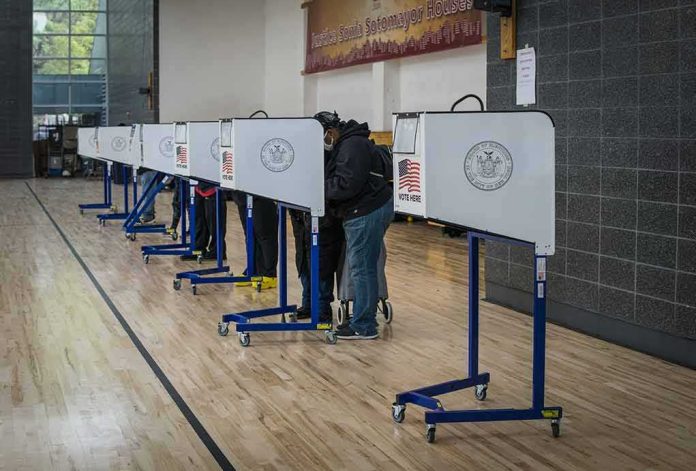
Poll workers do not ask most Californians for identification before handing over a ballot. The state’s own summary says so. Identification comes into play mainly for first-time voters who registered by mail and did not provide the requested numbers. Those voters can be asked for proof of identity the first time they vote in a federal election. This selective trigger is the hinge of the entire debate: routine voters face no ID, while a small slice do.
Acceptable documents for that first-time check include a recent utility bill, the county’s sample ballot booklet, or another government document. A passport, driver’s license, state ID, or student ID also qualify. The list shows a clear tilt toward proof of residency and name, not secure photo cards alone. California frames this as compliance with federal rules while keeping voting simple. Opponents argue the bar is too low for confirming true identity.
The Core Dispute: Front-End Proof Versus Back-End Matching
Supporters of stricter voter identification say verification should happen before a name hits the rolls or a ballot is cast. They argue that assigning a state ID to someone with no license and no Social Security number leaves a soft spot that only audits can find later. That concern lines up with common-sense conservative values: trust, verify, and lock the door before you leave. The state’s position is that layered databases, weekly updates, and signature checks close that gap in practice.
Happy to share that I have been volunteering for over a year now to support the Voter ID Initiative over here for my home state of California. Fighting for election integrity is the right thing, regardless of party lines.
— Andy V Renditions (@artsymammotech) September 2, 2026
California’s own materials also undercut a common claim that “any card” works at the polls. The official list of acceptable documents for those first-time voters is specific. A gym card or an insurance card does not appear on that list. Utility bills, government mail, and standard IDs do appear. The registration side and the polling-place side differ by design. Critics sometimes merge them. The rules let people register with missing numbers, but poll workers still have limited authority to check certain first-time voters.
What The Numbers Do—and Do Not—Show
Officials point to low known fraud cases to defend the approach, and they highlight that in-person voter impersonation is rare. The Secretary of State describes a system that matches Department of Motor Vehicles and Social Security data, and updates death and felony records on a frequent cycle. That is a serious process on paper. Yet the public record here does not supply statewide counts tying the unique-ID pathway to improper votes. The clash remains about structure, not proven abuse.
So where should the burden sit—front end or back end? A clear, consistent photo-ID rule at the polls would settle doubts for many voters. It would also impose new steps on some residents and change mail-ballot workflows. California has chosen the opposite direction: more access, more matching, and targeted checks. If lawmakers want both trust and turnout, they should publish hard data on how many registrations lack all listed numbers, how often matches fail, and how many first-time voters get flagged and cured. Sunlight would help both sides judge the tradeoffs.
Sources:
thegatewaypundit.com, sos.ca.gov, elections.cdn.sos.ca.gov, voteriders.org, ballotpedia.org