
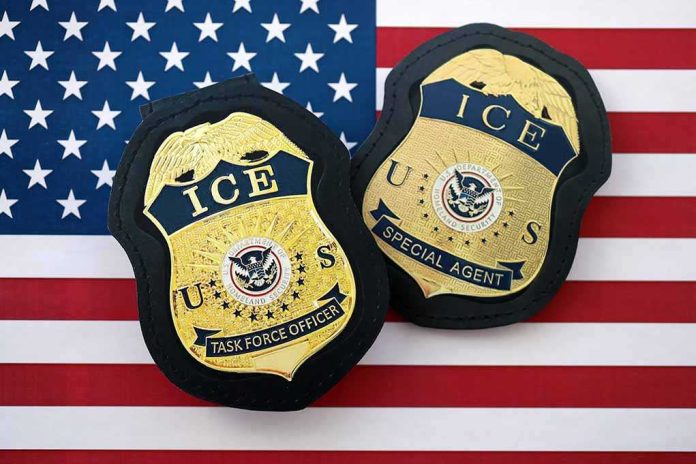
A U.S. citizen ended up bloodied on an Evanston sidewalk because federal agents mistook him for someone else—and the camera was rolling.
Story Snapshot
- Cellphone video shows federal immigration agents pinning a U.S. citizen who said, “I’m a U.S. citizen”.
- Department of Homeland Security said the man resembled their target and was released after he identified himself.
- News outlets reported head, neck, and dental injuries from the detention.
- Government records and scholarship show mistaken detentions of citizens are a recurring problem, not a one-off.
The Evanston Mistake, Caught on Camera
Evanston police and multiple outlets reported that federal immigration agents detained the wrong man on a city street and left him injured. Video shows the man on the ground, bleeding, saying he is a U.S. citizen as agents keep him pinned. Police later said agents realized he was not their target and learned he is a citizen before leaving the scene. The news timeline places the incident in the third week of September, with medical aid requested soon after.
The Department of Homeland Security said the man resembled the person they sought, received lawful commands, and did not cooperate at first. The department also said agents left without further incident once he identified himself. That account contests how the takedown unfolded, but it does not dispute the core fact: they held a U.S. citizen by mistake. Reports from several outlets describe injuries to his head, neck, teeth, or jaw following the encounter.
What The Law Allows—and Where It Fails
The government points to its power under federal law to question and, with probable cause, arrest during immigration operations. The Department of Homeland Security told reporters that agents act under federal statute and the Fourth Amendment standard for stops and arrests. That may be true as a legal frame. But authority to act does not excuse identity errors, poor verification, or force that outpaces the facts on the ground. Limited facts leave the legality call unresolved here; courts decide that, not press releases.
Two things can be true at once. Officers can have lawful tools, and citizens can still get swept up. Conservative values demand both border enforcement and personal liberty. That means clear rules to verify identity fast, strict limits on force when facts are thin, and swift correction when agents grab the wrong person. Government power must hit the target it aims at, not the neighbor who happens to look similar.
Beyond One Sidewalk: A Pattern With History
This incident fits a wider record of citizen detentions tied to weak verification and patchy oversight. Investigative reporting has documented citizens caught in immigration custody over the years, sometimes for days, before officials admitted the mistake. A congressional document collected examples of citizens pulled into enforcement actions in recent years and pressed agencies for better tracking and disclosure. Academic work going back more than a decade flags a base-rate problem: when millions of encounters occur, small error rates still hurt real Americans.
That pattern matters more than any one clip. A viral video can change minds for a day, but durable fixes need data and process. Agencies should log every case where agents detain someone later confirmed as a citizen, with time-to-verify and reason-for-stop fields. That is basic accountability. Congress should require regular public reporting and penalize field offices that repeat the same mistakes. Good policing starts with good records.
How To Fix the Miss and Protect Both Security and Liberty
Identity verification needs upgrades that work at street speed. Rapid checks that confirm Social Security records alone are not enough; those files can be messy. Agents should use multi-factor proofs when safe to do so: state records, prior immigration filings, and local police confirms when available. Supervisors should approve any use of force beyond restraint when identity is still in doubt. If a person claims citizenship, that should trigger a fast-track protocol and audio recording until resolved.
Report: More Than 500 U.S. Citizens Detained By ICE Officials dlvr.it/TVpSLM #News #ImmigrationandCustomsEnforcement pic.twitter.com/sZALCHQVOr
— The Randy Report 🇺🇸 🏳️🌈🇺🇦 (@randyslovacek) October 6, 2026
Victims need a clear path to report and repair. The Department of Homeland Security maintains complaint channels for actions involving U.S. citizens, including a detainee helpline and outreach offices. That is the floor, not the ceiling. A citizen wrongly held should get an incident number on the spot, automatic release paperwork, and a contact for medical costs and claims. Taxpayers already fund these operations; they should not fund preventable do-overs without learning from them.
Why This Story Will Not Vanish
Public trust hinges on a simple promise: the government knows the difference between citizens and noncitizens before it uses force. The Evanston clip broke that promise in full view. The Department of Homeland Security’s statement tries to narrow it to a compliance dispute. The video and the injury reports keep it larger: identity first, force last. That is common sense, and it aligns with both strong borders and stronger rights. Do both, or lose the country’s confidence.
Sources:
nytimes.com, cnn.com, crbcnews.com, people.com, yahoo.com, nbcchicago.com, chicagotribune.com, congress.gov