
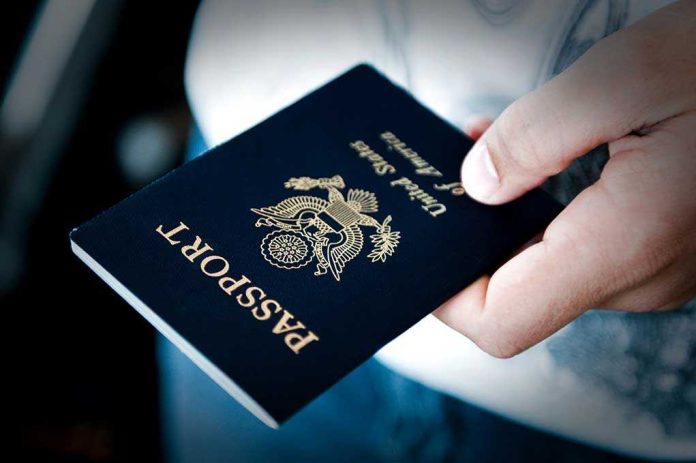
Connecticut now demands ironclad identification to board a plane but lets you vote with nothing more than your word on a piece of paper.
Story Snapshot
- Connecticut implemented federal REAL ID requirements for domestic air travel on May 7, 2025, requiring enhanced security documentation to fly
- The state maintains no photo ID requirement for voting, allowing residents to use Social Security cards or sign affidavits instead
- Approximately 73% of Connecticut residents already had REAL ID-compliant cards before the deadline, with upgrades costing $30 or $72 for renewals
- Only U.S. citizens and permanent residents qualify for REAL ID, while voting restrictions remain minimal regardless of citizenship verification
Two Doors, Two Standards
Connecticut residents discovered an odd quirk in American governance on May 7, 2025. The federal REAL ID Act, born from 9/11 Commission recommendations two decades earlier, finally demanded that anyone wanting to board a domestic flight present enhanced identification meeting strict security standards. Connecticut DMV officials scrambled to accommodate the remaining 27% of residents without compliant cards, offering extended appointment hours through April. Yet walk into any polling place in the Constitution State, and you face no such scrutiny. A Social Security card suffices. So does any pre-printed identification showing your name and address. Cannot produce even that? Sign an affidavit and vote anyway.
The REAL ID Reality Check
The Transportation Security Administration now refuses to accept standard Connecticut driver’s licenses at airport checkpoints. Residents needed to visit the DMV with birth certificates, Social Security cards, and two proofs of residency to obtain the federally compliant version marked with a star. Over 2 million Connecticut residents already possessed these cards before the deadline, with 31,000 processed in the month prior. Processing takes 20 business days after appointment. The cost runs $30 for an upgrade or $72 for renewal. Connecticut DMV spokesperson Ernie Bertothy confirmed the 73% compliance rate, suggesting residents understood the stakes of missing flights home from vacation.
The Voting Paradox
Connecticut law treats election security with remarkable leniency compared to airport security. The ACLU Connecticut explicitly confirms that voters face no photo ID requirement. Any government-issued document works, including utility bills or bank statements. Voters without documents sign Form ED-681, an affidavit attesting to their identity. This creates a peculiar hierarchy of trust: the federal government demands rigorous proof of identity to fly from Hartford to Orlando, but Connecticut asks virtually nothing to determine who governs the nation. The contrast defies common sense security principles that most Americans apply to their daily lives.
Security Theater or Sensible Standards
The REAL ID Act emerged from genuine security concerns after 19 hijackers exploited weak identification standards in 2001. Federal authorities established minimum security benchmarks for state-issued identification cards, requiring document verification and background checks. Implementation dragged for years, delayed by state resistance and pandemic backlogs. Connecticut began offering REAL ID cards in October 2011 as optional upgrades, giving residents nearly 14 years to comply. The May 2025 deadline carried real consequences: miss your flight or show a passport. Meanwhile, election integrity advocates have pushed for years to apply similar verification standards to voting, facing accusations of voter suppression for suggesting that casting ballots merits the same security as boarding aircraft.
The Citizenship Question Nobody Asks
REAL ID eligibility restricts compliant identification to U.S. citizens and permanent residents exclusively. Connecticut residents lacking this status cannot obtain the enhanced cards, regardless of their driving qualifications or length of residency. This federal standard acknowledges that certain privileges require verified citizenship or legal permanent status. Yet Connecticut voting procedures draw no such distinction, requiring neither proof of citizenship nor legal residency beyond self-attestation. The state trusts residents to honestly complete affidavits without verification mechanisms that federal aviation security deemed essential. This policy choice reveals differing philosophies about identity verification: one treats it as fundamental to security, the other dismisses it as unnecessary bureaucracy that might discourage participation.
Connecticut Just Passed a Tough New ID Law, but Not for Voting https://t.co/WbrNpnqI0Y This is not only ridiculous, but it shows that the Democrats' arguments in opposition to Voter ID laws — that some voters are too poor to get IDs — is a lie.
— AtomBob (@atombob357) April 20, 2026
The fundamental question remains unanswered: why does Connecticut consider strict identification essential for the relatively low-stakes act of boarding a domestic flight, yet treat it as optional for the high-stakes responsibility of selecting leaders and determining policy? The disparity suggests that security standards shift based on political priorities rather than consistent principles. Americans navigating this contradictory landscape might reasonably wonder whether their government prioritizes theater over substance, applying rigorous standards where convenient while ignoring them where politically awkward. Connecticut residents can now fly with confidence that their fellow passengers proved their identities, but they vote alongside neighbors who merely promised they are who they claim to be.
Sources:
CT’s REAL ID deadline approaches: What to know about new TSA requirement
Know Your Rights: Voting and IDs in Connecticut