President Trump labeled congressional criticism of his Iran war strategy “virtual treason,” as Defense Secretary Pete Hegseth clashed with lawmakers over war costs, legal authority, and battlefield outcomes in back-to-back Capitol Hill hearings.
Story Snapshot
- Defense Secretary Pete Hegseth testified before Congress defending Operation Epic Fury, the U.S. military campaign against Iran, amid fierce bipartisan questioning over costs, authorization, and strategy.
- Hegseth argued that a ceasefire “pauses” the 60-day congressional approval deadline under the War Powers Resolution, a claim Democrats and some Republicans sharply disputed.
- Cost estimates for the Iran conflict range from a disputed $29 billion figure to warnings the total could reach nearly $50 billion, with no complete accounting yet for damage to U.S. military facilities.
- Senator Elizabeth Warren accused Hegseth and others of potentially profiting from the war — an allegation Hegseth flatly denied, saying “no one owns me.”
Hegseth Defends Iran Operation on Capitol Hill
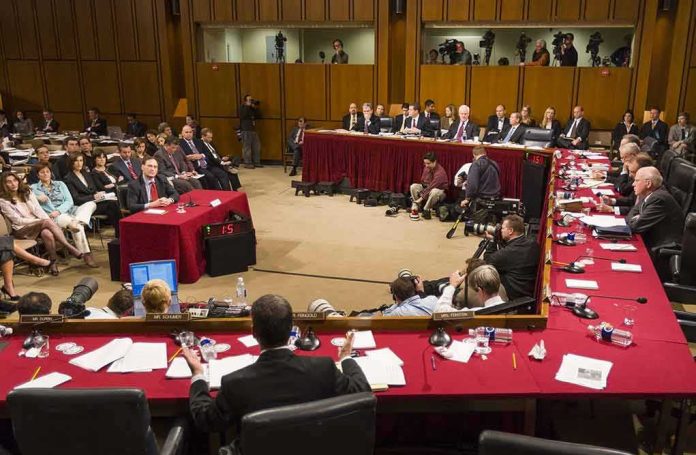
Defense Secretary Pete Hegseth and Joint Chiefs Chairman General Dan Caine testified before Senate and House committees in May 2026, marking the first time top Pentagon officials faced lawmakers directly since the Iran conflict began. Hegseth pushed back against what he called politically motivated attacks, defending the operation’s objectives and insisting the military campaign — dubbed Operation Epic Fury — was pursued on American terms, not forced on the administration by outside pressure.
Hegseth was direct in rejecting the notion that allies or circumstances dragged the U.S. into the conflict. He criticized allied nations for hesitating when action was needed, stating flatly that “nothing gets foisted” on President Trump. General Caine testified under oath that the joint force remains operationally ready, acknowledged 14 service members lost during Operation Epic Fury, and stressed that sustained defense investment is essential to maintaining U.S. military superiority going forward.
War Powers Clock and the Ceasefire Dispute
A central flashpoint in the hearings was Hegseth’s claim that the current ceasefire with Iran effectively “pauses” the 60-day deadline imposed by the War Powers Resolution of 1973, which requires congressional authorization for sustained military hostilities. Lawmakers from both parties rejected that interpretation. Senator Tammy Baldwin and others argued the clock does not pause simply because active fighting has temporarily stopped, demanding formal authorization or a withdrawal of forces.
This dispute follows a well-worn pattern in American history. Since the War Powers Resolution passed, Congress has formally authorized only a handful of major military operations, while presidents of both parties have relied on Article II executive authority to act without new authorization. The Trump administration’s ceasefire-pause argument echoes similar executive branch positions taken in prior conflicts, though critics argue this case involves a scale of operations that demands explicit congressional sign-off.
Cost Questions and Accusations of Deception
Senator Patty Murray pressed Hegseth on the financial cost of the Iran war, calling the administration’s $29 billion figure “suspiciously low” because it excludes damage to U.S. military facilities. Iran struck at least 228 American military structures or pieces of equipment during the conflict, according to reporting cited in the hearings. The Pentagon’s acting comptroller admitted no current cost estimate exists for facility repairs, saying the final number depends on future military posture decisions. Murray stated bluntly: “We can’t get that number and that is the real concern to us.”
US Defense and Iran Policy 🇺🇸🇮🇷
Defense secretary Pete Hegseth clashed with lawmakers in congressional hearings over strategies for the Iran war, defending administration positions amid pointed questions on escalation risks and resource commitments. President Donald Trump… https://t.co/3apaGVhy3x
— U.S.A.I. 🇺🇸 (@researchUSAI) May 12, 2026
Senator Elizabeth Warren went further, accusing Hegseth of insider trading — suggesting administration officials may have profited from advanced knowledge of the military operation. Hegseth rejected the accusation forcefully during the Senate hearing, denying any financial conflict of interest and dismissing the charge as a political smear. Separately, some lawmakers accused Hegseth of “lying to the American public” about the war’s progress and costs — accusations Hegseth disputed throughout the multi-day testimony. President Trump, watching the proceedings, publicly labeled the congressional criticism “virtual treason,” a remark that drew its own round of controversy. Senate Democrats also attempted to pass legislation limiting Trump’s Iran war powers during this period, but that effort failed to advance.
Sources:
[1] Web – Hegseth denies profiting from Iran war after Warren’s accusations
[2] YouTube – ‘You’re LYING’: U.S. Congressmen ROAST Pete Hegseth …
[3] YouTube – Democratic senators spar with Defense Secretary Pete Hegseth …
[4] YouTube – Hegseth accused of ‘lying to the American public’ about war in Iran
[5] YouTube – Hegseth Slams Allies, Says Iran War Was Not ‘Foisted’ on Trump by …
[6] Web – Hegseth criticises allies over Iran and says ‘Nothing gets foisted on …
[7] YouTube – Pete Hegseth disputes Iran conflict deadline as costs …
[8] YouTube – Iran war: Hegseth argues ceasefire pauses 60-day deadline
[9] YouTube – Pete Hegseth Lays Out Why Iran’s Incentives To Stay In Ceasefire …
[10] Web – Hegseth faces new questioning from Congress on the Iran war
[11] YouTube – Pete Hegseth questioned over Iran war