
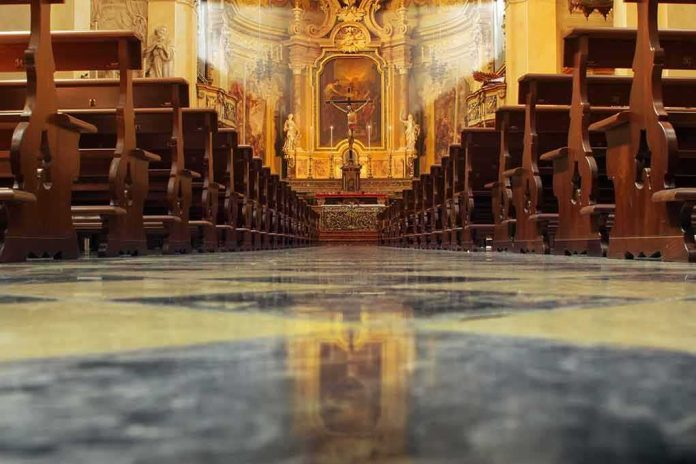
Police arrested a man who admitted smashing a basilica display, stealing a St. Nicholas relic, then burning and crushing it.
Story Snapshot
- Arrest followed a parish report of a missing St. Nicholas relic in Lorraine, France.
- The suspect admitted breaking the case and destroying the fragment, according to parish accounts.
- The object was a reliquary holding a bone fragment attributed to Saint Nicholas.
- Investigators were told the motive was opposition to relic veneration, not profit.
Arrest Tied To Missing Relic At French Basilica
Police identified a suspect and arrested him at his home after a relic vanished from the Basilica of Saint-Nicolas-de-Port in northeastern France. Parish leaders reported the disappearance to authorities, naming a reliquary that held a bone fragment linked to Saint Nicholas. Local and regional outlets describe a straightforward case: a parish alert, a police investigation, and a quick identification of a single suspect. The church’s report anchored the timeline and set the search in motion.
The arrest capped several days of concern in the parish community. The basilica safeguards artifacts tied to the fourth-century bishop known for charity and the legend behind Santa Claus. The missing item was not a golden chalice or a painting with resale value. It was a small fragment revered for its spiritual link. That detail matters. It shaped both the manhunt and public reaction as word spread beyond Lorraine and into national and English-language coverage.
Confession Focused On Destruction, Not Resale
Accounts from the parish and press say the suspect admitted to police that he smashed the protective glass, removed the reliquary, then burned and crushed the bone fragment. He did not try to fence the object or melt down precious metal. Reports say he called the veneration of relics a kind of idolatry or fetishism, which he rejected. That statement tracks with the reported destruction rather than any plan to profit in the black market for religious art.
That motive sets this case apart from many crimes against religious heritage. Law enforcement groups say most thefts of sacred objects are property crimes, driven by cash, opportunistic access, and weak security. Churches and places of worship appear often on target lists because they house valuable items and welcome the public. The International Criminal Police Organization says such spaces are common targets worldwide, even if many thefts still occur in private homes.
What Made This Theft Different From The Usual Pattern
Typical church thefts cluster around objects with obvious material value. Historic England’s national assessment flagged lead roofs stripped for scrap and artifacts taken for resale. Federal Bureau of Investigation (FBI) guidance warns police to expect opportunistic thefts and patchy reporting across jurisdictions. This case pivots on a belief-driven act against a small, sacred fragment, not a quick grab for cash. That contrast explains why parish testimony became central and why police moved fast.
Public patience runs thin when sacred spaces get hit. People expect two things that match American conservative values and common sense. First, protect houses of worship with basic security that works. Second, enforce the law without fear or favor when someone desecrates what communities hold dear. This case checks both boxes so far: a prompt report, an arrest, and a stated motive that lets prosecutors frame charges and seek a clear outcome consistent with public order.
Saint Nicholas, A Living Tradition With Local Weight
Saint Nicholas is more than a Christmas tale in Lorraine. Towns mark his feast with processions and family events. The basilica anchors that identity. Removing even a small relic hits morale and memory, not just a display. That is why the parish’s message had urgency and why the reported confession drew sharp reactions. The story also traveled fast because it touched the root of a wider season, weeks before communities turn to Advent and the saint’s feast day.
MAN ARRESTED FOR SMASHING CASE, STEALING, BURNING & CRUSHING BONES OF ST. NICHOLAS AT BASILICA IN LORRAINE FRANCE
A Suspect Has Been Arrested (BUT NOT NAMED) After Breaking Into A Protective Display Case At The Basilica Of Saint-Nicolas-De-Port In Meurthe-Et-Moselle, France,… pic.twitter.com/lLb8a9tvv7
— John Basham (@JohnBasham) November 9, 2026
One caveat remains in open reporting. Coverage relies on parish accounts and local media summaries rather than a full court file in public view. That is not unusual in European cases at this stage. The core facts still stand: a parish report, a home arrest, and a suspect who, according to published accounts, admitted to breaking, taking, and destroying the relic. Authorities now carry the task to charge, test evidence, and secure a judgment that fits the facts.
Sources:
nashaniva.com, dailycaller.com, thecatholicherald.com, dailymail.com