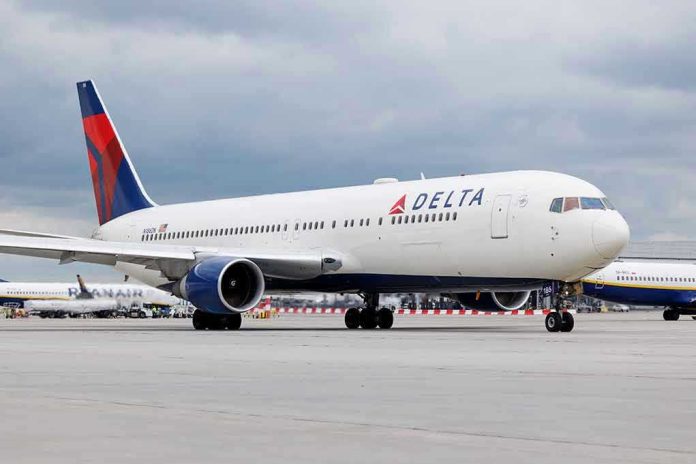
One phone call unleashed chaos at Reagan National Airport, proving that even a false threat can turn routine travel into a nerve-wracking spectacle that grips an entire city.
Story Snapshot
- A bomb threat targeting United Airlines Flight 512 forced a complete ground stop at Reagan National Airport.
- Passengers were kept onboard for nearly an hour before a tense evacuation—without their belongings.
- No explosives were found, but the disruption rattled airport operations and travelers throughout the day.
- The FBI investigation into the source of the threat remains active, with public anxiety lingering.
United Flight 512: Sudden Threat Turns Routine into Emergency
United Airlines Flight 512 from Houston touched down at Reagan National Airport the morning of November 4, 2025, expected to be just another arrival in a busy schedule. Minutes after landing, air traffic control received a chilling phone call: a bomb was allegedly onboard, timed to detonate if the plane reached the ground. Authorities moved instantly, isolating the aircraft and surrounding it with emergency vehicles, transforming ordinary travel into a high-stakes drama for everyone involved.
Passengers and crew had no idea why their plane sat on the tarmac, far from the terminal, for nearly an hour. Anxiety simmered as the minutes ticked by, fueled by unanswered questions and the sight of emergency personnel assembling outside. Only when law enforcement ordered an urgent evacuation—insisting all belongings be left behind—did the reality of the situation begin to dawn. Shuttle buses whisked passengers away, leaving their possessions and sense of normalcy behind as authorities began the painstaking search for explosives.
Airport Operations Disrupted: How a Single Threat Paralyzed Reagan National
Reagan National Airport, a hub vital to the nation’s capital, ground to a halt. Flights awaiting takeoff were frozen, incoming planes diverted or delayed, and travelers throughout the terminal watched as the drama unfolded on the runway. The bomb threat—later determined a hoax—demonstrated the vulnerability of even the most secure facilities to disruption by a single, anonymous call. Airport officials coordinated with federal law enforcement, the FBI, and United Airlines operations to minimize risk and manage the chaos, prioritizing safety but unable to prevent hours of schedule upheaval.
While no device was found and all passengers were ultimately safe, the incident’s effects rippled well beyond Flight 512. Delays cascaded through the day’s flight schedule, affecting thousands of travelers and causing economic and logistical headaches for airlines, airport staff, and the broader transportation network. The coordinated response, though effective, underscored the delicate balance between security, efficiency, and communication in the modern aviation landscape.
Passenger Perspective: Confusion, Relief, and Lingering Unease
For those aboard Flight 512, the ordeal was defined by confusion and fear. Passengers described being left in the dark about the nature of the threat until evacuation, voicing frustration at the lack of information but relief at the professionalism of the emergency response. The forced abandonment of personal items added to the sense of vulnerability, with many left wondering how such a threat could so easily upend their lives—even if it proved unfounded.
Airport staff and law enforcement prioritized swift, decisive action, but the psychological impact on travelers remains. Interviews with passengers revealed gratitude that no real danger materialized, yet anxiety lingers over the ease with which a hoax call can trigger mass disruption. The experience is a stark reminder that, despite layers of security, airlines and airports must constantly adapt to new threats, both real and imagined.
Security Protocols and Industry Implications: Lessons from the Ground Stop
Experts in aviation security emphasize the necessity of treating every threat as credible. The Reagan incident highlights the effectiveness of established protocols—isolating aircraft, evacuating passengers, and thorough searches—in ensuring safety. However, it also exposes the costs: operational paralysis, economic losses, and a shaken public. Calls for investment in threat detection and caller identification technology are growing, alongside pleas for clearer crisis communication to reduce passenger distress.
Aviation analysts argue that while most bomb threats prove to be hoaxes, their disruptive potential is real. The Reagan ground stop serves as both a warning and a case study, prompting industry-wide reflection on how best to balance vigilance, transparency, and efficiency. The FBI’s ongoing investigation into the source and motive of the threat could yield further lessons for airlines and regulators, shaping the next generation of emergency protocols and public trust measures.
Sources:
DCA flights grounded for over an hour after reported bomb threat