
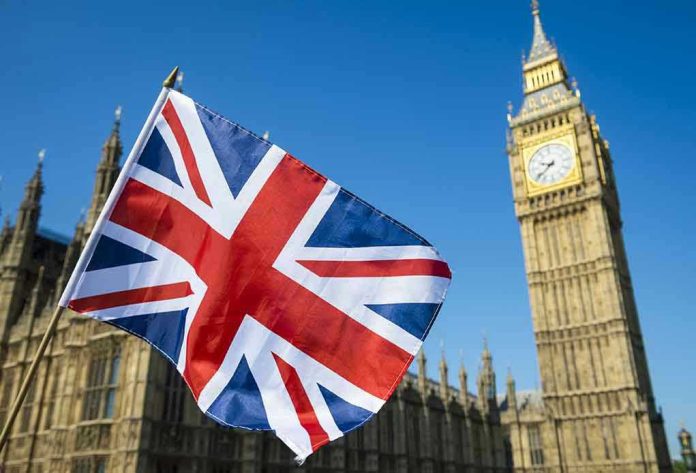
Britain’s new approach to immigration is less about open arms and more about closed doors, with echoes from a darker past that demand our attention.
Story Snapshot
- Shabana Mahmood signals a dramatic shift in Britain’s immigration stance, invoking a controversial past.
- The rhetoric mirrors divisive historical slogans, sparking debate on national identity and values.
- The government’s promise of sanctuary gives way to an assertive policy of removal for illegal immigrants.
- This moment tests Britain’s commitment to compassion versus control, raising difficult questions for the future.
Britain’s Immigration Turning Point: The Signs Go Up
Shabana Mahmood, a senior political figure, chose an image as blunt as it was provocative: “Britain is full. No blacks, no dogs, no Irish.” This phrase, infamous for its use in the windows of boarding houses during the last century, is more than a slogan—it’s a scar. Mahmood’s message marks a deliberate pivot from Britain’s long-standing self-image as a sanctuary for the desperate. Now, the government intends to remove those deemed illegal with new determination, setting aside the old hospitality for a hard-line policy.
Such rhetoric isn’t just policy—it’s theater, designed to stir the public and force a reckoning with uncomfortable truths. Mahmood’s words don’t merely echo the signs of the past; they challenge today’s Britain to decide what kind of country it wants to be. By putting compassion and control into open conflict, she is gambling that the electorate’s desire for order now outweighs its pride in openness. For readers who remember the postwar period or have family stories marked by migration, this new stance feels like a rewriting of the national script.
The Historical Resonance: Old Slogans, New Politics
The phrase “No blacks, no dogs, no Irish” isn’t randomly chosen. It holds a mirror to Britain’s troubled history with race and migration, summoning memories many would prefer to forget. Using it now, in the context of immigration enforcement, is a calculated move. Mahmood seeks to wake the nation from complacency, but risks inflaming tensions that have never fully healed. The message is clear: sanctuary is conditional, and the conditions are tightening.
For those over 40, the echo is unmistakable. Many recall the painful days when such signs were not just metaphorical. Policymakers now invoke that era to justify new restrictions, arguing that the nation can no longer serve as the world’s refuge. This rhetorical tactic isn’t just about numbers or legal status—it’s about national memory and identity, about who gets to belong and who must go.
Policy Shift: From Sanctuary to Expulsion
The government’s new tone leaves little room for ambiguity. Mahmood makes it plain: the age of sanctuary is ending, replaced by a “kick them out as soon as possible” doctrine. This is a break from decades of carefully balanced language about compassion, integration, and British values. Instead, the focus is on bold enforcement, with all the risks and backlash that entails.
The shift is not just administrative—it’s cultural. For years, Britain prided itself on being a haven for those in dire need, citing postwar refugee programs and asylum policies as evidence of its moral leadership. Now, the language is about limits, about protecting resources and social cohesion. The message to would-be immigrants is stark: don’t expect leniency, and don’t expect to stay.
A Nation at a Crossroads: Compassion Versus Control
Mahmood’s stance forces a national debate—one that’s as much about values as about visas. Britain must now answer whether it is prepared to let go of its legacy of sanctuary in favor of a fortress mentality. For some, this is a necessary correction; for others, it is a betrayal of everything the nation once stood for.
The open question is whether this new approach will satisfy the public’s demand for order, or simply deepen divisions over what it means to be British. As the signs go up—literal or metaphorical—the country stands on the threshold of a new era, with echoes of the past ringing louder than ever.
Sources:
Mahmood battles backlash from Labour MPs over asylum reforms