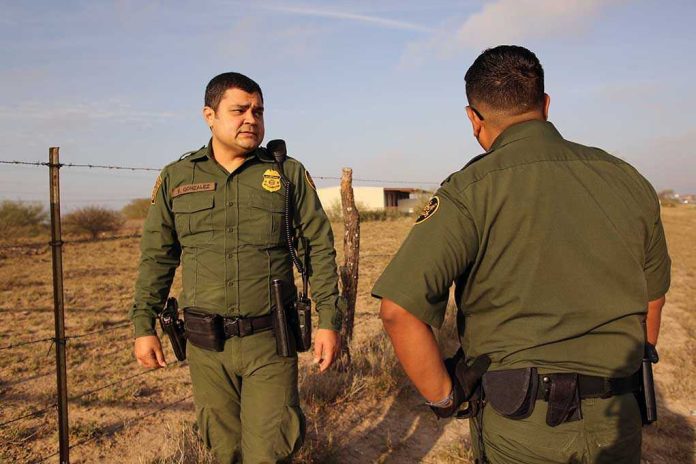
Cartels are putting a $10,000 price tag on the lives of Border Patrol agents, turning the U.S.-Mexico border into a literal hunting ground—and America’s law enforcement into targets for organized, well-funded killers.
Quick Take
- Federal memo exposes $10,000 bounties offered by Mexican cartels for shooting Border Patrol agents.
- Cartel hitmen may disguise themselves as Mexican military, using military-grade weapons to ambush agents in Texas’s Rio Grande Valley.
- This threat is part of a broader, tiered bounty system, with up to $50,000 offered for assassinations of federal agents.
- Recent attacks and plots reveal a new, more aggressive cartel strategy against U.S. law enforcement.
Cartels Escalate: Turning the Border into a Battlefield
Early November 2025, Border Patrol agents across the Rio Grande Valley received an internal memo that read like something from a wartime intelligence briefing. The warning: Cartels are paying $10,000 for anyone who dares to shoot at a U.S. agent. This isn’t the first time cartels have placed bounties, but the explicit cash offer, the coordination, and the military-style deception push the threat to a whole new level. The memo describes assailants potentially donning Mexican military uniforms and wielding long guns or even machine guns—an audacious and deeply troubling escalation.
Cartel violence at the border is nothing new, but this level of open incentivization is. The Rio Grande Valley—spanning over 34,000 square miles—has long served as a blood-and-money corridor for drug and human smuggling. But now, the stakes for those on the frontlines have been raised by criminal organizations frustrated by increased law enforcement pressure and recent large-scale U.S. operations. This is as much about sending a message as it is about eliminating obstacles.
A Tiered Bounty System: Money for Mayhem, Terror as Strategy
The memo is just one piece of a broader, more sinister puzzle: a tiered bounty system recently exposed by the Department of Homeland Security. Cartels aren’t just offering $10,000 for shootings—they’re putting up to $50,000 on the heads of federal agents for assassinations. Doxxing, assaults, kidnapping: each comes with its own price. Law enforcement sources confirm these offers aren’t empty threats. In the past month alone, there have been multiple attacks on federal facilities, including a sniper assault on a Dallas ICE center. Cartel frustration has given way to open warfare tactics, with U.S.-based gangs reportedly acting as hired guns for Mexican kingpins.
Operation Midway Blitz in Illinois, which netted more than 1,000 arrests, has been cited as one of several enforcement actions that may have triggered this escalation. DHS intelligence bulletins warn of “proxy violence”—Chicago gangs and others acting on cartel orders. The message to agents: Be vigilant. The message to the cartels’ foot soldiers: There’s cash to be made in blood.
Warfare and Deception: Cartels’ Military Tactics on U.S. Soil
Cartel operatives are refining their tactics, blurring lines between criminality and paramilitary action. Disguising themselves as Mexican military not only confuses agents in the heat of engagement but also gives the cartels plausible deniability and diplomatic cover. The use of long arms—including military-grade rifles and machine guns—signals a willingness to escalate from hit-and-run violence to outright armed conflict. Security analysts warn this is not simply a response to law enforcement pressure, but a calculated strategy to intimidate and paralyze U.S. operations along critical smuggling routes.
Federal agents now face not just random violence but targeted, profit-driven attempts on their lives. This shifts the balance of risk for agents and may undermine recruitment, morale, and operational capacity. DHS Secretary Kristi Noem has called the threats an “organized campaign of terror,” and federal agencies are scrambling to adapt protocols and increase protective measures.
Ripple Effects: Border Communities, Policy, and the American Public
These bounties do not just endanger federal agents—they cast a long shadow over America’s border communities, law enforcement families, and even migrants caught in the crossfire. The prospect of open gunfights or targeted assassinations disrupts daily life, frays trust, and increases fear on both sides of the border. For policymakers and the public, these threats fuel an already heated debate over border security, immigration enforcement, and U.S.-Mexico relations. The economic cost of ramped-up security and the social cost of fear and instability will only grow if this campaign of violence escalates further.
Industry experts and criminologists agree: Cartels are adapting, and they are using financial incentives for violence as a tool of both retaliation and deterrence. Some warn that heavy-handed enforcement could provoke even more aggressive tactics. Others argue that the only solution is overwhelming, coordinated, and relentless law enforcement action. All acknowledge one thing: The border has become a proving ground—for the cartels’ ruthlessness and for America’s resolve.
Sources:
WJBC: Memo: Cartels Offering $10K to Shoot at Border Agents