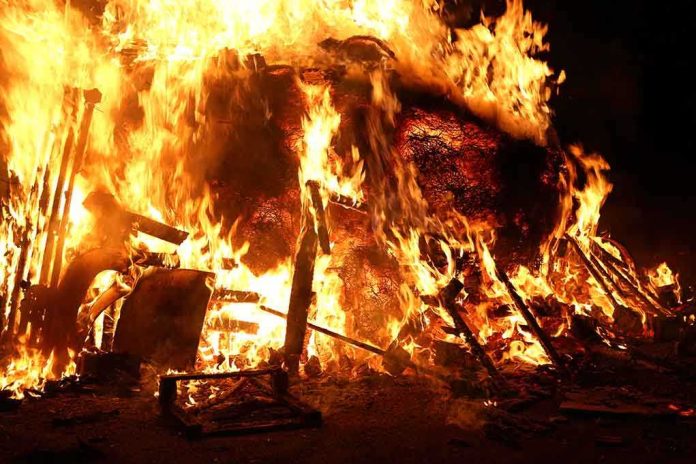
A transformer fire at a convenience store in Mexico’s Sonora state killed at least 23 people, including children, exposing a critical gap between rapid urban expansion and aging electrical infrastructure that governments refuse to adequately address.
Quick Take
- A fire and explosion at Waldo’s convenience store in downtown Hermosillo, Sonora killed at least 23 people and injured 12 others on November 1, 2025
- Preliminary investigations indicate a transformer failure sparked the blaze, though the exact cause remains under investigation
- Children were among the fatalities, and six injured remained hospitalized as of Sunday morning
- President Claudia Sheinbaum dispatched federal support to assist victims’ families and ordered an investigation into safety violations
- The tragedy underscores Mexico’s infrastructure vulnerabilities in high-density urban commercial districts
When Infrastructure Fails, Bodies Count
Hermosillo, a city of roughly 900,000 people, experienced explosive growth over the past two decades without corresponding upgrades to its electrical systems. Downtown commercial districts like the one where Waldo’s operates operate in older buildings with mixed-use zoning, creating a perfect storm for catastrophic failure. The transformer that ignited this fire didn’t spontaneously decide to explode—it was the inevitable result of aging infrastructure pushed beyond safe operational limits by unchecked urbanization and deferred maintenance.
The Transformer That Changed Everything
Preliminary findings from Sonora authorities point to a transformer as the ignition source, though investigators continue examining whether the device malfunctioned due to age, overload, poor maintenance, or design defects. The fire spread rapidly through the convenience store, with victims succumbing primarily to toxic gas inhalation rather than burns. Six injured individuals remained hospitalized Sunday morning, their conditions suggesting severe respiratory damage from smoke exposure. The speed and intensity of the blaze raises questions about fire suppression systems and emergency evacuation procedures at the location.
A Pattern Mexico Refuses to Break
This isn’t Mexico’s first brush with infrastructure-related disaster. A 2019 daycare fire in Monterrey killed 26 children and prompted nationwide fire safety reforms that apparently never reached Hermosillo’s commercial districts. A 2023 shopping center fire in Hermosillo injured several people and triggered temporary closures and safety inspections. A 2021 transformer explosion in a residential area caused significant property damage. Each incident generates headlines, promises of reform, and official hand-wringing—followed by business as usual.
Federal Response and Political Theater
President Claudia Sheinbaum issued condolences and ordered federal support for victims’ families and the injured. Interior Secretary Rosa Icela Rodríguez coordinated federal assistance while Sonora Governor Alfonso Durazo and Attorney General Gustavo Salas Chávez oversaw the investigation. These responses matter for grieving families, but they arrive after the tragedy, not before it. The real question isn’t whether officials will express sympathy—it’s whether they’ll mandate the electrical infrastructure modernization that could have prevented this entirely.
The Accountability Question
Victims’ families will likely pursue legal action against Waldo’s store management and local authorities for negligence. They’ll demand compensation, justice, and explanations. What they probably won’t get is systemic change. Mexico’s fire safety regulations exist on paper, but enforcement remains inconsistent, especially in older buildings and high-density commercial areas where profit margins matter more than safety inspections. Until authorities establish mandatory electrical system audits, enforce compliance with real consequences, and hold business owners accountable for deferred maintenance, Hermosillo’s infrastructure will continue aging while its population grows.
What Comes Next
The investigation will likely conclude with findings about the specific transformer failure, recommendations for improved safety protocols, and calls for regulatory reform. Some of those recommendations may be implemented. Others will be shelved due to cost concerns or bureaucratic resistance. The real test comes in whether Hermosillo and other Mexican cities use this tragedy as a catalyst for comprehensive infrastructure modernization or simply file it away as another unfortunate incident in a pattern that keeps repeating.
Sources:
Fire and explosion at store in northwestern Mexico leave at least 23 dead and a dozen injured