Congress is pushing a farm-labor overhaul that could turn seasonal visas into year-round work and ignite a fresh immigration fight.
Story Snapshot
- H.R. 9535 expands the farm guest-worker system and allows year-round jobs for visa holders.
- The bill has dozens of bipartisan cosponsors, signaling real momentum in Congress.
- Advocates say it modernizes hiring; critics call it “amnesty” that will weaken wages.
- The proposal is introduced and referred, with final text and outcomes still uncertain.
What The Bill Actually Does
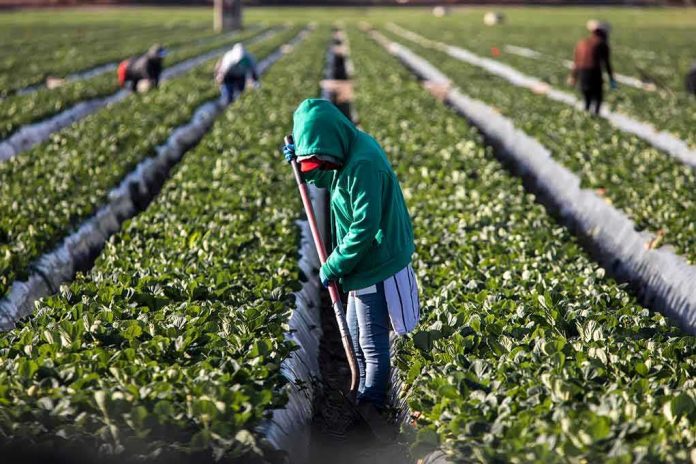
H.R. 9535, the Securing Agriculture’s Workforce Act of 2026, targets how farms hire workers. It expands the agricultural guest-worker program known as H-2A and removes the rule that limits it to temporary or seasonal work. That change would let employers hire visa workers for year-round farm jobs, which hits dairy and other continuous operations first. The bill also builds online tools for employers and agencies and locks in how wages are calculated for these jobs.
Supporters pitch the bill as a fix to recurring labor gaps that disrupt planting, harvest, and animal care. The measure attempts to speed up recruiting, reduce paperwork, and cut misfires in hiring. It is not a final law. Congress has only introduced the bill and sent it to committee. Details can change in markup or on the floor. That status matters because farm rules shift fast once lobbyists and committees start amending.
Who Is Behind It And Why That Matters
Representative Glenn Thompson introduced the bill on June 30, 2026. The cosponsor list shows a rare mix of Republicans and Democrats, including names from farm-heavy states. That spread signals a shared concern about labor in food production, even as the parties fight over the border. Bipartisan backing does not prove the economics, but it does show political will to change the system now.
The proposal speaks to a wider trend. Use of H-2A has surged over the past decade as farms report trouble finding workers and move to more formal recruiting channels. That growth reflects employer demand for predictable labor, though it does not prove a shortage at every farm or every crop. The current bill responds to that reality by shifting from seasonal to year-round access, and by standardizing wage rules.
Why Critics Call It ‘Amnesty’
NumbersUSA argues the bill would waive key penalties for people who worked enough hours in agriculture before enactment, and says many unauthorized farmworkers could shift into recurring H-2A status. The group warns this would reward unlawful presence and reset the labor market with a large guest-worker pool. The Federation for American Immigration Reform calls the bill an amnesty that invites more illegal immigration and depresses wages through year-round expansion and capped adjustments.
Yes, it’s amnesty. Not the full green-card-and-citizenship version the open-borders crowd wants, but amnesty all the same, the classic Washington variety that legalizes people who broke the law because employers and politicians find them useful.
What the bill actually does
H.R.…— Live From Studio 6B (@lfs6b) November 11, 2026
United Farm Workers raises a different alarm. The union says employers could swap resident workers for foreign guest workers tied to company housing, stuck with one employer, and blocked from permanent status. That model, they argue, would weaken bargaining and slow wage growth in rural towns. These claims are sharp and deserve scrutiny. The official summary does confirm year-round eligibility and wage-setting features, but it does not by itself prove wage harm or job loss.
What We Know, What We Do Not
Established facts show the bill expands H-2A, removes the seasonal-only constraint, sets online hiring tools, and codifies wage calculations. The record also shows introduction and referral, with no final law. That leaves outcomes uncertain. The primary file does not present hard data on farm vacancies, wage effects, or retention under year-round rules. Lawmakers are moving on program design without a public, quantified labor map that ties changes to results.
Conservative readers should weigh two principles. First, the rule of law must stand. Any waiver or status shift should be narrow, time-limited, and tied to clear background checks and enforcement. Second, the food supply must be reliable and domestic where possible. If Congress expands visas, it should also require strong E-Verify, tough fraud checks, mobile worker rights to prevent coercion, and wage rules that track real market signals, not caps that mask costs.
The Smart Middle Path Congress Should Take
Congress can square the circle with simple guardrails. Demand verified domestic recruiting first. Tie any year-round visa slot to clean background checks and on-farm housing that passes inspection. Require portability so a worker can switch employers within agriculture to reduce coercion risk. Link wage formulas to transparent surveys and block artificial caps that lag inflation. Sunset the reforms after a fixed period and force a public audit of wages, vacancies, and enforcement before renewal.
H.R. 9535 opens a door that could steady American agriculture or entrench a brittle dependency. The text moves quickly on access but leaves questions on enforcement, worker mobility, and wage signals. Lawmakers should lock in those protections now, not after the fact. Food security, fair pay, and the rule of law are not rivals. They are the three legs of the same stool. Tip one, and the harvest falls with it.
Sources:
thegatewaypundit.com, congress.gov, govinfo.gov