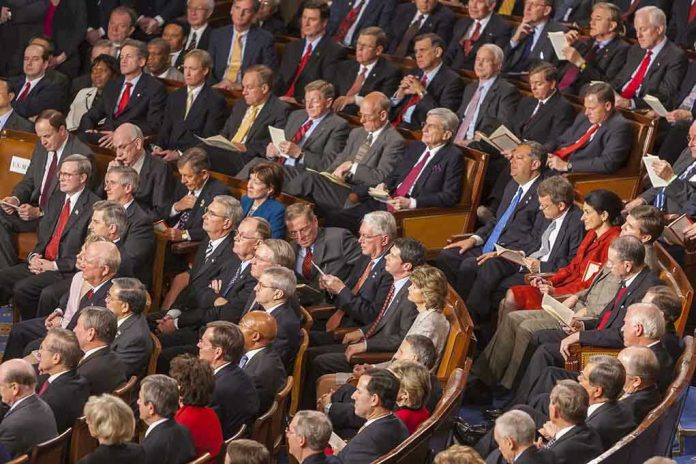
Congress could soon face a reality where their paychecks vanish the moment a government shutdown begins—thanks to a plan from Senator John Kennedy that’s as shrewd as it is provocative, and it’s poised to test just how accountable lawmakers are willing to be.
Story Snapshot
- Senator John Kennedy has introduced bills to suspend Congressional pay during government shutdowns.
- The proposal sidesteps the Constitution’s pay guarantee for legislators by technically delaying, not canceling, pay.
- This move forces lawmakers to share the financial pain federal workers feel during shutdowns.
- The plan reignites debate about Congressional accountability and incentives in budget negotiations.
Senator John Kennedy’s Bold Gambit: Tying Lawmakers’ Pay to Shutdowns
Senator John Kennedy, Republican from Louisiana, has launched a legislative offensive that targets a perennial sore spot: Congressional pay during government shutdowns. His proposed bills would halt daily paychecks for senators and representatives for every day the government remains shuttered. The initiative aims to make lawmakers feel the consequences of their budgetary brinkmanship, echoing the financial uncertainty forced upon millions of federal workers and contractors when Washington gridlocks. Kennedy’s plan arrives amid growing public anger over Congressional dysfunction, reframing the debate by making the cost of inaction personal for every member of Congress.
The legal ingenuity of Kennedy’s approach lies in its navigation of the Constitution’s Twenty-Seventh Amendment, which prohibits Congress from varying its own compensation until after the next election. Instead of outright denying pay, Kennedy’s proposal would delay the release of paychecks, effectively putting Congressional salaries on ice until a budget deal is reached. This legal sidestep may prompt a flurry of constitutional debate, but the intent is clear: Members of Congress cannot escape the consequences of the shutdowns they help create. The bill’s message is as stark as its mechanism—if federal employees must wait for their money, so must the lawmakers responsible for the impasse.
Shifting the Incentives: Who Really Feels the Pain of a Shutdown?
Government shutdowns have become a recurring spectacle in American life, with federal workers bearing the brunt of Congressional stalemate. While agencies close and services grind to a halt, lawmakers have historically continued to collect their pay, insulated from the effects of their own gridlock. Kennedy’s proposal would upend this dynamic, introducing real stakes for Congress itself. The plan is not without precedent—several similar bills have been floated in previous years, but none have gained the traction or attention Kennedy’s effort now commands, reflecting a shift in both public sentiment and political will.
For many Americans, the optics of Congress collecting salaries during shutdowns have long been a source of frustration. Kennedy’s legislation channels this public anger into a concrete policy, arguing that shared sacrifice is the only way to ensure lawmakers negotiate in good faith. Critics of such measures warn that financial penalties could encourage hasty deals rather than thoughtful budgeting, but supporters counter that current incentives favor posturing over progress. By directly tying Congressional pay to government functionality, Kennedy hopes to realign incentives toward compromise and fiscal responsibility.
Constitutional Questions and Political Calculus
The constitutional tightrope Kennedy’s bills walk will almost certainly be tested if the legislation moves forward. The Twenty-Seventh Amendment’s language was designed to prevent self-serving changes to Congressional pay, but Kennedy’s delay tactic seeks to respect its letter while challenging its spirit. Legal scholars remain divided on whether delayed compensation constitutes a “variance” under the amendment, setting the stage for potential court battles if the bills pass. This tension between constitutional safeguard and political accountability is at the heart of the debate—should Congress be shielded from immediate financial consequences, or should it confront the same uncertainty as those affected by shutdowns?
The political calculus is equally complex. Some lawmakers may balk at the prospect of personal financial loss, while others could embrace the bill as a demonstration of solidarity with federal workers. The proposal’s success will depend on whether enough members are willing to put their own paychecks on the line to prove their commitment to ending government shutdowns. Kennedy’s gamble is that public pressure and media scrutiny will make it politically untenable for Congress to reject the idea outright, especially in an election year when accountability is top of mind for voters.
Reframing Accountability in Washington
Senator Kennedy’s plan is more than a legislative tweak; it’s a pointed challenge to the prevailing culture of Congress. By making shutdowns a personal financial risk for lawmakers, the proposal seeks to upend the incentives that have allowed budget standoffs to become routine. Whether the bills survive legal and political hurdles remains to be seen, but they have already shifted the conversation about who should bear the cost of Congressional dysfunction. In a political climate where frustration with lawmakers runs high, Kennedy’s initiative may prove to be a pivotal test of whether Washington is willing to hold itself to the same standards it imposes on everyone else.
Voters, advocacy groups, and even some lawmakers are watching closely to see if Congress will embrace this new model of accountability. If Kennedy’s plan succeeds, it could set a precedent for how future shutdowns are handled, making clear that when the government closes its doors, everyone—including those at the top—pays the price. The outcome will reveal whether Congress is truly ready to accept responsibility for the consequences of its own decisions, or if, once again, the burden will fall on those with the least power to prevent it.
Sources:
Kennedy pushes plan to halt Congress pay during government shutdown