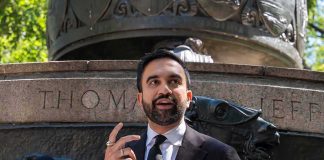
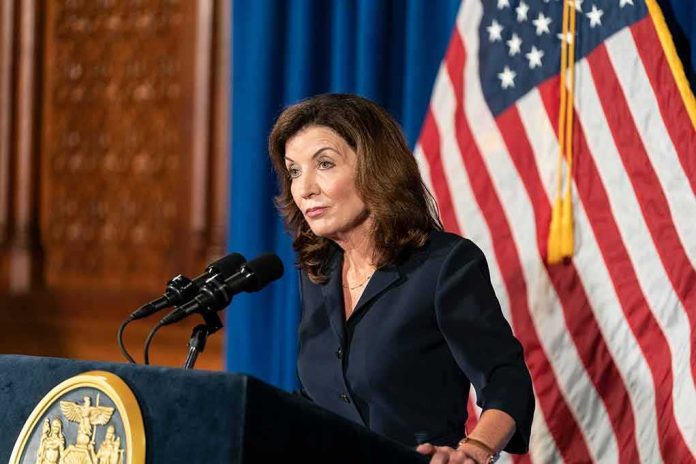
Bruce Blakeman says Governor Kathy Hochul built a conveyor belt that welcomes, funds, and shields migrants in New York, and the receipts he cites are public policy.
Story Snapshot
- Blakeman links Hochul’s record to policies that welcome and protect undocumented migrants.
- Hochul advanced state support for immigrant integration and legal defense funding.
- Claims that undocumented immigrants can vote in New York remain false under state and federal law.
- Research finds sanctuary rules reduce deportations without raising crime.
What Blakeman Is Arguing, And Why It Lands
Bruce Blakeman frames Hochul’s record as an open invitation. He points to state moves that fund legal services for unaccompanied minors and formalize protections against aggressive immigration enforcement. He adds the launch of a state institute to help immigrants, including those who lack legal status, connect to schools and jobs. On the trail and on debate stages, he says these choices signal softer enforcement and more benefits, which in his view drives more arrivals to New York.
That pitch speaks to three voter fears: safety, spending, and power. He argues sanctuary-style rules tie local police hands, risk public safety, and force taxpayers to foot rising costs. He claims Albany spent billions on hotels, food, and phones for people here illegally, and that this crowds out help for citizens. Even when the exact dollar figure is debated, the frame is simple and sticky: if you subsidize it, you get more of it. That is a classic conservative case.
What Hochul’s Record Actually Did
Hochul signed and promoted policies that expanded legal shields for immigrants. Her team highlighted laws that treat threats to report immigration status as coercion and set guardrails on state cooperation with federal enforcement. She also announced millions for lawyers to aid unaccompanied children and youth, and she backed an institute to speed immigrant integration into education and work, naming undocumented people among the focus groups. Supporters call this humane governance; critics call it a magnet.
Public safety claims need careful sorting. National media and academics have tested whether sanctuary policies raise crime. Multiple studies, including work published in the Proceedings of the National Academy of Sciences, found no rise in violent or property crime tied to sanctuary rules, while deportations did fall. Other reviews reach similar findings: homicide does not increase, and some domestic violence outcomes improve under sanctuary policies. These are aggregate results, not a shield against awful cases, but they push back on blanket crime claims.
The Voting Power Fight Is Narrower Than The Rhetoric
Some voters worry that the next shoe to drop is voting by people here illegally. The law says otherwise. Federal law makes noncitizen voting in federal elections a crime, and New York State law limits state elections to citizens. New York City tried to let certain lawful noncitizens vote in municipal races, but the New York Court of Appeals blocked it, citing the state’s citizenship rule. PolitiFact’s review is blunt: undocumented immigrants cannot vote in New York’s state or federal elections.
"We will no longer be a sanctuary state when I become governor."
Bruce Blakeman, who's challenging Gov. Kathy Hochul in November, vows to overhaul New York's immigration policies on "Hannity," claiming the state spends $81,000 per illegal migrant.
"It's a tragedy. It's wrong,… pic.twitter.com/rmra0pEpd4
— Fox News (@FoxNews) October 15, 2026
This matters because it separates two debates. One debate is about services and enforcement. The other is about the ballot box. The first debate is live and visible in budgets and shelters. The second has strict legal walls that courts just reinforced. When opponents stretch policy support for undocumented residents into claims of undocumented voting, the facts do not match the fear. A better test is whether the state’s support package helps or hurts public order and fiscal sanity.
How Conservative Voters Can Read The Tradeoffs
The core conservative lens asks three questions. Does the policy draw more illegal crossings or extended stays in New York? Does it burden taxpayers who see eroded services and higher costs? Does it weaken the rule of law by blurring lines between legal and illegal presence? Hochul’s programs to fund lawyers, limit cooperation with federal agents, and build integration pipelines for undocumented migrants cut against strict-enforcement priorities. The spending and signals are real; the voting panic is not.
Bottom Line For New York
New York cannot control the border, but it does control signals, services, and policing posture. Hochul set a compassionate course that offers help first and limits local entanglement with federal agents. Blakeman promises a turn toward enforcement and deterrence. Crime data do not prove sanctuary rules spark violence, yet the fiscal and fairness questions remain open and immediate. Voters must decide which costs they will carry and which risks they will accept in the name of order or mercy.
Sources:
npr.org, spectrumlocalnews.com, patch.com, governor.ny.gov, timesunion.com, breitbart.com, oleantimesherald.com, politifact.com, nydailynews.com