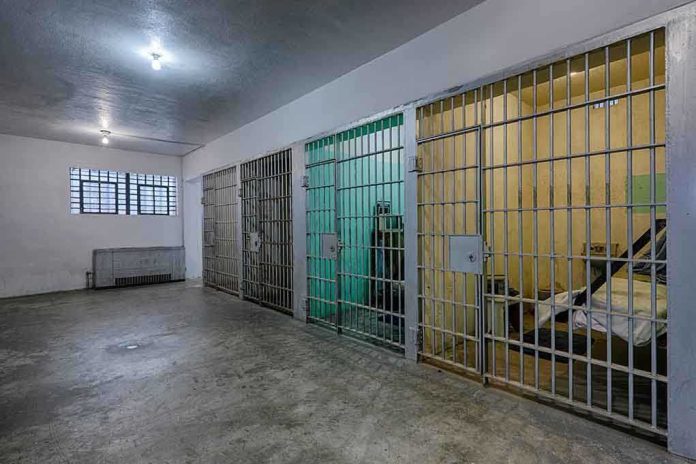
A 41-year-old Salvadoran father walked into a New Jersey immigration jail alive in June and left it as a body in August, and the gap between those two dates now hangs over America’s conscience like a question no one wants to answer.
Story Snapshot
- Edwin Lopez-Cornejo died after a reported medical emergency while in immigration custody in Newark.
- Federal officials say staff responded fast and he received proper medical care, but the cause of death is still pending.
- Family members and advocates claim he was denied key medication, and elected officials are demanding answers.
- The case exposes deeper questions about how America treats detained migrants and who is accountable when someone dies behind locked doors.
A man dies in custody and the official story starts with a medical emergency
United States Immigration and Customs Enforcement says Edwin Lopez-Cornejo, a 41-year-old man from El Salvador, suffered a medical emergency while locked inside Delaney Hall Detention Facility in Newark. Staff at the privately run site, which holds immigration detainees under contract, reportedly reacted by providing care and calling 911. Lopez-Cornejo was taken to University Hospital in Newark, where medical workers pronounced him dead on August 1. The agency states that the official cause of death is still under review, and it labels his time in custody as having included “proper medical care.”
That bare timeline sounds clinical on paper, but it represents the final chapter of a man’s seven-week stay in a detention center already under heavy fire. Lopez-Cornejo had been arrested on June 18 and held at Delaney Hall until the day of his death. This was not his first contact with immigration enforcement; reporting notes he had a prior removal years earlier, which is common in complex border cases. None of that changes the basic fact: when the government holds someone, it takes responsibility for his safety every hour he is behind that fence.
Family grief and allegations of denied care collide with government assurances
While the official statement focuses on a sudden medical emergency, Lopez-Cornejo’s mother tells a much more personal and painful story. She says her son lived with diabetes and high blood pressure and needed steady medication to avoid serious health trouble. Advocates allege that he did not receive his required drugs during weeks in custody, and that he complained about health issues before he collapsed. The American Civil Liberties Union of New Jersey says he “reportedly died after not receiving adequate medical care,” putting the focus squarely on treatment inside the facility. These claims directly challenge the federal line that his medical care was proper, and they raise a simple, hard question that matters to anyone who believes in common-sense responsibility: if the government takes your body, does it also fully protect your health?
Officials at the Department of Homeland Security and Immigration and Customs Enforcement have not publicly walked through detailed medical records, daily check logs, or minute-by-minute notes from the day he collapsed. Instead, the public hears a short statement about a medical emergency and fast staff response. That kind of tight messaging is normal for large agencies, but it leaves a big gap. In that gap, grieving family members and vocal advocates are filling the space with their own accounts, describing phone calls, symptoms, and pleas for help that they say were ignored. For many Americans, especially conservatives who value personal responsibility and clear accountability, the most pressing issue is simple: we need documents and sworn testimony, not just press lines, to know whether someone failed this man.
A detention center with a troubled past faces fresh scrutiny
Delaney Hall is not a blank slate facility that suddenly appears in the news because of one tragedy. State and local reports show months of protests over living conditions, including heat problems and hospitalizations after air conditioning failures. Federal authorities recently moved nearly 120 detainees out of the site and confirmed three hospitalizations linked to conditions there. This history shapes how communities hear the news of another death. When people already worry about poor treatment, every new incident sounds less like a freak event and more like part of a pattern. That is how public trust erodes: slowly, through repeated stories that rhyme.
Edwin Lopez-Cornejo received “proper medical care” while in custody, according to ICE, which also says his official cause of death will be released following further medical examination. https://t.co/9ak4rvnyCb
— NBC News (@NBCNews) August 4, 2026
Elected officials have stepped into the spotlight, and their words carry weight. Senator Cory Booker called the circumstances “deeply disturbing” and repeated his long-standing call to close Delaney Hall for good. Representative Bonnie Watson Coleman released a statement pressing for a full accounting of what happened before and during Lopez-Cornejo’s collapse. New Jersey leaders and city officials have confirmed the death and demanded transparency, saying at minimum the family and public deserve clear answers. Their stance aligns with basic conservative values about government oversight: when a person dies in state custody, the state must show the facts, not hide behind vague language.
What this death says about detention, duty, and American values
Immigration detention will always spark strong feelings, but underneath the politics sits a basic question about duty. When the United States locks someone up, whether in a county jail or an immigration center, it does more than restrict movement. It takes near total control of that person’s daily life. That control comes with a non-negotiable duty of care. You cannot tell a man when to eat, when to sleep, and when he can see a doctor, then shrug if he dies and say, “It was just a medical emergency.” The public record so far shows two clashing stories about that duty in Newark: a short official account that stresses fast response, and a detailed family account that speaks of slow neglect.
American conservatives often talk about the rule of law, secure borders, and personal responsibility. Those ideals sit at the heart of this case. The rule of law says government rules must be clear and fairly applied. Secure borders mean enforcing immigration laws while still respecting human dignity. Personal responsibility does not stop at the cell door. It extends to every guard, nurse, and supervisor whose choices shape whether a detainee gets timely care. Lopez-Cornejo’s death now tests whether our system lives up to those ideals or hides behind them. Until medical reports, treatment logs, and honest testimony come out, this story will remain an open loop for many Americans. They will keep asking a blunt question that cuts through every slogan: if the government could have prevented this death and did not, who will be held to account?
Sources:
thegrio.com, cbsnews.com, aclu-nj.org, facebook.com, x.com, insidernj.com, thehill.com, aol.com, instagram.com