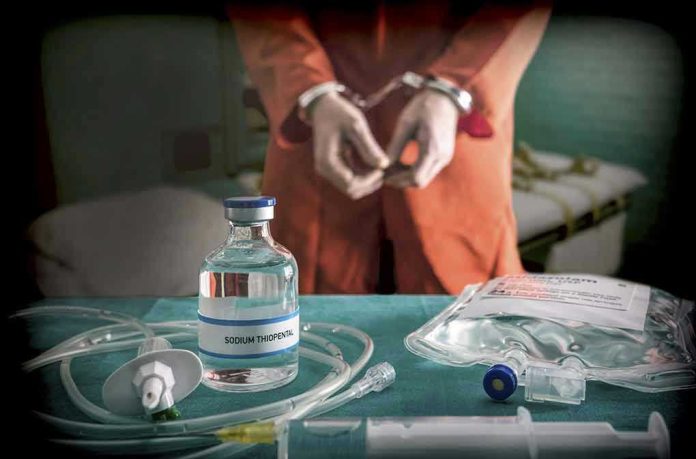
Florida just executed its 17th death row inmate of the year—a man whose crime and fate reveal as much about state politics as they do about the enduring scars left by a single night’s brutality.
Story Snapshot
- Richard Barry Randolph was executed 37 years after killing his former manager in a crime that stunned a small Florida town.
- His execution marks a record-breaking year for capital punishment in Florida under Governor Ron DeSantis.
- The victim’s family finally witnessed the sentence carried out after decades of legal delays and appeals.
- This case reignites debate over the effectiveness, morality, and politics behind the death penalty in America.
Florida’s Record-Breaking Year of Executions
Florida shattered its own modern record in 2025 by carrying out 17 executions, signaling a new era of capital punishment enforcement in the state. Governor Ron DeSantis, facing both national scrutiny and local demands for justice, signed a string of death warrants that sent a clear message: Florida will not hesitate to enforce the ultimate penalty. The pace of executions, unseen since the death penalty’s reinstatement in 1976, has become a political flashpoint, with supporters hailing it as overdue justice and opponents decrying it as a step backward for human rights.
The state’s aggressive stance is not happening in a vacuum. Florida’s approach is being watched closely by legal scholars, activists, and politicians nationwide, as other states grapple with declining public support for executions and mounting evidence of wrongful convictions. Yet, for some, the question is not whether the practice should end, but why it’s taken so long for justice to be served.
A Crime That Shocked and Transformed a Community
In August 1988, the quiet town of Palatka, Florida, was rattled by news of a violent robbery at a local Handy-Way convenience store. Richard Barry Randolph, a former employee, tried to break into the store’s safe, only to be confronted by his former manager, Minnie Ruth McCollum. The encounter spiraled into a savage attack: McCollum was beaten, strangled, stabbed, and raped. Randolph fled in her car, clutching stolen lottery tickets, but not before three witnesses saw him leave the scene.
McCollum was discovered alive but comatose; she died six days later. Police quickly tracked Randolph to a Jacksonville grocery store, where he was caught trying to cash the stolen tickets. He confessed, led officers to the bloody clothes he’d discarded, and soon after, a jury convicted him of murder, rape, robbery, and grand theft. The brutality of the crime cemented Randolph’s name in Florida’s criminal annals and ignited a decades-long quest for justice by the McCollum family.
Decades of Appeals, Delays, and Growing Frustration
Randolph’s conviction in 1989 was only the start of a legal odyssey spanning nearly four decades. His attorneys filed appeals challenging everything from the adequacy of his legal representation to the state’s access to public records. The courts, including the Florida Supreme Court and the U.S. Supreme Court, ultimately denied each appeal. This lengthy process, while designed as a safeguard against wrongful convictions, also tested the patience and resolve of the victim’s family.
A man convicted of raping and fatally beating his manager at a Florida convenience store in 1988 was put to death Thursday evening in the state’s 17th execution this year. https://t.co/IiGyDbUzMf
— WSVN 7 News (@wsvn) November 21, 2025
For McCollum’s relatives, the years ticked by with every court date, each delay reopening old wounds. When the execution date finally arrived, they attended the proceedings and publicly thanked Governor DeSantis for his role in bringing closure. The family’s gratitude reflects a sentiment often voiced by those who have lost loved ones to violent crime: that justice delayed is justice denied.
The Politics of Death: Law, Order, and Election Year Calculus
Governor DeSantis’s decision to sign so many death warrants in 2025 was not just a matter of legal procedure—it was a carefully calculated statement. With a national spotlight on law-and-order policies, DeSantis positioned himself as a defender of victims and a champion of swift justice. His administration’s record pace of executions has been lauded by those who believe the death penalty deters crime and brings closure to families, while critics argue it’s more about political posturing than public safety.
The case of Richard Barry Randolph exposes the deeply embedded tensions in America’s ongoing debate over capital punishment. Legal experts point to Florida’s history of wrongful convictions and the unproven deterrent effect of executions. Yet, for many Floridians, particularly those who have suffered loss, the death penalty remains a necessary—if imperfect—tool for justice.