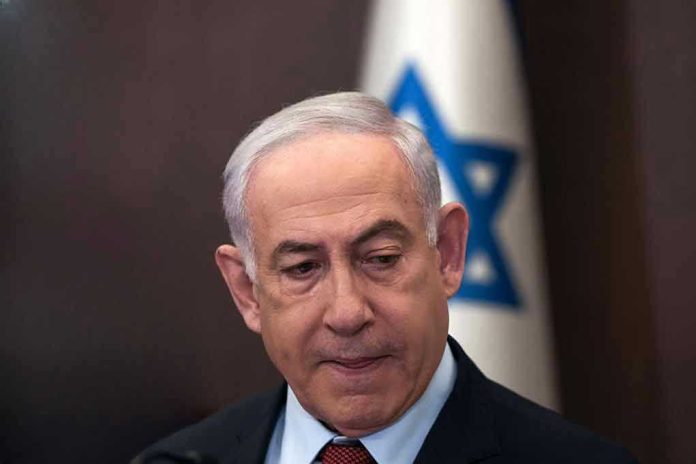
The collapse of a fragile ceasefire in Gaza has ignited a fresh wave of violence, as President Donald Trump backs Israeli Prime Minister Benjamin Netanyahu’s forceful response against Hamas.
Story Highlights
- Ceasefire between Israel and Hamas collapses, leading to renewed violence.
- Trump publicly supports Netanyahu’s decision to retaliate against Hamas.
- At least 26 people dead as Israeli strikes resume, escalating the humanitarian crisis.
- Hamas had shown willingness to hand over Gaza administration as part of a truce.
Ceasefire Shattered: A Renewed Cycle of Violence
On October 10, 2025, a ceasefire agreement was supposed to bring a semblance of peace to the conflict-ridden Gaza Strip. However, this agreement quickly disintegrated when Israeli Prime Minister Benjamin Netanyahu ordered military strikes after an incident involving the handover of hostage remains by Hamas. The fallout was immediate and deadly, with at least 26 people killed in the initial strikes, further exacerbating the humanitarian crisis in the region.
Donald Trump, the former U.S. President, did not hesitate to lend his vocal support to Netanyahu’s decision. His endorsement of the military escalation adds another layer of complexity to an already volatile situation, potentially influencing other international actors’ responses and further polarizing opinions on the conflict.
Humanitarian Crisis Deepens
The renewed violence has had catastrophic effects on the civilian population in Gaza. The latest military actions have resulted in civilian casualties, including women and children, as reported by various humanitarian organizations. The infrastructure in Gaza, already on the brink of collapse due to previous conflicts, is facing near-total devastation. The population, heavily reliant on international aid, struggles with severe shortages of essential supplies like food, water, and medical care.
While the Israel Defense Forces (IDF) claim their operations target militants, the reality on the ground paints a grim picture of mounting civilian tolls. The humanitarian crisis in Gaza is a stark reminder of the high human cost of the conflict and the urgent need for a sustainable peace solution.
Political Dynamics and Global Implications
Netanyahu’s decision to resume strikes comes amidst Hamas’s expressed willingness to transfer the administration of Gaza to a technocratic committee, an offer that was part of the now-defunct truce. This move was seen as a potential stepping stone towards a more stable governance structure in Gaza, yet the renewed military actions have thrown these plans into chaos.
For Trump, supporting Netanyahu aligns with his broader strategy of backing Israeli policies, a stance that has been both influential and controversial. His involvement in the conflict raises questions about the future of U.S. diplomacy in the Middle East and whether his actions might hinder or help any lasting peace efforts.
Future Prospects and Challenges
The breakdown of the ceasefire and the subsequent military escalation underscore the fragility of peace efforts in the region. The repeated cycle of violence and ceasefire violations highlights the deep-rooted issues that have plagued Israeli-Palestinian relations for decades. Without addressing the underlying causes of the conflict, such as territorial disputes, governance challenges, and security concerns, the region risks descending into further chaos.
The international community remains divided on how to effectively mediate and address the crisis. As violence continues, the urgency for a comprehensive and inclusive peace process that involves all stakeholders becomes increasingly apparent. Only through such efforts can the humanitarian toll be alleviated and a pathway to lasting peace be forged.
Sources:
Wikipedia: Timeline of the Gaza war
Times of India: Israel-Hamas war timeline
Wikipedia: Timeline of the Gaza war (3 October 2025 – present)
Red Cross: Gaza crisis timeline