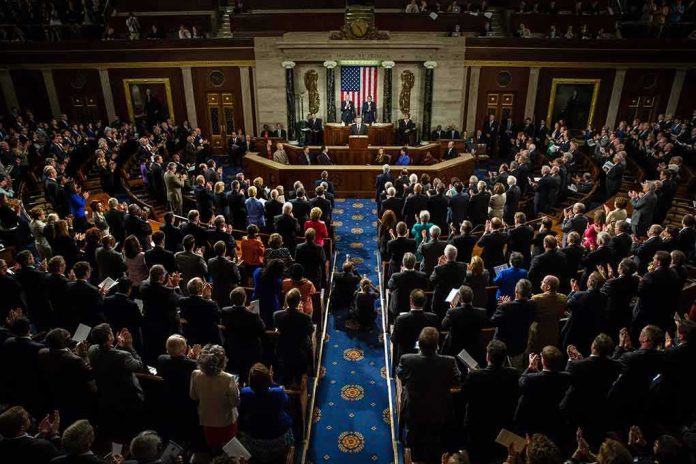
Jack Smith walked into the Senate hearing room and staked his name on one claim: the charges rose from evidence, not politics.
Story Snapshot
- Smith told senators his Trump charging decisions followed evidence and grand juries, not party labels.
- Republicans framed the hearing as “abuse of authority” and “targeting of Republicans”.
- The fiercest clash centered on toll-record subpoenas for GOP lawmakers’ phone data, not call content.
- Smith’s camp called those subpoenas lawful, narrow, and tied to January 4–7, 2021, leads.
What Smith Said Under Oath, And Why It Matters
Jack Smith opened by backing every charging call he made. He told the Senate Judiciary Committee that the evidence, not politics, drove both Trump cases. He tied those decisions to grand jury processes and the facts his team gathered. He denied any motive linked to Trump’s party or campaign. That line set the tone: stand on the record, not on rhetoric. News outlets present in the room reported that basic stance on the spot, and it matched his prepared remarks.
The committee title previewed the knife fight ahead. Republicans labeled the session “Oversight of Jack Smith’s Abuse of Authority and the Targeting of Republicans and Related Matters.” That wording showed where the majority wanted to go: process, power, and whether a prosecutor crossed lines while investigating a sitting political figure. The schedule, room, and witness list were posted publicly in advance by the committee, so no one missed the frame or the stakes.
The Flashpoint: Toll Records, Scope, And Constitutional Lines
Republican senators pressed hard on subpoenas for toll records tied to Republican lawmakers. Toll records list numbers, dates, and call lengths. They do not include the words said or messages sent. Smith’s attorneys said the requests were lawful, narrow, and consistent with Department of Justice policy. They added that the date window targeted the days around January 6. The most detailed public defense stressed that investigators sought non-content data to confirm contacts, timing, and traffic patterns, not speech.
Conservative critics argued the sweep was broader and more political than that. They cited Republican committee materials claiming dozens of lawmakers and hundreds of Republican-aligned entities got drawn into a dragnet. They called it abuse of authority on the taxpayer’s dime. Those allegations are specific and serious, and they demand clear answers. But the best-documented rebuttal remains narrow scope, lawful basis, and non-content limits. On the rule-of-law scale, targeted non-content subpoenas sit far closer to routine policing than to spying.
The Conservative Test: Neutral Law Or Political Weapon?
A simple standard fits conservative values: evenhanded law that respects the Constitution, limits government, and punishes real crimes with real proof. Smith says he followed that path, with evidence, grand juries, and courtroom filings. He points to legal processes that any prosecutor would use. Republican leaders say the process itself became the weapon and trampled core protections. That is a clash over first principles, not just case files. Hearings like this exist to test those claims in public.
Jack Smith testifies publicly before the Senate Judiciary Committee today at 9:00 AM ET / 15:00 NL.
Expect questions about his investigations into Trump’s efforts to overturn the 2020 election, the classified-documents case, and subpoenas involving lawmakers’ phone records. Smith… pic.twitter.com/GOZCwPho6T— (not so) Sweet Bᵀᴹ (@Sweet_Bee1972) September 29, 2026
Fair-minded readers should ask two questions. First, did the tools match the target? Non-content toll data, tied to a tight time frame, to map contacts around a riot, fits standard practice. Second, were Republicans treated differently because they are Republicans? Smith denies that. To prove bias, critics must show like cases treated unlike, or rules bent only one way. The hearing forced both sides to lock in those positions, on the record and under lights.
What To Watch Next
Committee staff will press for documents that show who approved what, and when. Smith’s camp will keep pointing to written policies, the grand jury firewall, and prior court rulings. If a judge later finds that subpoenas were overbroad or breached separation of powers, expect reforms to follow. If the paper trail backs Smith, the debate shifts from method to the wisdom of using a special counsel in hot political cases at all. Congress has wrestled with that for decades.
Sources:
youtube.com, northeasttimes.com, abcnews.com, apnews.com, judiciary.house.gov, foxnews.com, coloradopolitics.com, kfgo.com, judiciary.senate.gov