The Irish Open crowd roared as President Trump vowed to remove the U.S. tariff on Irish whiskey—on the spot, by name, and to cheers heard across the Atlantic.
Story Snapshot
- President Trump announced he will remove the U.S. tariff on Irish whiskey at the Irish Open closing event.
- The crowd responded with loud applause, treating it as a concrete pledge.
- Trump said the push came from Ireland’s leader and top golfers, including Shane Lowry.
- Reports described the tariff rate as about 10 percent at the time.
What Trump Said, Where He Said It, And Why It Landed
President Trump told fans at the Irish Open in Doonbeg that he will take the tariff off Irish whiskey. He said people kept asking him to do it, and he answered from the stage. The crowd erupted, and reporters captured the promise as the headline of the day. He later told reporters he meant Irish whiskey only, not a wider cut for other European goods, drawing a clear line around the pledge.
Several outlets reported the same core facts within hours. Reuters, Politico, the New York Times, the Associated Press via the Atlanta Journal-Constitution, ITV, and Al Jazeera all ran with the on-site announcement and the reaction it drew. That volume and speed matter. When many independent desks lock onto the same quotes and setting, the signal is strong: a public commitment, in front of cameras, meant to be heard in Washington and Dublin.
The Tariff In Question And The Stakes For Drinkers And Distillers
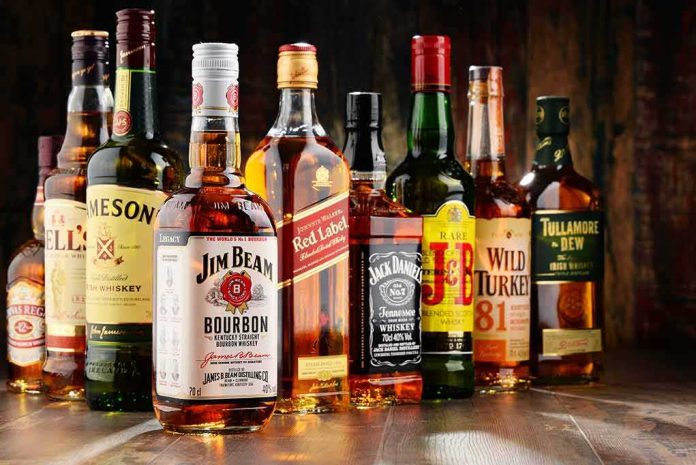
Reports put the tariff near 10 percent on Irish whiskey at the time of the announcement, a cost that rolls through importers, distributors, bars, and store shelves. Removing that charge would cut a real expense on every bottle that comes through U.S. ports. This is not a niche market. Irish whiskey exports have grown for years, with the United States as a leading buyer, so even single-digit tariffs add up fast for producers and customers.
Fans heard a pocketbook issue stated in plain terms, which explains the roar. For American consumers, less duty can mean lower prices or better stock. For Irish distillers, it can mean more orders and steadier planning. For U.S. bars and retailers, it can mean stronger margins and more specials that bring people in. That simple math beats trade jargon every time, and the president spoke directly to it.
Who Asked For It And How The Message Traveled
Trump credited personal appeals from Ireland’s Taoiseach Micheál Martin and from golfers, with Shane Lowry named in coverage that tracked his words closely. That framing linked the decision to national leadership and a national sport hero. It also matched the day’s visuals: a trophy ceremony, a packed gallery, and a leader on a mic. Politico described the moment as a crowd-pleaser, and Reuters and the New York Times noted cheers and applause as soon as he said it.
Sláinte! Trump Scraps 10% Tariff on All Irish Whiskey as Parting Gift ~ https://t.co/3DGFexnZlM
— MikeKirby (@mikekirbyone) September 14, 2026
Trade watchers will recognize the pattern. Leaders sometimes use big stages to set direction first, then send the lawyers and customs officers to make it real. The United States and the European Union have swung tariffs on spirits up and down in recent years, often as collateral in bigger fights over planes, metals, and tech. Announcements can come fast. Implementation follows through formal steps like executive actions and customs notices.
How This Fits The Larger U.S.–Europe Tariff Chessboard
Spirits have been bargaining chips before. In past cycles, Washington and Brussels added duties on whiskies and liqueurs while arguing over planes and steel, then paused or dropped them when a deal neared. The current push to lift the Irish whiskey tariff sits in that history. It trades a narrow relief for goodwill without touching broader European Union products, which Trump said he was not changing that day. That targeted scope aligns with common sense: fix what you can, fast, and keep leverage elsewhere.
One caveat belongs on the logistics, not the promise: reports said details on timing were not yet given that day, which is normal for public tariff calls made on a weekend stage. The point of the mic moment was direction, not footnotes. The legal switch flips through the usual process that follows. Until then, the market reads the signal, and partners prepare for the change.
Why This Moment Mattered Beyond The Fairway
Policy spoke plain English to people’s wallets, and it did so in a way that honored a close ally. That blends economic sense with cultural respect, both staples of American conservative values. The United States buys a lot of Irish whiskey. Irish producers hire real workers. Lower friction on a friendly good makes trade feel fair, not fuzzy. It also shows a preference for targeted action over sprawling, catch-all deals that take years and stall out.
Expect distillers and importers to plan for faster shipments and new promotions if the formal change posts. Expect bars to lean into Irish pours this fall. Expect Dublin to bank the goodwill for future talks. And expect fans to remember where they were when a golf crowd cheered a tariff cut like a walk-off putt.
Sources:
thegatewaypundit.com, aljazeera.com, politico.com, nytimes.com, ajc.com, essentiallysports.com, forth.news, finance.yahoo.com, reuters.com, rte.ie